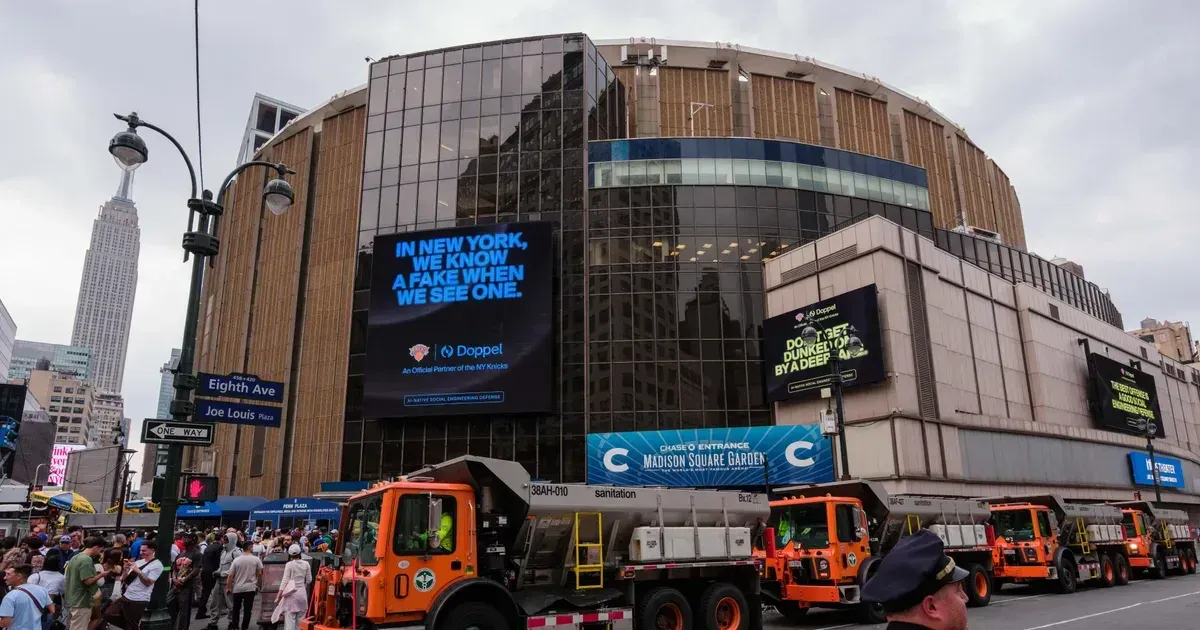
A 51-year-old concertgoer died after falling from an elevated position during a Goose concert at Madison Square Garden, according to New York police reporting cited by the New York Post. The incident turned a major arena show into a venue safety investigation and left fans looking for basic answers about what happened inside the building. Arena deaths create a difficult information gap because the people closest to the incident may be shaken, while people farther away may only see emergency movement and start filling in details online.
Police said the man was found unconscious and unresponsive after the fall. The incident occurred on June 20, 2026, during Goose's Madison Square Garden run, with the man later pronounced dead at Bellevue Hospital. That sequence gives investigators a narrow starting point but does not yet answer the larger questions about location, visibility, crowd movement and whether any preventable hazard was present.
The Madison Square Garden fall is a tragedy first, but it also raises practical questions for one of the country's best-known indoor venues. Investigators will need to determine the man's location, the height involved, nearby crowd conditions and whether any structural or behavioral factor contributed. They will also need to review camera footage, staff reports and medical response timing before drawing conclusions.
Police Account Sets the Baseline
The New York Post reported that emergency responders were called around 9:51 p.m. and that the man was later pronounced dead at the hospital. Police had not released a detailed public explanation of how the fall occurred.
That limited account matters because early witness descriptions can spread quickly after a concert incident. The official timeline has to separate confirmed facts from audience reports, social media posts and assumptions made by people who saw only part of the response. That process can feel slow to fans, but it is the only way to avoid turning a fatal incident into a set of competing online narratives.
The confirmed facts are narrow: a man fell, emergency responders reached him and he died after being taken to a hospital.
Madison Square Garden's event listing showed Goose performing at the venue during the June run, and the band's tour page listed the New York dates. Those listings establish the setting, but the safety questions remain with police, venue management and any internal review.
The venue's size also matters. In a building with multiple seating levels, concourses, stairways and railings, a serious incident can involve different teams before a unified account reaches the public. Arena incidents involve multiple layers of responsibility, including security, ushers, medical teams, crowd control and coordination with city emergency services.
Fans Need Careful Communication
When a fatal incident happens during a live event, the audience often receives fragmented information. Some fans may know immediately that something serious occurred, while others may leave without understanding why rows were cleared or responders moved through the crowd.
Goose's MSG show was part of a high-profile run for the Connecticut band, which has built a large touring following. That context does not change the facts of the death, but it explains why the incident moved quickly through fan communities.
Public communication after an event like this should be restrained and specific. The best updates usually avoid speculation, name what has been confirmed and explain what remains under investigation. Families deserve privacy, witnesses need space to cooperate with investigators and fans should not be left with rumors about where the fall happened or whether the event environment played a role.
It is also important not to turn uncertainty into accusation. A fall can involve personal medical issues, missteps, alcohol, crowding, railings or other conditions, and those possibilities cannot be weighed fairly until investigators have evidence. That restraint protects both the victim's family and the integrity of any safety review.
The Review Should Be Concrete
The next useful public step is a clear safety review: where the fall occurred, whether the area met code, what staff saw and how quickly medical help arrived. Those answers can help prevent speculation and guide any venue changes if they are needed. A concrete review should also explain whether staff training, sightlines, barriers or emergency access routes worked as intended once the fall was reported.
Large arenas host thousands of people above floor level every night. That makes rare fatal falls especially alarming, because the public expects elevated seating, stairways and concourses to be managed with layers of protection. The death at Madison Square Garden will be remembered by the man's family and by fans who were nearby. The public record should now focus on verified facts, witness cooperation and whether the venue's response matched the seriousness of the emergency. That is the clearest path to accountability and to any practical safety improvement.