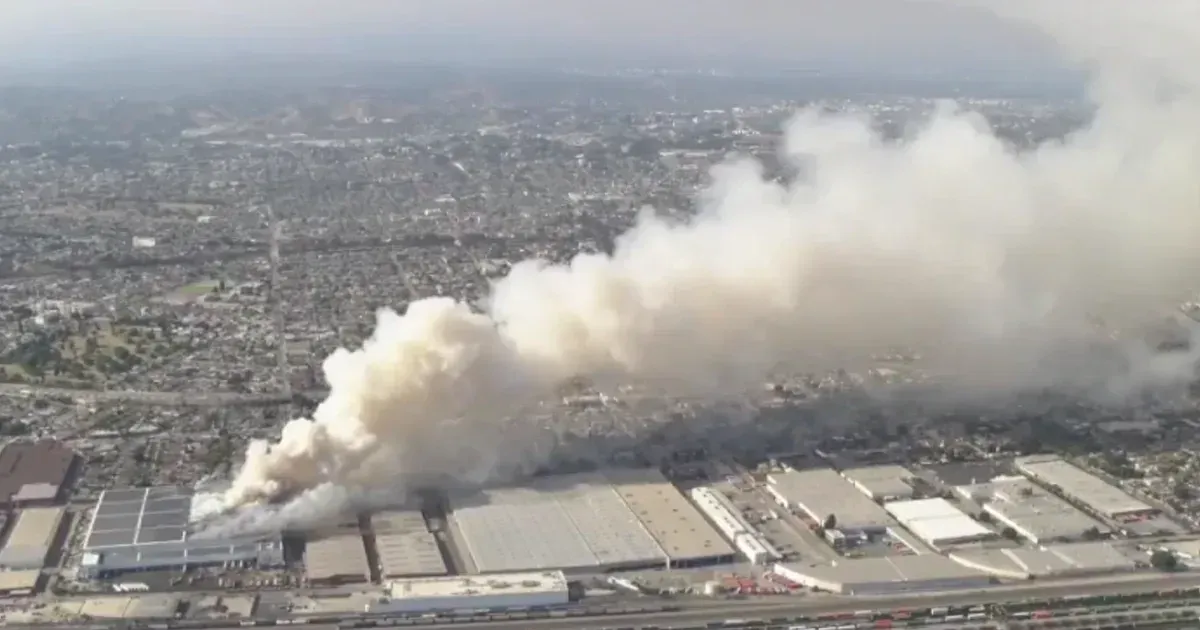
Los Angeles has issued an emergency declaration as a large Boyle Heights warehouse fire continues to smolder, keeping public health and cleanup concerns active days after the blaze began. Officials said the declaration is meant to speed resources for response, disposal and recovery.
CBS Los Angeles, AP and NBC Los Angeles reported on June 20, 2026, that Mayor Karen Bass moved to secure additional support as crews worked through the stubborn incident.
The Boyle Heights warehouse fire is not a routine structure fire anymore. The facility held massive quantities of frozen food, and officials have had to manage firefighting, smoke exposure, spoiled material, hazardous conditions and neighborhood concerns at the same time.
Emergency Status Targets Resources
Emergency declarations are not only symbolic. They are often used when a city needs to move faster than normal purchasing, contracting or interagency coordination would allow. They can help local officials access state resources, speed contracting, coordinate disposal and move faster when ordinary procedures do not match the scale of the problem.
AP reported that the warehouse contained about 85 million pounds of frozen food. That figure explains why the cleanup challenge may last longer than the visible flames. A cold-storage fire can leave behind smoke, water, food waste, structural hazards and odor problems that require careful handling. It can also require specialized disposal because spoiled food, firefighting runoff and damaged refrigeration systems may have to be managed together rather than as ordinary debris.
The fire response has shifted from putting out flames to preventing a lingering environmental and public health problem.
Mayor Bass said the city was concerned about community health, according to NBC Los Angeles. Residents near the site have had to follow changing guidance as smoke conditions, hot spots and cleanup work evolved. That uncertainty is part of the burden: people want to know when they can open windows, when children can play outside and whether odors signal a health risk or simply cleanup activity. For firefighters, the building itself also matters. The crews are not only chasing flames; they are working around structural weakness, smoke pockets and damaged systems inside a building that was designed to preserve cold products, not to be quickly opened and cleared after a major fire. Cold-storage facilities can have difficult layouts, insulated panels, refrigeration systems and heavy contents that complicate ventilation and access.
Smoke and Spoiled Material Drive Concern
CBS Los Angeles reported that smoke concerns persisted as the fire entered another day. Even when hazardous materials are isolated or controlled, prolonged smoke from a commercial site can disrupt nearby homes, schools, businesses and vulnerable residents.
Boyle Heights residents have been asked at points to shelter indoors or monitor official guidance. That kind of order is disruptive, especially for families without strong air filtration, workers who need to commute and people with asthma or other respiratory conditions.
The frozen-food contents add another layer. Once refrigeration and containment fail, officials have to remove and dispose of large amounts of spoiled material safely. That is a logistics problem as much as a firefighting problem. Trucks, disposal sites, protective equipment and air monitoring all become part of the recovery plan. If any one of those pieces lags, the neighborhood can feel the delay directly.
Officials also need to communicate clearly about what the public should and should not do. A prolonged warehouse fire can produce changing guidance as wind shifts, hot spots flare and cleanup crews expose new material inside the building. In a prolonged incident, residents need practical answers about air quality, cleanup timing, odor, street access and health precautions.
The Test Is Follow-Through
The emergency declaration gives Los Angeles more room to act, but the measure will be judged by results. Residents need the declaration to translate into faster cleanup, not just more process. Residents will want to see smoke reduced, waste removed, streets reopened and health risks explained in plain language.
The city also has to show how it will prevent the incident from becoming a long-running neighborhood burden. That means publishing practical milestones, not only general assurances, while the cleanup remains visible from nearby streets. Industrial fires can fade from citywide attention while nearby communities keep dealing with odor, dust, truck traffic and uncertainty. Boyle Heights residents will judge the response less by the declaration itself than by how quickly the smoke, waste and disruption actually disappear.
The immediate priority is containment and cleanup. The longer-term issue is trust between the city and a neighborhood that has to live closest to the site. The larger accountability question is whether the city can turn an emergency declaration into visible relief for Boyle Heights before the fire's aftermath becomes a second crisis. That means public updates should track measurable progress: smoke conditions, disposal work, air monitoring and when normal routines can safely resume.