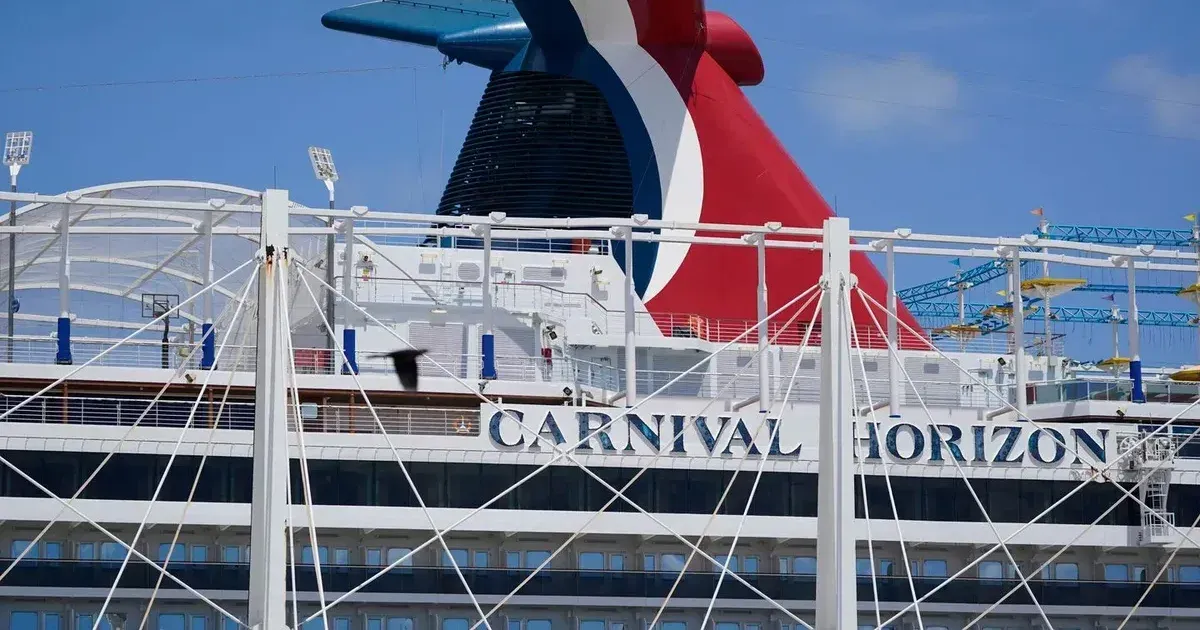
A Florida cruise death has become a federal juvenile murder case with unusually sensitive family and maritime issues. The investigation involves a minor suspect, an adult victim and a ship that was outside ordinary state jurisdiction. Federal officials are now weighing both evidence and charging posture. Authorities said on April 13, 2026, that a 16-year-old boy identified as T.H. faces charges tied to the death and sexual abuse of his 18-year-old stepsister aboard a Carnival vessel.
Florida Teen Faces Federal Charges
Prosecutors allege that the assault took place during a scheduled vacation, transforming a family getaway into a crime scene that spanned multiple jurisdictions. Because the incident occurred on a Carnival Cruise vessel outside of state territorial waters, the U.S. Justice Department assumed primary control over the case. T.H. was reportedly traveling with his parents and stepsister at the time of the incident. Witness statements from nearby cabins indicated no obvious signs of a struggle prior to the discovery of the body. Forensic teams spent several hours processing the room once the ship docked to ensure no evidence was contaminated by the high-volume passenger traffic common on such vessels. Anna Kepner was just weeks away from her high school graduation, according to family social media posts that have since been set to private. She had planned to attend university in the fall, a detail that has added a layer of public grief to the unfolding legal drama. T.H., though a minor, faces a potential transfer to adult court given the nature of the murder and sexual assault allegations. Federal law allows for such transfers in cases involving extreme violence or sexual predation. Prosecutors have not yet officially moved to try him as an adult, but legal experts expect a motion to be filed before the preliminary hearing.
Cruise Security Under Review
Carnival Cruise officials released a brief statement confirming their full cooperation with the FBI and other federal agencies. The company maintains that its security personnel followed all established protocols for responding to a medical emergency that later turned into a criminal investigation. Despite these assurances, the incident has renewed scrutiny regarding the ratio of security staff to passengers on mega-ships. Most vessels of this size carry thousands of travelers but only a small contingent of trained security officers. Evidence, however, pointed toward a premeditated attack that likely would have challenged even a strong security presence.
Investigative files suggest that the U.S. Justice Department is looking into the timeline of the evening to determine if any intervention could have prevented the tragedy. T.H. reportedly remained in the cabin for several hours after the alleged crime before help was summoned. This delay is a central component of the prosecution's case regarding the intent and subsequent actions of the suspect. Ship records show that the family had participated in several onboard activities earlier that day. None of the cruise staff reported any visible tension between the stepsiblings during those public interactions.
Federal Jurisdiction at Sea
Maritime law often complicates the prosecution of violent crimes because ships frequently move through different legal zones. Prosecution of such crimes falls to federal authorities rather than local police because of the location of the vessel. The U.S. Justice Department utilizes the Special Maritime and Territorial Jurisdiction of the United States to claim authority over crimes committed on the high seas. This allows Florida-based federal prosecutors to handle the case even if the ship was hundreds of miles from the coast. The suspect remains in custody while his defense team reviews the federal evidence disclosure.
FBI agents specialized in maritime crimes led the initial interviews with the suspect and the surviving family members. Because Anna Kepner was an American citizen and the ship docked in a U.S. port, the legal pathway for federal charges was straightforward. International maritime treaties generally grant the country of the ship's flag the right to investigate, but most cruise lines have agreements with the U.S. for crimes involving American citizens. These agreements ensure that violent offenders do not escape justice through jurisdictional loopholes. The complexity of the case remains a meaningful hurdle for the defense team as they navigate federal sentencing guidelines.
The family legal fallout now shapes the juvenile case as much as the maritime setting. Anna Kepner was described by friends as a vibrant student with a passion for photography. Her death has left the Florida community in a state of shock, especially given the age of the accused. T.H. had no prior criminal record, a fact that his defense team is expected to emphasize during bail hearings. The U.S. Justice Department has pushed for the suspect to be held without bond, citing the gravity of the murder charge. Public records indicate that the family had no history of domestic disturbance calls to their home address. The lack of history makes the sudden outburst of violence even more difficult for investigators to categorize.
Criminal proceedings in federal court move at a different pace than state-level trials. T.H. will likely face a grand jury indictment within the next month as the FBI completes its forensic analysis of electronic devices seized from the cabin. Carnival Cruise has offered counseling services to the crew members who were first on the scene. These employees are often the forgotten witnesses in maritime tragedies, forced to maintain professional decorum while processing traumatic events. The prosecution will rely heavily on their testimony to establish the condition of the crime scene before federal agents could board. Florida legal analysts suggest that the physical evidence in the cabin will be the deciding factor in the trial.
Maritime Crime and Juvenile Justice
Questions regarding the fundamental safety of the cruise industry often surface only after blood is spilled on the lido deck. The case involving T.H. and Anna Kepner extends beyond a family tragedy to become a searing indictment of the illusion of security provided by multibillion-dollar vacation conglomerates. While Carnival Cruise advertises a sanctuary of leisure, the reality is a floating city where the police force is a private security detail with limited powers and questionable training. The U.S. Justice Department must step in precisely because these companies have created a jurisdictional gray zone that favors corporate liability protection over passenger safety.
The quick arrest in Florida is a rare win for maritime law enforcement, which more often than not struggles to secure crime scenes that are literally moving targets. It is time to stop viewing these incidents as isolated domestic disputes and start recognizing them as the predictable outcome of an underregulated environment. When you pack thousands of people into a confined space with unlimited alcohol and minimal oversight, the results are inevitable. The prosecution should be the start of a broader federal push to mandate a permanent, independent law enforcement presence on all vessels departing from American ports.
The industry is overdue for a reckoning. Blood in the water cannot be washed away by a corporate press release.