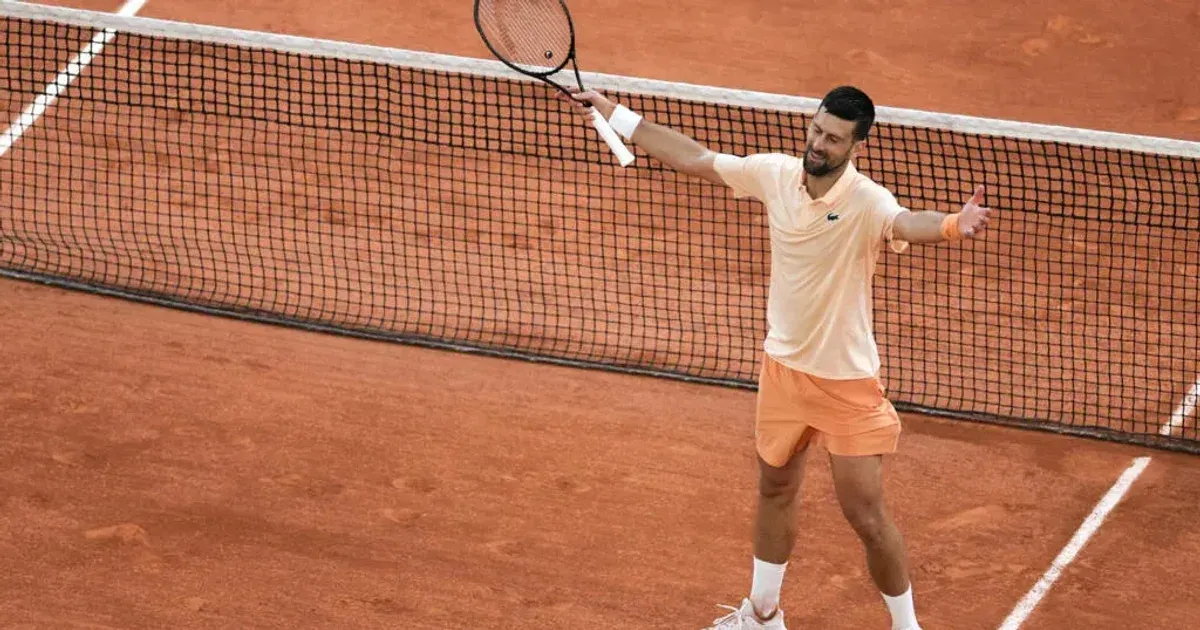
Novak Djokovic saw his pursuit of a 25th Grand Slam title end in the third round of the French Open after a grueling five-set defeat against Brazilian teenager Joao Fonseca. The Paris upset changed the tone of the tournament by removing one of its most reliable champions. For Fonseca, the win is not only a result but a signal that the next generation can survive a five-set stage. Events unfolded throughout Friday afternoon on May 29, 2026, as the reigning champion struggled to maintain his early momentum against a younger, faster opponent. Fonseca secured a 3-6, 4-6, 6-4, 6-2, 6-3 victory after four hours of play on Court Philippe-Chatrier. This result ends the Serbian player's hopes of extending his major record during the current clay-court season.
Fonseca overcame a two-set deficit to eliminate the top-seeded veteran in a physical contest.
Djokovic started the match with characteristic efficiency, capturing the first two sets by using his deep baseline returns and tactical variety. Brazilian fans in the stadium watched as the 39-year-old appeared poised for a routine entry into the fourth round. Fonseca, however, found another level of intensity in the third set, breaking the Djokovic serve early and capitalizing on a series of unforced errors. Youthful exuberance began to outweigh experience as the match moved into a fourth hour under the intense Paris sun.
Records show that Djokovic has rarely surrendered a two-set lead in the early rounds of a Grand Slam tournament. Tennis analysts noted a drop in the champion's service speed during the fourth set, suggesting the physical demands of the long rallies were taking a toll. Fonseca maintained his aggression, hitting 45 winners over the final three sets to overwhelm the defensive capabilities of his opponent. Success in the final set arrived when the teenager broke Djokovic's serve at 3-2.
The 2026 French Open produced two major upsets as Novak Djokovic and Jannik Sinner exited the tournament.
Jannik Sinner, the world number one and tournament favorite, also exited the competition earlier in the day. Juan Manuel Cerundolo defeated Sinner in a match defined by the physical struggles of the Italian star. Sinner arrived in Paris with a 30-match winning streak, a run that established him as the dominant force in men's tennis over the previous six months. Physical exhaustion combined with extreme heat conditions led to a sudden decline in his performance level during the match against Cerundolo.
Paris temperatures reached levels that forced officials to implement heat-reduction protocols for the spectators and players alike.
Tournament officials reported that the on-court temperature exceeded 95 degrees Fahrenheit during the afternoon sessions. These conditions heavily influenced the physical endurance of the older athletes and those coming off a heavy schedule of recent tournament play. Match officials implemented the extreme heat policy, allowing for extended breaks between the third and fourth sets for the competitors. Cerundolo took advantage of the slower movement from Sinner to secure his own advancement in the draw.
Fonseca Overturns Two-Set Deficit
Advancement to the fourth round is the greatest achievement in the young career of Joao Fonseca. He demonstrated tactical maturity by moving Novak Djokovic laterally across the baseline, preventing the Serbian from dictating play with his backhand. Statistics from the match indicate that Fonseca won 65 percent of his second-serve points in the final two sets, a figure that highlights his ability to remain calm under pressure. The Brazilian crowd celebrated the victory as a sign of the changing dynamics in South American tennis.
Extreme Heat Impacts Tournament Favorites
Athletes at Roland Garros faced some of the most difficult environmental conditions in the history of the event this year. Jannik Sinner appeared visibly distressed between points during his match against Juan Manuel Cerundolo, often leaning on his racket for support. Physical trainers were called to the court multiple times to provide hydration and cooling treatments. The exit of the top two seeds in the same round has altered the betting odds and the expectations for the second week of the tournament.
New Generation Shapes Roland Garros Draw
Potential champions now include a mix of established veterans and unseeded outsiders who have navigated the early rounds with less physical damage. The absence of both Djokovic and Sinner means that a first-time French Open winner is increasingly likely. Young players like Carlos Alcaraz or Holger Rune may view this development as their primary opportunity to seize control of the ATP rankings. Draw dynamics shift sharply when the defensive anchors of the top half are removed prematurely.
Two Early Exits Reshape the Roland Garros Draw
The departure of the two highest-ranked players in the world suggests a transition within the professional tennis hierarchy. While Djokovic has defied age for several seasons, the defeat to a teenager after leading by two sets is a data point that indicates the physical gap is closing. Sinner's physical struggles are equally telling, as they demonstrate that even the most consistent winners are susceptible to extreme environmental stress. This double upset creates an unpredictable environment for the remaining rounds, where mental resilience will be as critical as technical skill.
Future matches will determine if Fonseca can maintain this level of performance against other top-ten opponents. His victory over a 24-time Grand Slam champion provides a template for how the next generation can challenge the established order. Djokovic must now reassess his schedule and recovery protocols as the grass-court season approaches. The tennis world will watch to see if this exit is an isolated incident or the start of a broader decline for one of the sport's defining champions. The result will also change the draw conversation because Djokovic losses at Roland Garros still alter how every contender reads the bracket.