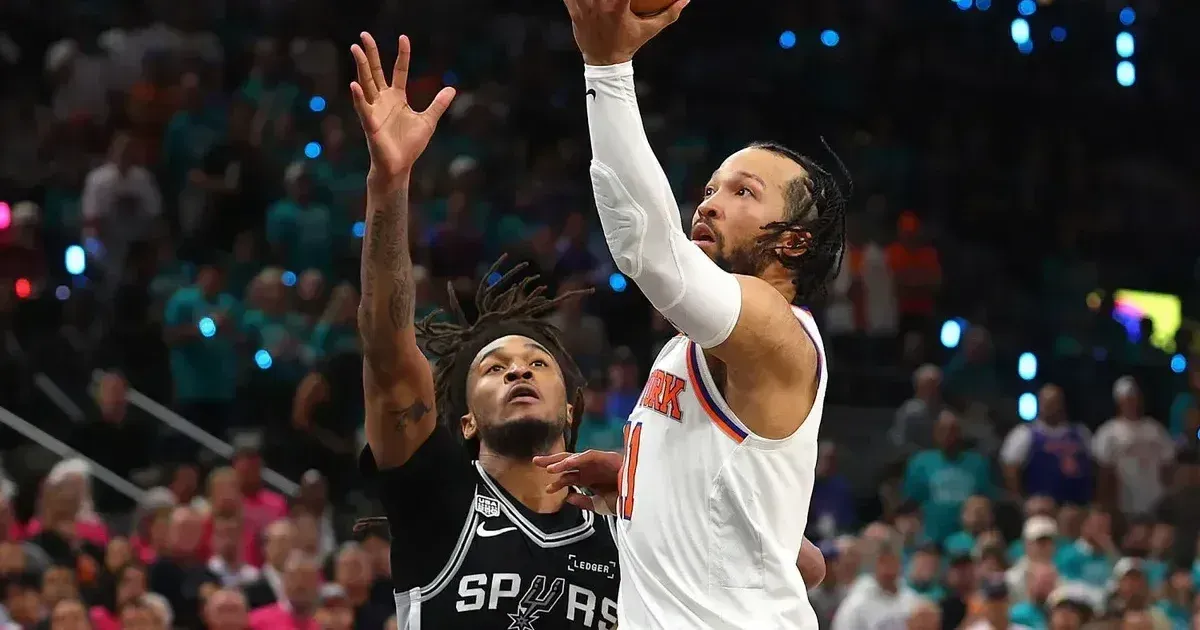
Victor Wembanyama gave the San Antonio Spurs the kind of Finals performance that changes a series without ending the debate around it. The win gives the Finals a different commercial shape because a longer series is now plausible. The performance also turned Game 3 into a reminder that San Antonio still has a star capable of changing the tone of the series. The June 8, 2026, win at Madison Square Garden cut the New York Knicks' lead to 2-1 and made Game 4 feel less like a formality than a pressure test. San Antonio's 115-111 victory also gave the NBA a ratings moment built around a young star, a historic market and a suddenly tighter matchup.
Victor Wembanyama finished with the production San Antonio needed from its franchise centerpiece. His scoring around the rim, defensive range and passing out of pressure helped the Spurs survive a road environment that had carried the Knicks through much of the postseason. New York still had chances late, but San Antonio's stops and cleaner execution protected the four-point margin.
The result mattered because the Knicks had entered the night with control of the series. A 3-0 lead would have left San Antonio close to the edge. Instead, the Spurs turned the Finals back toward basketball questions that can be answered on the floor: spacing, turnovers, rim protection and whether New York can make Wembanyama guard in more uncomfortable areas.
Wembanyama Changes the Matchup
Game 3 showed why Wembanyama is difficult to treat as a normal big man. He can score over single coverage, punish late rotations and still erase shots on the other end. That combination forced the Knicks to choose between crowding him early and leaving San Antonio's guards with more room to operate.
The Spurs also benefited from the way his presence simplified late possessions. When the game slowed, San Antonio could run offense through a player who sees over the defense and still gets to high-percentage areas. That did not make the Spurs perfect, but it gave them a reliable answer when the building grew louder.
New York's problem is that the adjustment has to be physical and tactical at the same time. The Knicks need better ball movement, more work before the catch and a plan for keeping Wembanyama away from the rim without surrendering clean perimeter looks. That is a narrow balance in a Finals setting.
Ratings Turn the Game Into a League Moment
The audience numbers gave the result a second layer. Reports from the broadcast side pointed to one of the strongest Game 3 viewership performances in decades, with interest driven by New York's market size, San Antonio's young star and the global pull around Wembanyama. For the league, that combination is exactly what a modern Finals is supposed to deliver.
Madison Square Garden helped amplify the moment. The arena gives any Knicks playoff game a national texture, and a Finals game there carries extra weight because New York has waited so long for this stage. When that setting meets a player with Wembanyama's international profile, the broadcast value rises beyond the final score.
The league will be careful not to turn one ratings surge into a permanent conclusion. Still, Game 3 offered evidence that the NBA can build a global audience around a player who is not based in Los Angeles, Boston or Miami. That matters for future media rights, international marketing and the way networks frame the rest of the series.
Game 4 Becomes the Tactical Test
The Knicks still lead the series, but the burden of response has shifted. Jalen Brunson and New York's creators need to generate cleaner possessions before the Spurs' length settles into the half court. If the Knicks spend too much of Game 4 attacking late in the clock, Wembanyama's rim protection becomes even more valuable.
San Antonio's challenge is different. The Spurs have to prove Game 3 was not simply a great individual performance attached to a narrow escape. They need enough secondary scoring, disciplined transition defense and defensive rebounding to keep the Knicks from turning the Garden crowd into a run.
The officiating conversation will also follow the teams into the next game. Late whistles and non-calls are part of every close Finals contest, but they become louder when the margin is four points and the series changes direction. The cleaner team emotionally may gain as much as the cleaner team tactically.
Wembanyama Win Changes Both Series and Ratings Story
The strategic meaning of Game 3 is that Wembanyama's ceiling is no longer an abstract future asset. It is already shaping how opponents prepare, how broadcasters sell the Finals and how San Antonio thinks about its rebuild. That does not guarantee a championship, but it changes the timeline around the Spurs.
For New York, the danger is not only losing one game at home. It is allowing the series to become a referendum on whether the Knicks can solve the one player who changes both ends of the floor. Game 4 will show whether this was a corrective win for San Antonio or the start of a much larger shift in the Finals.