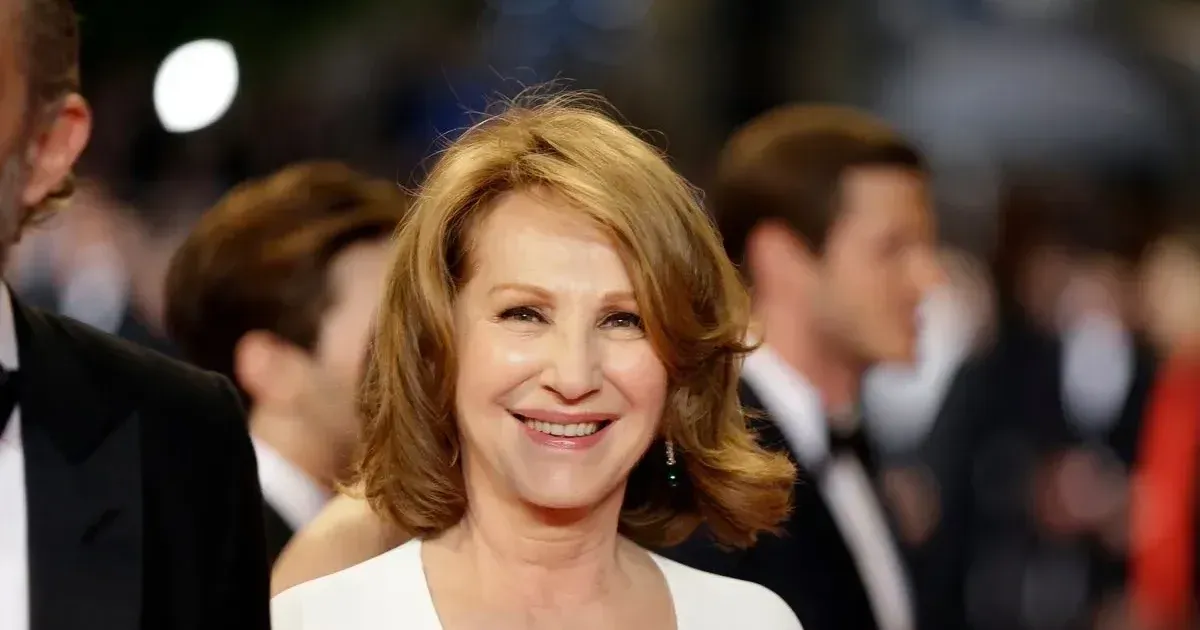
Nathalie Baye, a foundation of European cinema who defined the French screen for more than half a century, died at her residence in Paris. Her family confirmed the loss through a formal statement to Agence France-Presse, identifying the cause of death as Lewy body dementia. Her family reported her death on April 19, 2026. Baye reached the age of 77. Prolific output characterized her career, which spanned approximately 80 feature films and decades of consistent critical acclaim. Longevity of this caliber remains a rarity in an industry often obsessed with fleeting novelty. Her home in Paris was the site of her final hours.
Lewy body dementia, the neurological condition cited by her family, gradually impacted her health in recent years. This disease involves abnormal protein deposits in the brain that affect thinking, movement, and behavior. Medical records often describe it as a challenging overlap of Parkinson's disease and Alzheimer's symptoms. Baye died on Friday evening surrounded by her relatives. Public knowledge of her condition was limited before the family announcement on Saturday morning. Detailed statements regarding the progression of her illness remained private until her passing.
Lewy Body Dementia and the Final Paris Days
Parisian life suited Baye, who maintained a quiet presence in the French capital even as her international profile grew. Her family told AFP that she passed away peacefully on Friday evening. Lewy body dementia is a severe burden for both patients and caregivers, often manifesting in cognitive decline and physical instability. Nathalie Baye had largely retreated from the public eye during her final months. Dignity in her private life mirrored the grace she displayed in her screen performances. Family members emphasized the private nature of their grief during this period.
Versatility defined her approach to the craft. Nathalie Baye began her career working with the legendary auteurs of the French New Wave and the generation that followed. Critics often noted her warmth, a quality that allowed her to connect with audiences across linguistic and cultural divides. Naturalism was her primary tool. She resisted the melodramatic flourishes common in theater, preferring a subtle, grounded realism that became her signature style. Filmmakers sought her out for this specific reliability.
Four César Awards and the French Auteur Era
Records show that Baye achieved a feat unmatched by many of her contemporaries. She secured the César Award, France's highest cinematic honor, four times. This total includes a striking streak where she won the prize three years in a row between 1981 and 1983. Professional peers recognized her as a peerless talent during the 1970s and 80s. Those years saw her collaborating with giants of the medium like Jean-Luc Godard and François Truffaut. French cinema relied on her presence to anchor complex, often experimental narratives.
Success did not come by accident. 77 years of life gave her the perspective to choose roles that challenged the status quo of French society. While many actors of her generation stayed within the confines of domestic drama, Baye pushed into thrillers, comedies, and historical epics. Her first César wins marked a shift in how female leads were perceived in European film. Directors viewed her as a collaborator rather than a mere subject. This professional respect translated into four distinct trophies over her lifetime.
"She died on Friday evening at her home in Paris from Lewy body dementia," her family told AFP.
Auteurs of the 1980s found in Baye a muse who was neither passive nor predictable. Her work with Godard in Every Man for Himself showcased an ability to handle intellectual, challenging dialogue. Truffaut used her in The Green Room and Day for Night, projects that solidified her status as a high-art icon. Performance for Baye was never about celebrity. Artistry drove her choices, leading to a filmography that is a chronological map of modern French cultural history. French audiences treated her with a familiarity usually reserved for national treasures.
Spielberg and the Transition to Hollywood Cinema
International audiences might recognize her most readily from her work with Steven Spielberg. He cast her in the 2002 hit Catch Me If You Can, where she played the mother of Frank Abagnale Jr., portrayed by Leonardo DiCaprio. The role brought her to the attention of a younger, global demographic that was largely unfamiliar with her Parisian arthouse roots. Spielberg praised her ability to bring complex emotion to a supporting role. Hollywood offered her numerous opportunities, yet she frequently returned to France. European projects continued to provide the depth she craved.
Global fame never altered her fundamental approach to acting. Steven Spielberg used her European sensibility to ground his American narrative in authenticity. Working in a foreign language did not dampen her screen presence. Instead, it highlighted her capability to communicate through subtle facial expressions and physical poise. Producers in Los Angeles respected her insistence on meaningful scripts. She refused to be pigeonholed as a generic European caricature. Her performance in the Spielberg film remains a standout example of cross-continental casting success.
Warmth and Versatility in Eighty Film Performances
Eighty films constitute a large body of work for any performer. Baye managed this volume without a decline in quality. Warmth and charm were not just personality traits but professional assets she deployed with precision. Her characters felt lived-in and real. Younger actors often cited her as a mentor on set. Cooperation was a hallmark of her professional reputation. She avoided the ego-driven conflicts that frequently derail high-budget productions.
Industry veterans in the U.S. and U.K. followed her career with admiration. While some actors lose their edge with age, Baye found more interesting roles as she matured. Character studies became her forte. She transitioned from the ingenue roles of her youth to the complex matriarchs and professionals of her later years. The evolution kept her relevant to contemporary directors. The Independent noted her charm was still a constant through every decade of her career. Persistence despite a changing industry was her greatest strength.
Final assessments of her career must include her impact on French soft power. French cinema is a major export, and Baye was one of its most recognizable faces. Her presence in a film often guaranteed distribution in foreign markets. Paris remained her base of operations, but her influence was global. Cultural institutions across France are expected to hold retrospectives in her honor. The void left by her passing will be felt in editing rooms and on film sets for years. Her family has asked for privacy as they prepare for final services.
Film Legacy Outlives the Shock
National icons often serve as convenient vessels for collective nostalgia, yet the passing of Nathalie Baye reveals a sharper void in the machinery of European cultural influence. Her career was a rare bridge between the intellectual rigor of the French New Wave and the commercial magnetism of Hollywood. The exit marks the end of an era where a single actor could command the respect of both Godard and Spielberg without compromising their artistic identity. The French film industry currently struggles to produce stars with this level of cross-over gravitas.
Skepticism is warranted when modern critics label every veteran actor a legend. However, Baye earned the title through sheer statistical dominance. Four César Awards are not an accident of timing; they are evidence of a monopoly on talent. Her death from Lewy body dementia highlights the fragility of the human mind, even one as sharp and storied as hers. It is a grim irony that a woman who spent eighty films building a vast library of human experience would have her own cognitive faculties eroded at the end.
The French Ministry of Culture now has to determine who can fill this vacuum. Global streaming platforms are diluting national cinematic identities, making it harder for actors to become symbols of a specific culture. Baye was a product of a system that prioritized the actor as an artisan. That system is dying. Her legacy will persist, but her archetype is likely extinct. Unreplaceable.