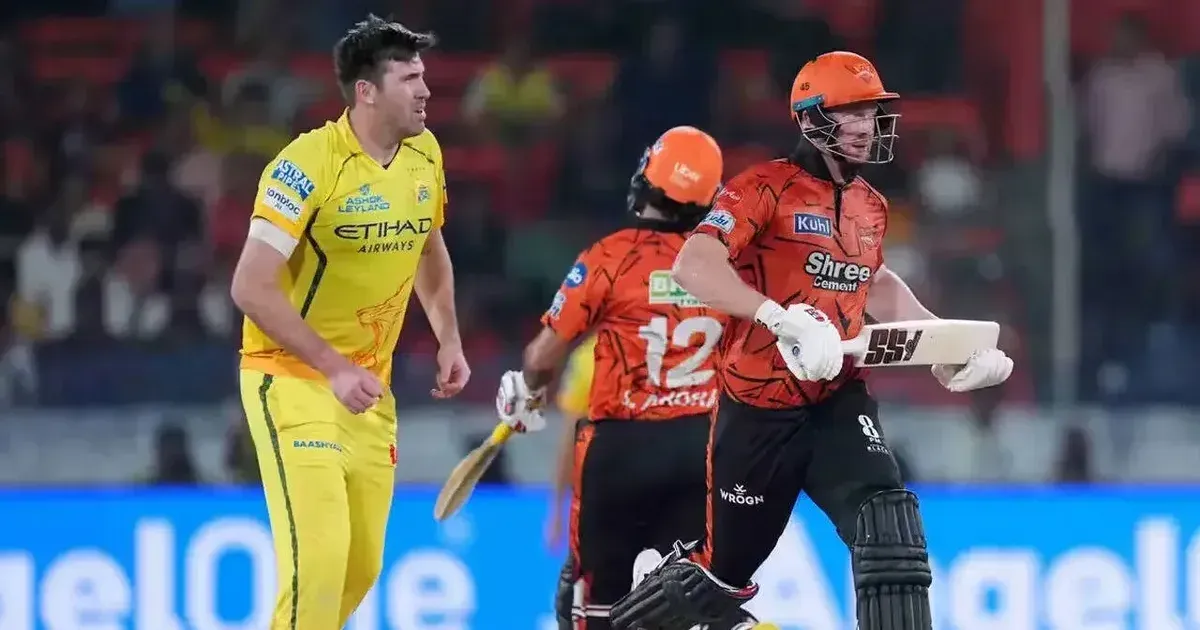
Sunrisers' win over Chennai put Ashwin's criticism of Gaikwad back into the IPL performance debate. R Ashwin publicly critiqued the batting performance of Ruturaj Gaikwad on April 19, 2026, after a difficult loss for the Chennai Super Kings. Technical observers noted that the opening batsman struggled to find rhythm against a disciplined Hyderabad bowling attack. Ashwin, speaking on his digital platform, emphasized that Gaikwad missed an essential opening to stabilize his form during the high-stakes Indian Premier League encounter. Critics have increasingly pointed to the pressure of leadership as a potential factor in the captain’s declining output at the crease.
Gaikwad managed a meager score before falling to a deceptive delivery that exploited his hesitant footwork. Performance data indicates that his scoring rate in the powerplay has dropped sharply compared to previous seasons. Ashwin noted that top-order stability dictates the tempo of the middle overs. Failure to capitalize on the new ball puts undue stress on the middle-order hitters. Sunrisers Hyderabad capitalized on this fragility by using early swing to isolate the Chennai captain.
Ashwin Critiques Gaikwad Batting Struggles
Experience in high-pressure environments usually allows senior players to navigate slumps, yet Gaikwad appears caught between aggression and caution. Ashwin argued that the opportunity against Hyderabad was a clear chance to regain confidence. Instead, the dismissal further solidified concerns regarding his technical approach against left-arm pace. Beyond the immediate statistics, the lack of intent in the early overs forced the rest of the lineup into risky stroke-play. The Sunrisers bowlers exploited these technical gaps with precision.
Leadership transitions in the IPL often bring scrutiny, particularly when the predecessor is a figure as towering as MS Dhoni. Gaikwad assumed the captaincy with high expectations, but his individual contributions with the bat have not kept pace with the requirements of the modern T20 game. Analysts suggest that the burden of tactical decision-making is interfering with his natural stroke-making ability. One-dimensional batting in the first six overs often leads to a stagnant total. Chennai finished their innings well below the par score for the venue.
Internal dynamics within the Chennai dressing room remain under wraps, though the public nature of Ashwin’s commentary adds a layer of external pressure. Ashwin rarely minces words when discussing technical failures in the league. He highlighted that consistent failures at the top of the order create a ripple effect throughout the team hierarchy. The veteran off-spinner suggested that a shift in mindset is necessary if Gaikwad hopes to lead Chennai into the playoffs. Success in this format requires a level of fearlessness that has been absent from the captain’s recent appearances.
Sunrisers Win and Klaasen Strike Rate Philosophy
Heinrich Klaasen became the primary protagonist for Hyderabad, delivering a masterfully paced innings that secured the win. His approach to the game provides a sharp contrast to the rigid methodologies often seen in struggling top orders. While analysts often obsess over high-velocity scoring, Klaasen focused on the requirements of the specific match situation. This victory for Hyderabad moves them up the table and clarifies their middle-order strength.
“I don’t care about strike rate. Adapting to match situations is more important than strike rate,” said Heinrich Klaasen, the Sunrisers Hyderabad batsman.
Situational awareness holds more value in the current T20 landscape than raw data points. Klaasen adjusted his tempo as the pitch slowed down, ensuring that Hyderabad did not lose wickets in clusters. He refused to be baited into reckless shots by the Chennai spinners. Modern metrics frequently prioritize a strike rate of 180, but Klaasen argued that such numbers are meaningless if they lead to a collapse. His mature approach allowed the Sunrisers to chase down the target with balls to spare.
Statistical models often fail to account for the psychological pressure of a run chase. Klaasen’s refusal to prioritize his personal strike rate over the team’s stability proved to be the difference between the two sides. He waited for the loose deliveries and rotated the strike during the tighter spells from the Chennai bowlers. This disciplined performance demonstrated why he is considered one of the most effective middle-order players in the league. Hyderabad’s coaching staff praised his ability to read the game under pressure.
Chennai Super Kings Leadership and Performance
Pressure on the Chennai management is mounting as the mid-season point approaches. Results have been inconsistent, and the lack of a firing opening pair is a recurring theme in their losses. While the bowling unit has performed admirably, the batting collapses have become a structural issue. Management must decide whether to persist with the current order or shuffle the lineup to ease the pressure on Gaikwad. The team continues to be reliant on individual brilliance rather than collective efficiency.
Gaikwad’s captaincy style has been described as calm, but results are the only currency that matters in the IPL. The contrast between his tentative batting and Klaasen’s decisive finish was evident to everyone in attendance. Tactical errors in the field also allowed Hyderabad to find easy boundaries during the middle overs. These minor lapses accumulated into a large deficit by the end of the match. Chennai’s path to the knockout stages is becoming increasingly narrow.
Historical precedents at Chennai suggest a loyalty to established players, but the current slump might force a change in strategy. The franchise has always valued stability over reactionary changes. However, the gap between their performance and the top-tier teams is widening. Ashwin’s critique is a public reflection of the private concerns held by many league observers. The upcoming fixtures will determine if Gaikwad can silence his critics with a meaningful score. Each failure at the top of the order amplifies the noise surrounding his leadership.
Cricket remains a game of fine margins where a single decision can alter the trajectory of a season. Hyderabad took their chances, while Chennai hesitated in key moments. The Sunrisers move forward with a clear template for success in the later stages of the tournament. Chennai must now regroup before their next outing to avoid a total collapse of their campaign. The scoreboard in Hyderabad told a story of two captains moving in opposite directions.
Chennai Loss Tests Batting Leadership
Strike rate obsession is the fool’s gold of modern T20 journalism. While commentators clamor for higher velocities and record-breaking totals, the reality of championship-winning cricket is rooted in the situational intelligence displayed by Heinrich Klaasen. The dismissal of metrics in favor of match awareness is not a regression; it is a sophisticated evolution that exposes the limitations of spreadsheet-driven coaching. Klaasen’s defiance of the strike-rate dogma is a direct challenge to the analytical industry that has sought to quantify the unquantifiable nature of momentum.
Gaikwad is drowning in the shadow of a legacy he did not build.
Leadership at Chennai is more than a tactical role; it is a spiritual inheritance that Gaikwad is currently ill-equipped to manage. The critique from Ashwin goes beyond an observation of form and becomes a diagnostic report on a captain who has lost his identity in the pursuit of administrative perfection. When a player begins to bat like a bureaucrat, the fire that fuels the IPL’s elite performers inevitably dies out. Chennai’s loyalty to the status quo is no longer a virtue. It is a suicide pact.