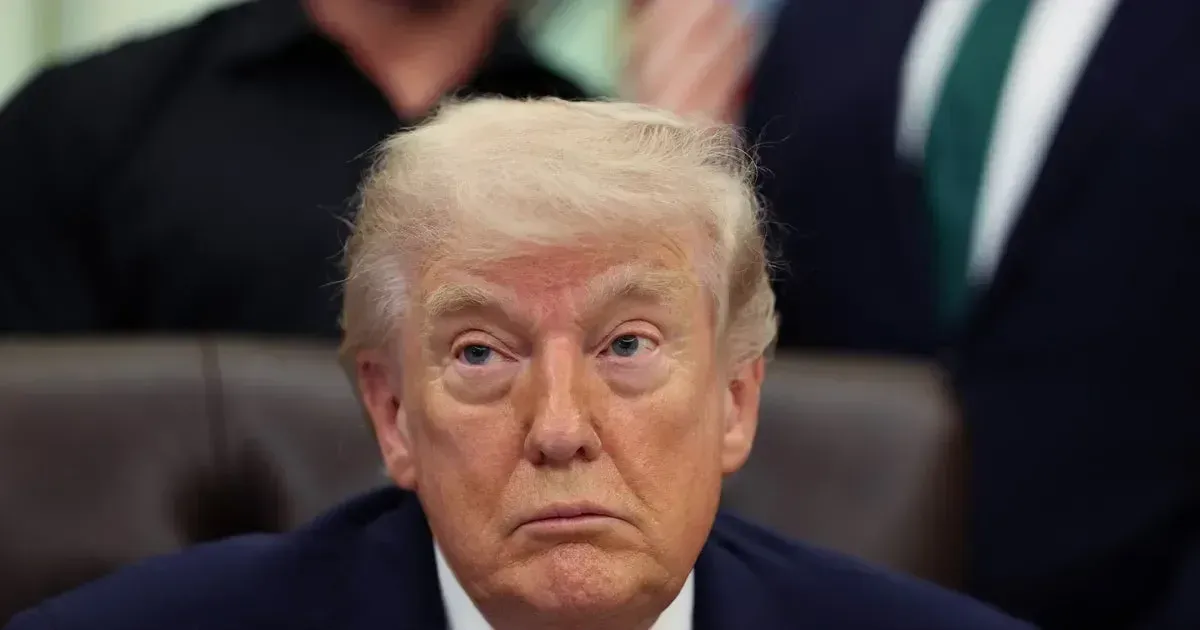
Donald Trump announced that American negotiators will travel to Islamabad to resume peace talks with representatives from the Iranian government. American officials plan to arrive in the Pakistani capital later this week to discuss a potential resolution to the escalating regional conflict. The talks were announced on April 19, 2026. President Trump paired this diplomatic overture with a series of aggressive warnings issued through social media. He accused Tehran of violating an existing ceasefire agreement and signaled a willingness to use overwhelming military force if negotiations fail to produce a signed deal.
Islamabad is the chosen venue for these high-stakes discussions, reflecting a strategic shift in mediation efforts. Pakistan has maintained a delicate diplomatic balance between the United States and Tehran for decades. American negotiators expect to confront a hostile Iranian delegation following reports of renewed violence in the Persian Gulf. Recent maritime intelligence suggests that unidentified vessels targeted commercial shipping interests, which the White House attributes directly to Iranian provocations. These incidents have effectively dismantled the fragile stability achieved in previous months.
Pakistan Prepares for High-stakes Diplomacy
Pakistani officials began securing the diplomatic enclave in Islamabad within hours of the American announcement. This city has historically enabled communication between Western powers and Islamic republics during periods of intense friction. Security forces have established multi-layered cordons around the Ministry of Foreign Affairs and potential meeting sites. Local authorities increased surveillance near international hotels to prevent disruptions from regional proxies. Prime Minister's Office sources indicate that Pakistan intends to act as a neutral facilitator rather than a participant in the core debates.
Negotiations will likely focus on maritime security and the restoration of the 2026 truce protocols. Iranian officials have yet to publicly confirm their attendance, though back-channel communications suggest their presence is probable. American representatives carry a specific list of demands centered on the cessation of drone activities and the withdrawal of fast-attack craft from international shipping lanes. The success of this summit depends entirely on the willingness of the Iranian leadership to accept terms that include rigorous monitoring of their naval assets. Pakistan remains the only regional actor with sufficient leverage over both parties to host such a sensitive gathering.
Escalating Threats Target Iranian Infrastructure
Trump used his Truth Social platform to outline the consequences of a failed negotiation process. He specifically identified civilian and industrial targets as potential objectives for the United States military. The President stated that every power plant and bridge across the Islamic Republic would face destruction if a deal is not finalized. This rhetoric deviates from traditional diplomatic language and targets the core of the Iranian domestic economy. Military analysts suggest that striking the national grid would cause immediate and total internal collapse.
“We’re offering a very fair and reasonable DEAL, and I hope they take it because, if they don’t, the United States is going to knock out every single Power Plant, and every single Bridge, in Iran. NO MORE MR. NICE GUY!”
Pentagon officials have updated strike contingency plans to align with the President's public declarations. These plans involve precision-guided munitions capable of disabling thermal and hydroelectric facilities without necessarily causing high civilian casualties. Iranian energy infrastructure consists of several hundred critical nodes, many of which are located near major urban centers. Destroying these assets would leave 88 million people without reliable electricity or water purification. Bridges across the Karun River and other essential waterways are also on the target list to prevent internal troop movements. Logic suggests the President is using these specific threats to force a quick capitulation from the Iranian Supreme Leader.
Maritime Hostilities in the Strait of Hormuz
Conflict in the Strait of Hormuz prompted this latest round of verbal escalation. Reports from the Washington Post indicate that at least three oil tankers experienced suspicious hull damage while transiting the waterway. American naval intelligence linked these events to limpet mines used by specialized Iranian units. Tehran denies involvement in these attacks and blames regional rivals for attempting to frame the Islamic Revolutionary Guard Corps. The United States Navy increased its presence in the Fifth Fleet area of responsibility to provide escort services for commercial vessels.
Tensions rose further when an American surveillance drone disappeared over international waters near the Omani coast. While Iran claims the aircraft violated its airspace, the Pentagon maintains the drone stayed within the designated flight corridor. This specific disagreement has fueled the President's claim that the Iranian killing machine must end. Economic data shows that insurance premiums for shipping in the Persian Gulf have spiked by 40% since the first ship reported an attack. Global oil markets reacted to the uncertainty with a 6% price increase during early trading sessions. The volatility in the energy market places immense pressure on the upcoming Islamabad summit.
Geopolitical Repercussions of Trump Peace Offers
Global leaders have reacted with caution to the dual nature of the American approach. While Al Jazeera reports that regional powers welcome the prospect of talks, the threat of total infrastructure destruction has alarmed the international community. European allies have urged restraint to avoid a humanitarian catastrophe. By contrast, several Gulf nations expressed support for a firmer stance against what they perceive as Iranian expansionism. The contrast between the peace offers and the threat of total war creates an unpredictable environment for the negotiators.
Iranian domestic media has characterized the American proposal as an ultimatum designed to enable a regime change. Hardline factions within Tehran are reportedly pushing for a total withdrawal from all diplomatic tracks. Despite this internal pressure, the Iranian economy is struggling under the weight of existing sanctions and high inflation. The prospect of losing the national power grid and transportation network poses an existential threat to the current government. Military planners in Tehran have responded by placing their missile batteries on high alert across the southern coastline. Every development leading up to the Islamabad meeting suggests that the margin for error has narrowed sharply.
Power Grid Escalation Risk
Nixon once theorized that an unpredictable leader could coerce adversaries into submission through pure psychological volatility. The current administration is reviving this madman theory with a ferocity that ignores the traditional guardrails of international law. By threatening the literal light and heat of 88 million civilians, the President has abandoned the pretense of surgical military intervention in favor of total national erasure. The threat amounts to a siege conducted through social media and satellite guided bombs. The choice of Pakistan as a venue is equally calculated to force a nuclear armed neighbor to choose a side in a conflict that could easily spill across its own borders.