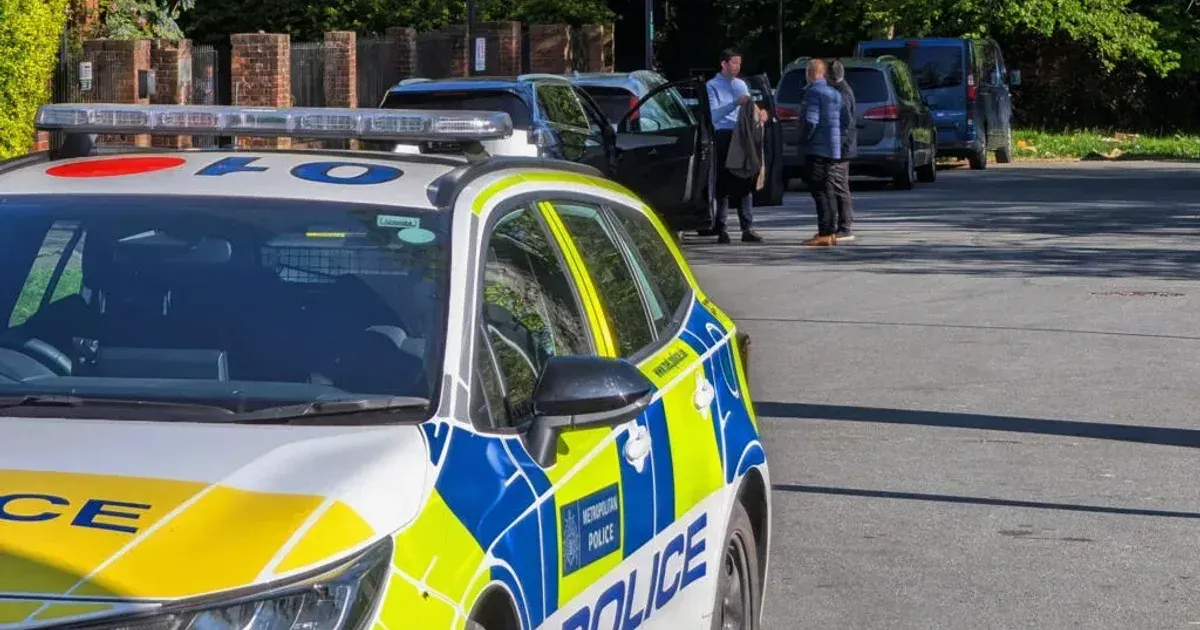
Keir Starmer stated that he felt appalled by a series of arson attacks targeting Jewish sites across Northwest London. Investigators from the Counter Terrorism Command assumed control of the search for suspects during the early morning hours. The latest attack occurred on April 19, 2026. An overnight attack from Saturday to Sunday focused on a local synagogue, marking the third such incident within a span of several days. Detective units began gathering forensic evidence and security footage from the residential streets where the fires occurred. Local residents reported seeing emergency services arriving shortly before midnight to extinguish flames at the entrance of a place of worship.
Police officials confirmed that the intensity of the incidents required the involvement of specialized anti-terror units. This shift in jurisdictional oversight indicates the severity with which Scotland Yard treats the pattern of fire-raising. Patrols increased across London boroughs with high Jewish populations. Officers conducted door-to-door inquiries throughout the morning. Evidence suggests the perpetrators used flammable liquids to spark wooden structures and entryways.
Metropolitan Police commanders held an emergency briefing to address the escalating threats. Intelligence suggests the timing of the attacks coincides with specific religious gatherings. Each incident shared tactical similarities that imply a coordinated effort or a single motivated individual. Forensic teams spent hours analyzing debris for traces of chemical accelerants. Forensic experts recovered charred containers near the perimeter of the most recent scene.
London Police Deploy Counterterrorism Units
Counterterrorism specialists took the lead in the investigation because the pattern of attacks suggests a clear intent to intimidate a specific religious group. Detectives analyzed communication networks for any claims of responsibility or digital signatures. No group has yet stepped forward to claim the actions. Officers examined historical data to find parallels with past domestic extremism. Intelligence analysts are currently screening known radical groups for potential links to these specific fires. Physical security around potential targets has been reinforced with additional mobile surveillance units.
“I am appalled by the spate of arson attacks against Jewish sites in northwest London in recent weeks,” Starmer said.
Community leaders met with police representatives to discuss the immediate safety of congregants. Fear circulated through the neighborhoods of Golders Green and Stamford Hill as news of the third fire spread. Security organizations that monitor antisemitic incidents recorded a surge in reports since the first fire occurred. Volunteer patrols started coordinating with the Met to provide extra eyes on the street during late-night hours. These civilian groups operate under strict guidelines to avoid interfering with official police work.
Arson Attacks Target Northwest London Synagogues
Specific synagogues in the northwest quadrant of the city have reported damage to property and exterior signage. One building sustained severe structural damage to its front hall when a firebomb landed near an antique wooden door. Firefighters arrived within six minutes of the initial alarm to prevent the blaze from reaching the main sanctuary. Nearby residential buildings were evacuated as a precaution during the cooling operations. Building inspectors cleared the site for limited use by Sunday afternoon.
Physical evidence collected from the synagogue indicates the use of crude but effective incendiary devices. Chemical analysis of the residues showed a mixture of common household fuels. Investigators believe these materials were purchased locally to avoid detection. Surveillance footage captured a figure wearing dark clothing near the alleyway moments before the ignition. The resolution of the video has so far prevented a definitive identification of the suspect.
Operational protocols for religious sites now include mandatory bag checks and locked gates during non-service hours. Many institutions have installed upgraded lighting systems to eliminate blind spots in their exterior corridors. These physical barriers provide a first line of defense while the police investigation continues. Local councils have also authorized the installation of temporary CCTV towers at key intersections.
Security Protocols Heighten at Jewish Community Sites
National security agencies are monitoring the situation to determine if the threat extends beyond the capital. Similar sites in Manchester and Leeds received briefings on the London incidents. Authorities cautioned against jumping to conclusions before the forensic report concludes. The lack of a manifesto or digital footprint complicates the motive analysis for the Counter Terrorism Command. Specialists in hate crime investigations are working alongside the arson task force. Every lead is being vetted through the central database at Scotland Yard.
Public transport hubs near the affected sites saw an increased presence of British Transport Police. K-9 units trained in explosives and accelerant detection performed sweeps of several community centers. No secondary devices were found during these searches. The operation remains focused on apprehending the individual or individuals responsible for the initial three fires. Coordination between different police branches has improved the speed of evidence processing.
Pressure on the government grew as members of the opposition demanded more resources for communal protection. Financial grants for security at religious schools and places of worship are under review for immediate expansion. Home Office officials signaled that additional funding could be released within the month. This decision rests on the final assessment of the current threat level by the Joint Terrorism Analysis Centre.
Community Security Pressure
Should the British government continue to rely on reactive condemnation rather than proactive neutralization, these arson attacks will serve as a blueprint for wider domestic instability. The failure of the Counter Terrorism Command to prevent the third attack in as many days exposes a critical vulnerability in the surveillance of high-risk urban sectors. The evidence points to a breakdown in the deterrent capability of Scotland Yard, where the prestige of the unit is currently outmatched by the simple efficacy of a localized arsonist. Starmer may be appalled, but his shock is a poor substitute for the aggressive infiltration of extremist cells. Empty rhetoric from Downing Street provides no shield for the synagogues of Northwest London.
Bureaucratic lethargy often follows such incidents. If the Home Office continues to debate funding cycles while buildings burn, they effectively concede the streets to radicals. The current strategy of increasing patrols is a temporary bandage on a systemic wound. Intelligence services must pivot from broad data collection to targeted human intelligence within the fringes of the city. A failure to catch these perpetrators within the next 72 hours will likely embolden copycat actors. Security is not a matter of feelings or statements. It is a matter of force and foresight.
Weakness invites aggression. If the state cannot protect its most targeted minorities, its social contract is functionally void. The time for briefings has passed. The time for arrests has arrived. The credibility of the Met hangs on a single arrest.