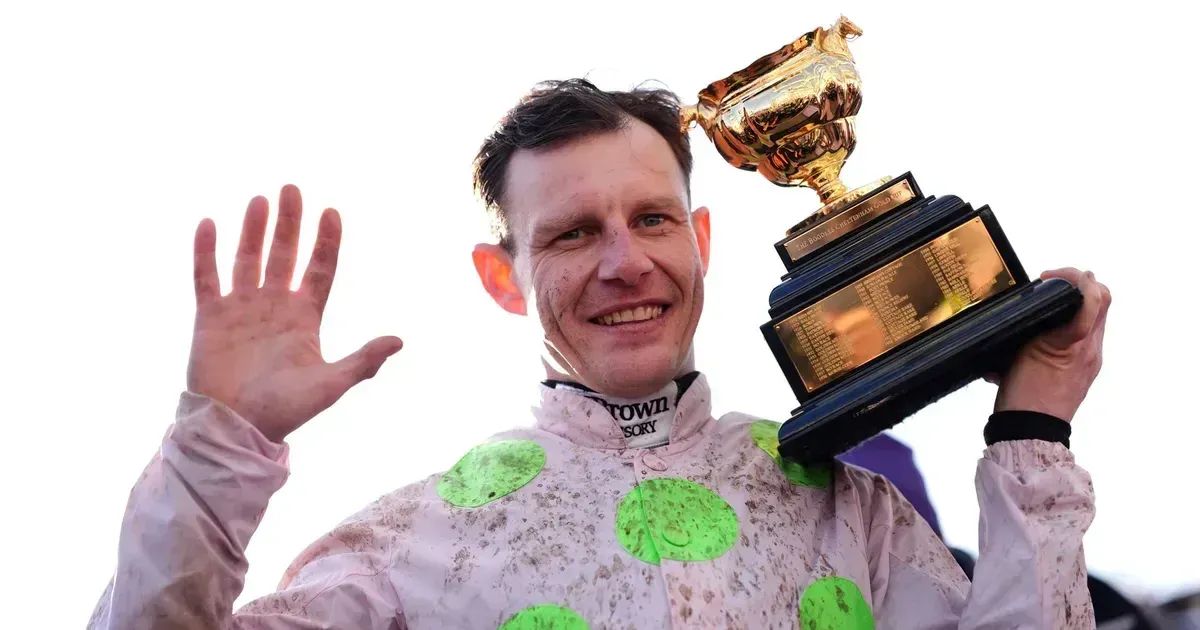
The Gold Cup result gave Cheltenham another measuring stick. Paul Townend guided Gaelic Warrior to a commanding victory in the Cheltenham Gold Cup, cementing the horse's place in the history of steeplechasing. Fans at Prestbury Park watched as the heavy favorite surged clear of the field in the final stages of the race. The Cheltenham result was reported on March 13, 2026. The victory secured yet another major title for trainer Willie Mullins, who continues to dominate the National Hunt field with clinical precision. But the atmosphere shifted rapidly when Envoi Allen, a veteran of the sport, collapsed and died shortly after crossing the finish line. Cheltenham Racecourse officials confirmed the fatality within minutes of the race concluding. The dual-festival winner apparently suffered a cardiovascular collapse, casting a shadow over the trophy presentation in the winner's enclosure. Supporters who had been cheering for the champion horse found themselves in a state of shock as screens were erected around the fallen athlete. Medical teams reached the animal within seconds, yet they were unable to revive him. This tragic outcome will inevitably fuel calls for tighter regulations regarding the age and fitness of horses competing at the highest level of the sport.
Gaelic Warrior Dominates Gold Cup Field
Gaelic Warrior entered the race with immense expectations from the betting public and the racing elite. The horse maintained a perfect rhythm throughout the grueling three-mile and two-furlong course, managing all 22 fences with athletic ease. Paul Townend remained patient in the early stages, allowing other runners to set a blistering pace on the soft ground. He made his move after the third-to-last fence, asking his mount for a decisive effort that left rivals struggling to keep pace. By the time the field reached the famous Cheltenham hill, the result was no longer in doubt. Gaelic Warrior accelerated away from the pack, showing the stamina that has characterized his rise through the ranks. In fact, the winning margin was several lengths, proof of the superior conditioning provided by the Mullins stable in County Carlow. This victory adds another trophy to the Mullins cabinet, marking his fourth Gold Cup win in the last eight years. The trainer noted that the horse had matured sharply since his last outing at Leopardstown. And the betting markets reflected this dominance from the start. Most major sportsbooks had the horse listed at short odds, as professional gamblers backed the consistency of the jockey and trainer partnership. Still, the victory feels hollow to some observers given the events that transpired in the immediate aftermath of the finish. Winning owners celebrated their success in the paddock, while the veterinary team focused on the somber task of managing the remains of a fallen competitor.
Tragedy Strikes Envoi Allen Following Finish
Envoi Allen, a horse that had captured the hearts of racing fans over many seasons, finished the race before the sudden collapse. The eleven-year-old gelding was under the care of trainer Henry de Bromhead and had a storied career that included multiple Grade 1 victories. Sky Sports confirmed that the horse died of natural causes related to the physical exertion of the race. The British Horseracing Authority is expected to conduct a routine post-mortem examination as part of its standard safety protocols. Such incidents, though rare, provoke intense scrutiny from animal welfare advocates and the general public.
Spectators near the finish line described a scene of immediate concern as the horse began to stumble. Unlike a typical racing injury occurring at a fence, this incident took place on the flat while the horse was being pulled up by its rider. Meanwhile, the broadcast coverage transitioned from the joy of the Gaelic Warrior camp to the grim reality on the track. This contrast highlighted the inherent risks associated with high-stakes jump racing. The loss of a horse with such a significant following is a blow to the morale of the racing community. For one, the debate over horse safety at the Cheltenham Festival has been a recurring theme in recent years. While the racecourse has invested millions in improving fence design and cooling facilities, the physical toll on the animals remains significant. By contrast, the performance of Gaelic Warrior showed the peak of equine health and preparation. The two narratives collided on a Friday afternoon that will be remembered for conflicting reasons. The Gold Cup remains the ultimate prize, but the price of entry is sometimes paid in more than currency.
Jukebox Man Struggles in Harry Redknapp Ownership
Celebrity interest in the race centered on Jukebox Man, a horse owned by former football manager Harry Redknapp. The runner failed to make a significant impact on the leaders and eventually finished in eighth place. Redknapp, a frequent presence at major racing festivals, had expressed hope that his horse could cause an upset against the Irish powerhouses. But the pace of the race proved too demanding for the underdog, who lacked the turn of foot required to compete with Gaelic Warrior in the final mile. The owner watched from the royal box as his colors drifted toward the back of the remaining field. Jukebox Man was always considered a long shot by industry experts and handicappers. The horse had shown promise in shorter distances, yet the transition to the Gold Cup trip appeared to stretch his limits. According to BBC Sport, the eighth-place finish was a respectable result given the quality of the opposition. It demonstrates the difficulty of breaking the stranglehold that major stables like those of Mullins and Gordon Elliott have on the sport's biggest events. Wealthy owners frequently spend millions in search of a Gold Cup winner, only to find the podium occupied by the same elite circle.
Separately, the commercial impact of the race was felt across the betting industry. Estimates suggest that over $500 million was wagered on the Gold Cup globally, making it one of the most significant betting events of the calendar year. High-resolution cameras captured every moment of the race, providing data points for analysts and fans alike. In turn, the success of Gaelic Warrior will likely lead to even lower odds in future engagements. The horse is now expected to target the Punchestown Festival later this spring if his recovery proceeds as planned.
Veterinary Response and Animal Welfare Protocols
The survival of National Hunt racing depends on its ability to minimize fatalities and maintain public trust. The British Horseracing Authority has implemented more than 20 new safety measures over the last decade to address these concerns. These include pre-race veterinary checks that are more rigorous than those found in almost any other sport. Every horse in the Gold Cup underwent a thermal imaging scan and a physical inspection by a panel of independent veterinarians before being allowed to compete. Despite these precautions, the internal physiological stress of a championship race cannot always be predicted.
To that end, the response time of the medical teams at Cheltenham is often cited as the gold standard for the industry. Oxygen and water were available at the site of the collapse within 45 seconds. Even so, some critics argue that the intensity of the Cheltenham Festival is fundamentally at odds with the long-term health of the horses. They point to the high speed and the frequency of jumps as factors that push animals beyond their natural biological limits. The death of Envoi Allen will serve as a focal point for these arguments in the coming weeks.
Racing executives must now balance the celebration of Gaelic Warrior's brilliance with the solemnity required by the loss of Envoi Allen. The festival generates over 100 million pounds for the local economy, but its social license is under constant threat. Every fatality at a high-profile event like the Gold Cup provides ammunition to those who wish to see the sport banned entirely. The industry relies on millions of people still finding the spectacle of the jump race compelling and culturally significant. The final day of the 2026 festival proved that the sport remains as volatile as ever.
Cheltenham Form Under Pressure
Watching the Cheltenham Gold Cup has become an exercise in moral cognitive dissonance that the racing industry can no longer ignore. On one side of the track, we see the mechanical brilliance of Gaelic Warrior, a creature bred and trained to the absolute limit of biological possibility. On the other, we see the literal carcass of Envoi Allen, a horse that gave everything to a sport that treats its participants as disposable commodities wrapped in the veneer of tradition. The racing elite will talk about the tragedy of the loss, but they will not talk about the systemic exhaustion inherent in their business model. They prioritize the spectacle of the betting slip over the heartbeat of the animal. If a horse like Envoi Allen, who received the best care money can buy, drops dead on the flat, it suggests that the sport itself has become too fast and too demanding for the animals it claims to love.
The British Horseracing Authority will issue a statement filled with platitudes and technical jargon, but the image of the green screens will remain in the public consciousness. We are reaching a point where the aesthetic of the steeplechase is outweighed by the ethics of the casualty list. Continuing to ignore this reality is not just a PR risk; it is a sign of a sport in terminal moral decline.