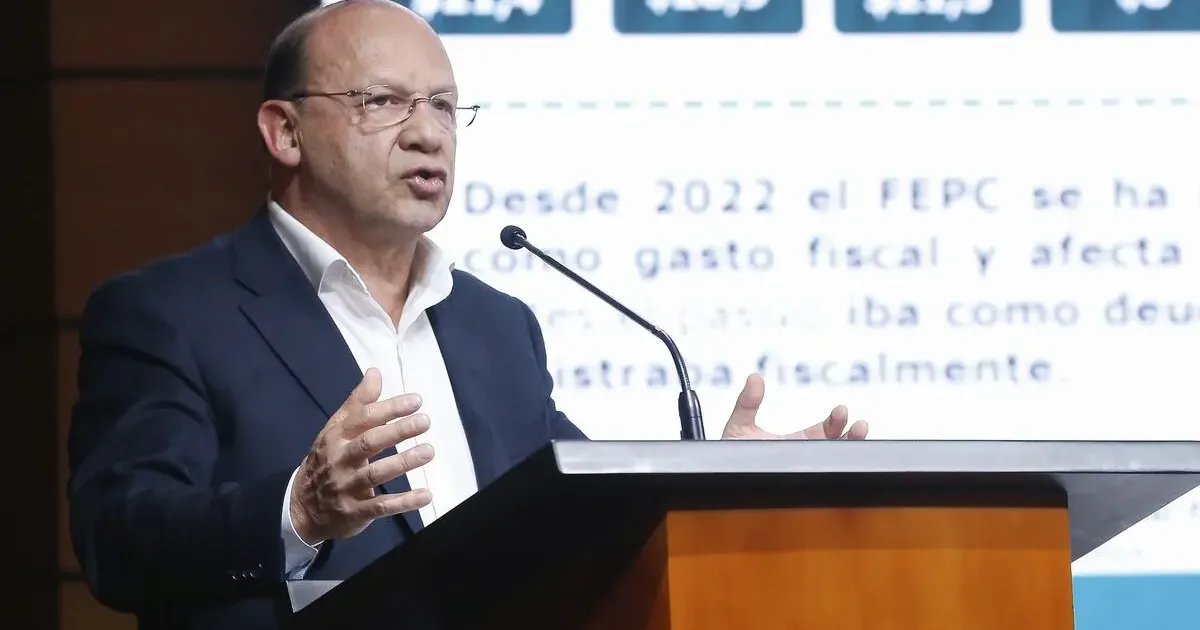
Colombia's March central-bank rupture was not just an awkward meeting. Finance Minister German Avila walked out after Banco de la Republica moved toward a second straight 100-basis-point rate increase, taking the benchmark rate to 11.25%. He then publicly criticized the decision before the bank's formal communication, turning a monetary-policy vote into a public fight over who gets to define the country's economic reality.
The episode mattered because Colombia was already carrying a difficult mix: sticky inflation, expensive credit, fiscal strain, peso sensitivity and a government that wanted looser policy to support growth. A finance minister can disagree with a central bank. What unsettled markets was the signal that disagreement had become institutional rupture.
The Walkout Became the Message
Central-bank boards are designed to contain disagreement. Members argue, vote and then let the institution speak through a formal decision. Avila's walkout broke that discipline. It suggested that the government's representative opposed the rate move and also questioned the legitimacy of the board's policy direction.
The distinction matters for investors. A dissenting vote is normal. A public break can make the bank's reaction function harder to read. Markets want to know how policymakers will respond if inflation rises, expectations drift, the peso weakens or growth slows. The walkout shifted attention from the rate itself to the political pressure around the table.
Inflation Left Little Room for Theater
Avila's argument had political appeal. High rates hurt borrowers, housing, investment and small businesses. President Gustavo Petro had repeatedly criticized tight monetary policy as damaging to production and ordinary households. In a country with visible inequality and fiscal stress, that complaint is not imaginary.
The problem is that inflation credibility is also a household issue. If the bank looks too soft, the peso can weaken, imported prices can rise and expectations can become less anchored. Lost credibility can punish the same workers and families the government says it wants to protect. Monetary restraint is painful, but lost credibility can be more expensive.
Board Function Became a Market Question
After the March rupture, the question was whether the government would keep participating normally in future meetings. Reports in April showed the tension continuing, with debate over whether board quorum and communication could be affected if the finance minister refused to participate. Even when the board can operate legally, the image of dysfunction carries a cost.
Central banks do not need drama. They need credibility, clear timing and predictable explanations. If every rate meeting becomes a test of government-bank relations, households and investors stop listening only to the inflation forecast. They start pricing the political fight.
Villar's Defense Raised the Stakes
Banco de la Republica manager Leonardo Villar defended the bank's constitutional mandate and price-stability role, while government officials accused the bank of favoring financial interests over social needs. The clash turned a technical argument into a public institutional dispute.
Villar's refusal to participate in a government monetary-policy forum later in April showed how far the relationship had deteriorated. The bank was trying to protect its independence from what it saw as political pressure. The government was trying to force a broader debate about employment, investment and social priorities. Both sides claimed the public interest. The market heard conflict.
The Election Shift Changed the Lens
By July, Colombia's political setting had changed again after Abelardo de la Espriella narrowly won the presidential runoff. Bond and currency investors began to price the possibility of a more market-friendly fiscal stance and stronger rhetorical support for central-bank independence. The election result does not erase the March episode. It reframes it as one of the final warnings from the Petro-era policy conflict.
The transition remains contested and politically tense, so markets are not buying certainty. But the earlier walkout showed why investors respond so strongly to institutional signals. Colombia's risk premium is not driven only by inflation numbers. It is also driven by whether fiscal policy, the presidency and the central bank appear capable of operating without open rupture.
Credibility Is the Asset Colombia Cannot Spend Twice
Avila's walkout hurt because it suggested that the government might treat monetary independence as an obstacle rather than a stabilizer. The central bank can make mistakes, and rate decisions should be debated. But if politicians convince markets that price stability is negotiable under pressure, the peso may tighten conditions faster than the bank intended.
The institutional cost is severe. Colombia cannot talk around inflation credibility. If the public sees only painful rates, the government gains political ground by attacking the bank. If investors see the bank under pressure, financing costs and currency risk rise. The country then gets the worst version of both arguments: expensive credit, weaker trust and households still paying for inflation.