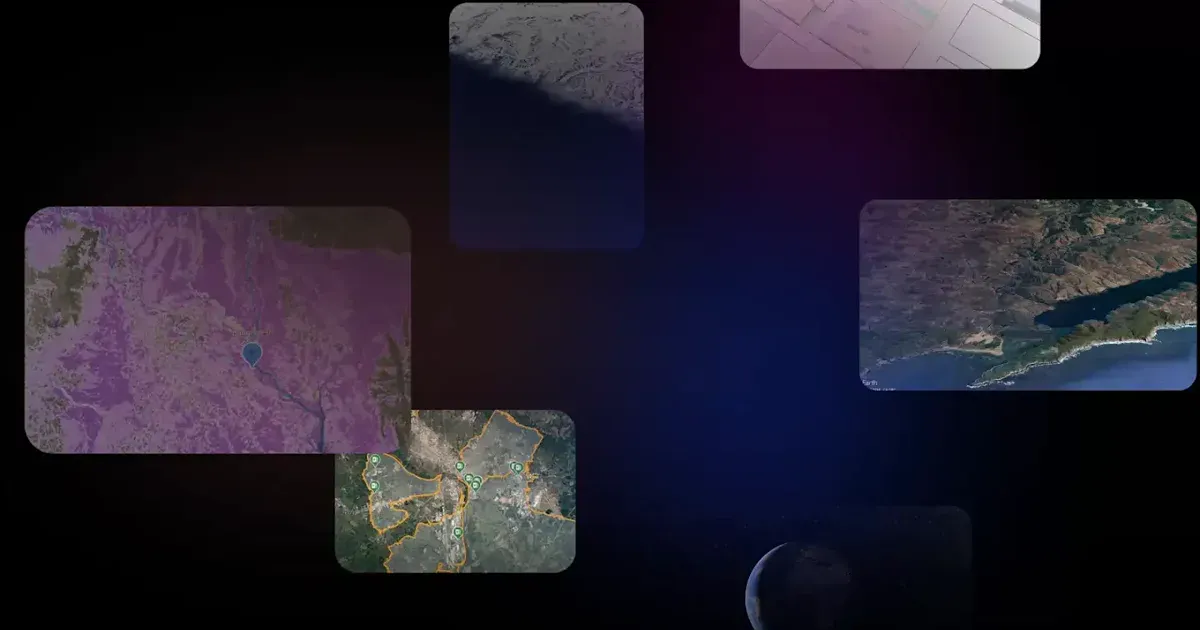
Google has removed a feature that let people rewrite Google Earth satellite views with text prompts. The rollback came on July 31, 2026, less than a day after the integration was announced. Google said it would work on stronger safeguards before allowing image generation inside Earth again.
The feature used Google's Nano Banana image model to edit a selected place rather than merely describe it. A user could begin with recognizable geographic imagery, enter a prompt and export a synthetic version of that scene. Google described the outputs as AI-generated and said they carried a watermark. The result did not replace the public map for other users, but it could leave the product as a screenshot or video. A viewer encountering that later copy would not necessarily see the creation controls that surrounded the original output.
Watermarks Did Not End the Misuse Test
Tests reported by The Verge showed how quickly the tool could produce false visual evidence around sensitive locations. Digital Digging founder Henk van Ess tested the generator at politically sensitive places. One output put refugees along the Mexico border; another depicted impact damage next to a Gaza hospital. He said the system did not refuse or soften the prompts he tried. The examples joined invented people and physical damage to existing borders, cities and hospitals, making location itself part of the false claim.
Engadget described a separate set of demonstrations reported by 404 Media. Joseph Cox created a false blast crater in Los Angeles and inserted protesters outside Google's campus in Mountain View, California. These were not ambiguous fantasy landscapes; they attached invented events to places that viewers could recognize.
Google's first defense centered on SynthID watermarking and verification tools. The company said every generated Earth image carried its digital marker, harmful topics were blocked and a doubtful viewer could use Gemini or Google Lens to check whether Nano Banana had created an image. Google also said it continually updated its protections. That response placed part of the verification burden on the recipient, who would first have to doubt the media and then check it with another Google service.
The tests exposed a gap between attaching a marker and ensuring that audiences notice or recover it. Van Ess reported that a video made from Google Earth output fooled Hive's AI detector. The Verge said this demonstrated how generated media could circulate despite the watermark. Cox separately argued that people often do not stop to authenticate an image before sharing it. Turning an output into video also changes the container in which the visual claim travels, even when the scene began inside a marked generation tool.
A Trusted Map Needs Controls That Travel With the Image
Google acknowledged that people rely on Earth for a dependable view of the world. It said geospatial professionals had found useful applications for the generator, but other people shared screenshots that appeared to break company policies. Google did not identify professional use as the reason for the reversal; it pointed to the screenshots being shared. That combination prompted the rollback while the company develops stronger guardrails.
The company drew an important boundary around the product itself: generated scenes were watermarked, and one person's output never became part of the Earth view shown to everybody else. That kept the shared map from becoming a false record visible to every user. It did not settle what happened after an individual user exported the result, removed it from the interface and posted it elsewhere.
The one-day reversal therefore turns on provenance outside the product, not only generation inside it. A safety check can reject a prompt before an image exists, while a watermark can identify an output afterward. Screenshots and recomposed video put pressure on both layers because the viewer may encounter the claim without the original interface or an obvious reason to inspect it.
Before the feature returns, the practical test will be whether guardrails survive the path from prompt to repost. Google has already identified policy-breaking screenshots as the immediate problem and promised stronger controls. A credible relaunch would need prompt restrictions that hold against sensitive real-world fabrications and provenance that remains useful when media leaves Earth. The brief launch showed that keeping synthetic scenes out of the shared map is necessary, but not sufficient when the product's familiar geography gives exported images an initial appearance of authority.