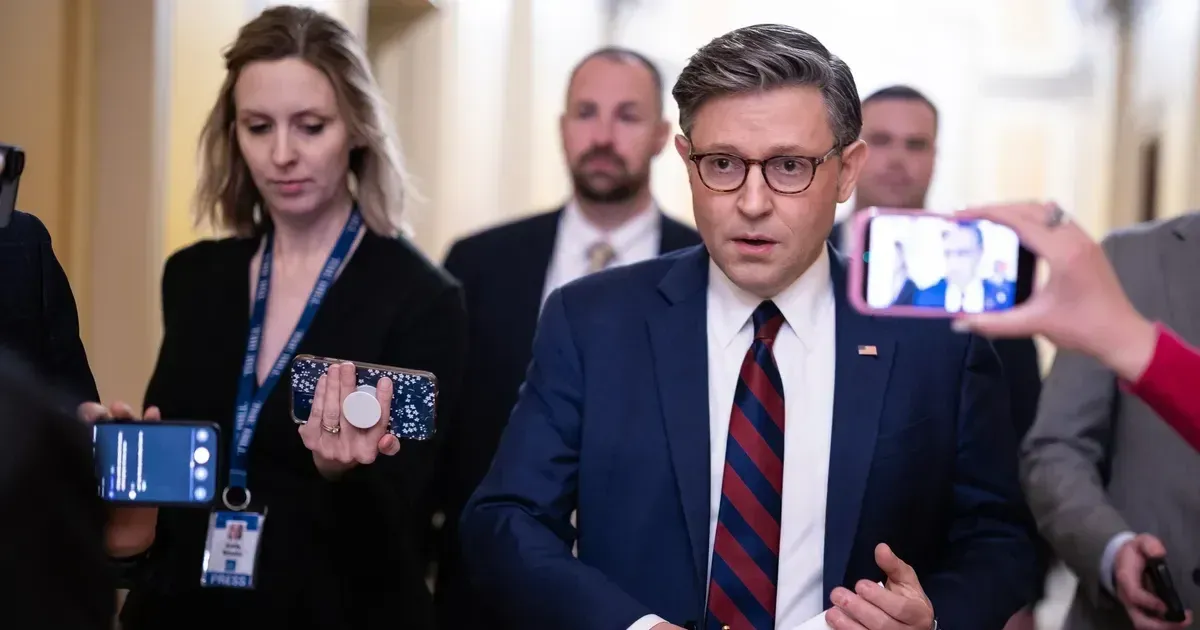
Republican leaders returned to tax-cut messaging while Middle East war risks threatened to undercut their affordability argument. The strategy depends on voters separating promised tax relief from the fuel and inflation pressures already hitting household budgets. Caucus divisions over spending add another complication. GOP members arrived in Washington on April 13, 2026, defending their signature legislation as oil volatility unsettled the pitch. Donald Trump intends to spend several days on the campaign trail to champion what he calls a big, beautiful tax bill. Republican strategists believe focusing on individual savings will unify a fractious caucus facing internal policy disputes. House members planned a Wednesday news conference to present data they claim proves middle-class families are better off under the current code. "My constituents are saving thousands of dollars and they know it. Republicans can and should take credit because the alternative would've been enormous tax hikes under the Democrats had they won the 2024 election," Representative Nicole Malliotakis, a Republican from New York, defended the focus on fiscal policy during a recent interview. Malliotakis dismissed suggestions that foreign entanglements would overshadow economic victories. She stated that her voters prioritize real savings despite the headlines coming out of Tehran. Recent federal data suggests her optimism faces a difficult reality as inflation reaches a two-year peak.
Tax Day Messaging From GOP Leaders
Republican lawmakers returning from a two-week recess face a difficult to-do list involving national security and fiscal deadlines. Party leadership has designated the current week as a showcase for their nine-month-old megabill. They aim to remind voters of lower tax brackets and increased credits before the April filing deadline. Internal polling shared with GOP members indicates that economic anxiety remains the primary concern for suburban voters. This focus serves to shield the party from criticisms regarding social issues or legislative gridlock. Donald Trump is scheduled to join the effort by hosting rallies in several swing states. These events will emphasize the contrast between Republican deregulation and the previous administration's spending habits. Strategists argue that the 2026 midterms will be won or lost on the perception of the American wallet. By tying their identity to tax relief, Republicans hope to maintain control of the House. Malliotakis noted that any deviation from this message could give Democrats an opening to discuss social programs. Internal caucus dynamics complicate this unified front. Hardline conservatives have expressed frustration with the pace of spending cuts, threatening to stall other priority items. Speaker of the House Mike Johnson must manage these internal divisions while keeping the focus on the tax successes. Failure to project a united party could undermine the promotional blitz planned for midweek. Historical trends show that legislative majorities often struggle to maintain discipline during high-stakes election cycles. Internal divisions persist as House Republicans weigh the risks of deeper involvement in the Middle East.
Energy Prices Complicate the Pitch
Spiking energy costs have compromised the Republican narrative of prosperity. Federal data released on Friday indicates that energy prices accounted for the majority of a recent inflation surge. Analysts from major banks suggest that global energy flows may not return to normal levels for several months. Voters in key districts are seeing prices at the pump exceed $4 per gallon in some regions. Rising transportation costs typically lead to higher prices for groceries and consumer goods, further squeezing household budgets. Energy markets have reacted sharply to the fragile cease-fire in the Middle East. Crude oil futures rose sharply following reports of stalled negotiations between regional powers. Investors fear that a wider conflict in the Persian Gulf could disrupt the passage of tankers through the Strait of Hormuz. Such a disruption would likely send global oil prices into triple digits, regardless of domestic policy efforts. Republicans have called for increased domestic drilling to offset these international risks. Efforts to expand domestic energy production have faced regulatory and logistical hurdles. While the GOP tax bill included incentives for traditional energy sectors, the impact on immediate supply is negligible. Economists note that the lead time for new oil production can span years, not weeks. The party remains vulnerable to global shocks that are entirely outside of their control. Malliotakis acknowledged these concerns but maintained that low taxes provide a necessary buffer for struggling families.
Divisions within the GOP extend beyond energy policy to include direct military aid and foreign commitments. Isolationist members of the caucus have questioned the continued financial support for operations in the Middle East. These lawmakers argue that domestic fiscal health should take priority over international security pacts. This perspective clashes with more traditional hawks who believe American leadership is essential for global stability. The lack of consensus creates a muddy legislative environment that interferes with the intended tax-cut focus.
Recent surveys indicate that a growing share of the electorate is weary of foreign conflicts. This shift in public opinion has forced Republican leaders to choose their words carefully. They must balance the need for a strong national defense with the demand for fiscal restraint at home. Some members have proposed cutting non-defense discretionary spending to pay for increased military readiness. The approach has met stiff resistance from Democrats and some moderate Republicans.
Nicole Malliotakis argued that the Iran conflict and tax policy are separate issues. She believes the party can successfully message both a safer nation and a more affordable economy. Other GOP lawmakers are less certain, privately worrying that the optics of war will drown out fiscal talking points. Success in the upcoming elections likely depends on which of these issues dominates the airwaves in October. For now, the leadership is betting that the IRS deadline provides the perfect window to talk about money.
Middle East Risk Moves Into Domestic Policy
Hostilities in the Middle East have moved from a peripheral concern to a central legislative obstacle. Iran continues to exert influence over regional proxies, threatening the stability of critical shipping lanes. The collapse of a potential peace agreement has forced the White House and Congress to consider emergency funding measures. Such measures would increase the national deficit, potentially contradicting Republican calls for fiscal responsibility. Lawmakers must decide if the cost of containment is worth the risk of further inflation.
Geopolitical analysts suggest that the current stalemate could persist for the foreseeable future. There is scant evidence that either side is prepared to make the concessions necessary for a lasting peace. The uncertainty keeps the risk premium high in commodity markets. Without a resolution, the GOP faces an uphill battle in convincing voters that the economy has fully recovered. The persistence of high prices remains a serious liability for any incumbent party.
Republican leaders plan to move forward with their news conference on Wednesday despite the darkening global outlook. They will highlight specific examples of families who saved money under the new code. By using human stories, they hope to bypass the abstract data of inflation and energy costs. Whether this strategy works depends on the severity of the next price hike at the gas station. Nicole Malliotakis remains the most vocal proponent of this pocketbook-first approach.
Tax Politics Under War Pressure
Republican strategy heading into the April 15 deadline is a desperate attempt to ignore the smoke coming from the Middle East. Focusing on nine-month-old tax cuts while gas prices climb toward five dollars a gallon is not a policy; it is a distraction technique. History demonstrates that voters do not remember the tax refund they received in February when they are paying for a hundred-dollar tank of gas in April. The GOP is essentially trying to sell a house while the neighborhood is on fire.
Delusional optimism has replaced pragmatism in the halls of the Capitol. Nicole Malliotakis and her colleagues are betting that their base will ignore the direct causality between Middle East instability and their shrinking disposable income. The bet assumes a level of voter amnesia that rarely exists in a high-inflation environment. If Iran decides to close the Strait of Hormuz, no amount of tax credits will save the Republican majority from an angry electorate.
The current legislative agenda is an exercise in misplaced priorities. Instead of forging a coherent energy security policy that addresses the volatility of the Persian Gulf, the leadership is holding news conferences to pat themselves on the back for yesterday's wins. If the GOP cannot find a way to lower energy costs, their tax bill will be remembered as a footnote in a larger economic retreat. The party must pivot or perish.