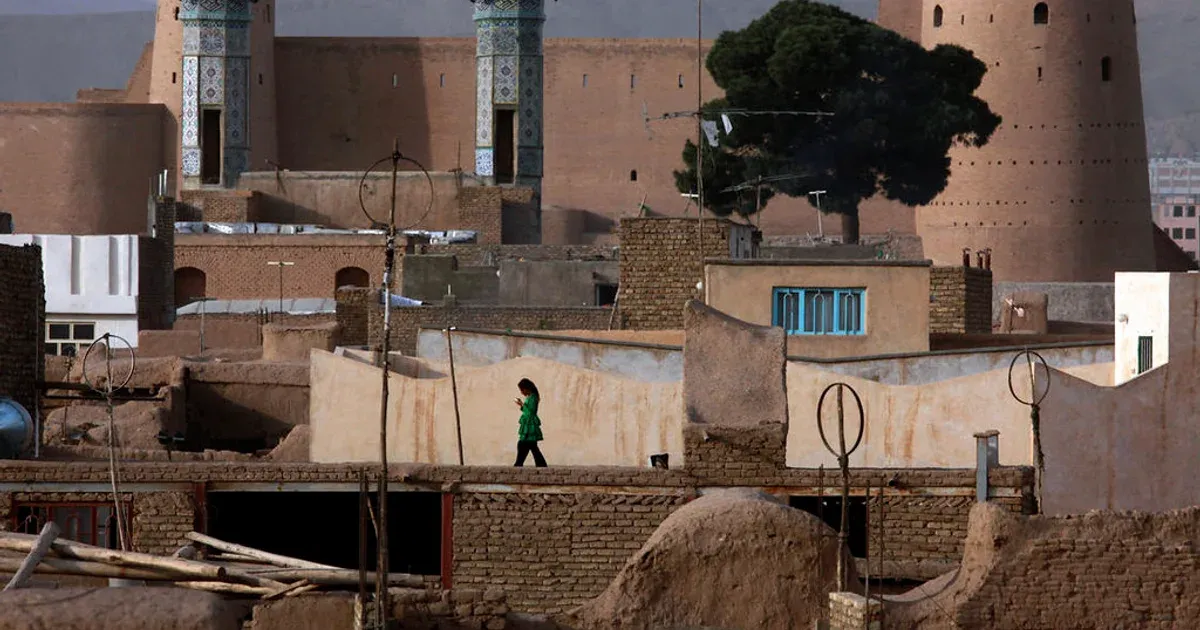
Witnesses reported that the victims had gathered for a traditional Friday outing when the assault began in a rural area of western Afghanistan. Violence of this nature frequently targets social gatherings to maximize psychological impact on local populations. Emergency responders reached the site shortly after the shooting, though the attackers had already fled into the rugged terrain surrounding the village. Local officials confirmed casualties near Herat on April 11, 2026, after the attack.
Reports from the regional security office indicate that the four victims died instantly from gunshot wounds. Medical personnel at the Herat Regional Hospital noted that several others sustained injuries during the chaotic scramble for safety. Security cordons now surround Deh Mehri as investigators search for forensic evidence or witnesses who can identify the perpetrators. No group has claimed responsibility for the bloodshed in the immediate aftermath of the event. Regional authorities typically attribute such targeted violence to splinter cells or insurgent groups operating outside the capital.
Herat is a critical economic hub due to its proximity to the Iranian border and its historically stable environment. Disruptions in this province often signal a broader deterioration in the security apparatus established by the central government. Experts who monitor Afghan internal affairs observe that rural districts remain vulnerable to mobile hit-and-overtake squads. Deh Mehri, situated away from the primary urban center, offers little in the way of permanent police presence. This vulnerability allows armed factions to execute swift strikes and retreat before reinforcements can deploy from Herat city.
Herat Province Faces Resurgent Rural Violence
Violence in western Afghanistan has evolved from large-scale battles to precise, high-impact assassinations of civilians. Local residents often bear the brunt of these shifts in tactics. Friday picnics represent an essential cultural outlet for families seeking reprieve from the economic pressures of daily life. Targeting these specific moments of leisure is a calculated tactic designed to demonstrate that the current administration cannot guarantee public safety even in moments of rest. Security officials in the province have faced increasing criticism for their inability to secure popular recreation zones.
Insurgent groups like ISIS-K have previously used similar methods to destabilize the region. While the Taliban administration claims to have suppressed the majority of extremist cells, the reality on the ground in places like Deh Mehri suggests otherwise. Intelligence reports frequently mention the presence of hideouts in the mountains that border Herat and Ghor provinces. These corridors enable the movement of weapons and fighters who strike at soft targets. Every successful attack emboldens these factions to expand their reach further into the administrative heart of the province.
Investigators are currently looking into whether the victims held any administrative or social positions that might have made them targets. Often, such shootings are not random but aimed at individuals perceived as being aligned with the state. Retaliatory violence between local tribes or families is another possibility that the police are exploring. Personal vendettas occasionally masquerade as insurgent activity in regions where the rule of law is inconsistently applied. Proving the motive requires a level of forensic expertise that is currently in short supply within the provincial police force.
Investigative Patterns in Deh Mehri Attack
Ballistic evidence recovered from the scene suggests the use of automatic rifles, a common feature in regional skirmishes. Officers collected several spent casings near the picnic site, which will undergo analysis in Kabul. Cooperation between local villagers and the security forces is essential for identifying the shooters. Fear of reprisal often prevents residents from speaking openly about armed groups moving through their territory. Silence becomes a survival mechanism in districts where the government presence is transitory at best.
The security situation in the outskirts of Herat requires immediate reinforcement to prevent these nomadic cells from operating with total impunity against our citizens.
A spokesperson for the Herat provincial governor issued that statement via an official Telegram channel late on April 10, 2026. Official rhetoric frequently focuses on the need for community vigilance and increased checkpoints along major thoroughfares. Checkpoints, however, do little to deter attackers who move through mountain passes and secondary dirt roads. The geography of the region favors those who are familiar with the bypasses and hidden valleys. Success in these investigations depends entirely on the speed of the initial response and the quality of human intelligence. Funding for provincial security has remained stagnant over the last fiscal quarter, affecting the mobility of patrol units. Vehicles often lack the fuel or maintenance required for long-distance deployments into the rural hinterlands. This logistical shortfall directly impacts the safety of villages like Deh Mehri. Without regular patrols, these areas become vacuum zones where local commanders or extremist groups exert their own forms of authority. The central government in Kabul has promised additional resources, but delivery remains slow and bureaucratic.
Security Gaps Persist in Western Afghanistan
Border security remains a secondary concern when compared to the threat of internal insurgency. Porous boundaries between provinces allow militants to shift their base of operations whenever pressure increases in a specific sector. Western Afghanistan has historically been a gateway for both trade and conflict. The current administration has struggled to balance the needs of the urban merchant class with the volatility of the agrarian workforce. Economic disparity often fuels the recruitment efforts of groups looking for disillusioned young men to join their ranks.
Stability in Herat is a requirement for any form of national recovery. Foreign investors and humanitarian agencies monitor the security climate of this province as an indicator for the rest of the country. Repeated failures to protect civilians at picnic spots or mosques undermine the narrative of a pacified nation. International observers note that the frequency of these small-scale attacks has increased by 15 percent over the last twelve months. This trend indicates a persistent and organized effort to challenge the monopoly on force held by the state. Civilian casualties continue to climb as these localized conflicts intensify. Data from independent monitors suggests that rural violence accounts for nearly 60 percent of all security-related deaths in the province. Most victims are men of working age, which places an additional burden on the local economy and social support systems. Families in Deh Mehri are now left to manage the aftermath of a tragedy that has no clear resolution or perpetrator. Grief in these communities frequently turns into resentment against the authorities who failed to protect them.