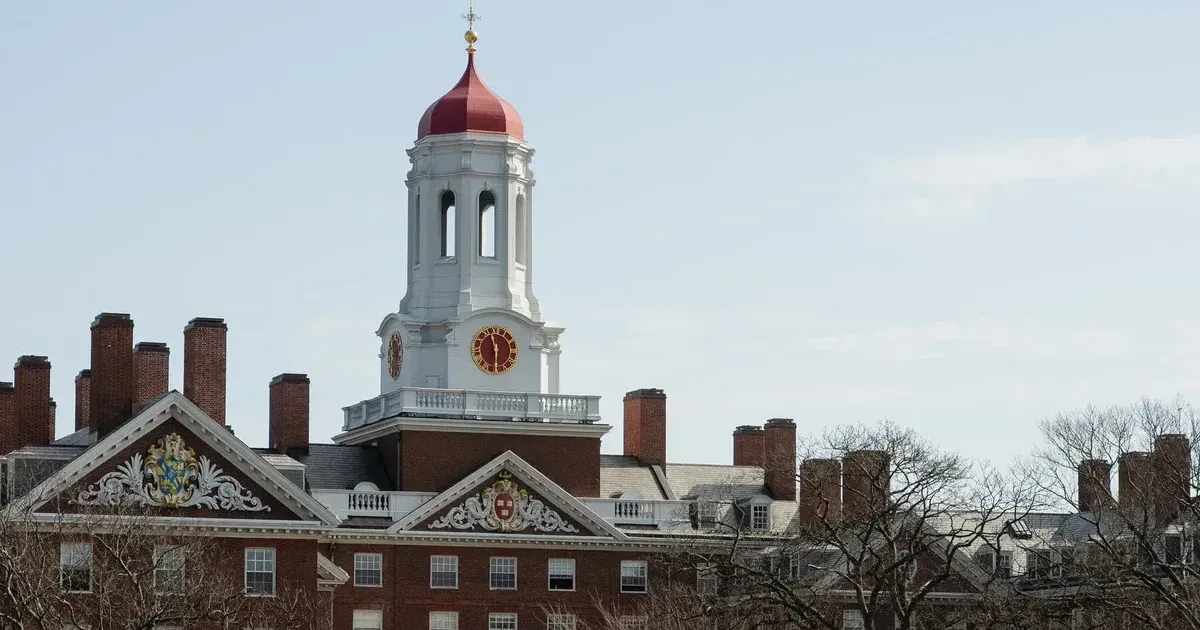
Harvard University is trying to narrow a federal antisemitism lawsuit before it reaches deeper discovery. The school moved on April 13, 2026, to dismiss the case, arguing that the claims duplicate litigation it won in 2025. The Justice Department says Harvard failed to respond adequately to campus antisemitism under Title VI. Donald Trump and his administration have prioritized civil rights investigations into elite universities since taking office, focusing heavily on Title VI compliance. Federal prosecutors contend that Harvard failed to protect Jewish students from a hostile environment, a claim the university denies. Legal filings submitted to the U.S. District Court in Massachusetts describe the government's lawsuit as an attempt to relitigate issues that have already reached a final judicial conclusion. Attorneys representing the university maintain that the facts have not changed since the previous court victory. Harvard won a similar case in 2025, where a federal judge determined the administration's response to campus unrest met the legal threshold for institutional conduct. University officials believe that moving the current case to that same judge will prevent conflicting rulings on the same set of circumstances.
Harvard Seeks a Procedural Advantage
Legal maneuvers centered on the "related cases" rule dominated the proceedings on Monday. Local court rules in Massachusetts allow for the consolidation of cases that share a common core of facts or legal questions. Harvard claims the new Department of Justice lawsuit is nearly identical to the private litigation it defeated just months ago. By requesting the same judge, Harvard seeks to leverage a favorable precedent that recognized its internal disciplinary processes as sufficient under federal law. Critics of the university view this move as a procedural attempt to avoid a fresh perspective on a sensitive issue. Justice Department officials, however, argue that their federal investigation uncovered distinct evidence not present in the earlier private lawsuit. Prosecutors claim their oversight role grants them broader standing to challenge university policies than individual student litigants. The government maintains that the university's previous win does not immunize it against federal enforcement actions under Title VI of the Civil Rights Act of 1964.
"Harvard has already litigated these issues to a final judgment in its favor, and the government's attempt to reopen a settled matter through a new complaint ignores the principles of judicial finality," the university legal team stated in the April 13 filing.
Federal judges rarely grant transfers solely based on a defendant's preference, yet the overlaps here are documented. Harvard pointed to specific paragraphs in the new federal complaint that mirror language used in the 2025 case. If the motion to transfer fails, a new judge will examine the evidence independently, potentially leading to a different interpretation of the university's obligations to its students.
Title VI Enforcement Pressure
Title VI prohibits discrimination on the basis of race, color, or national origin in programs receiving federal financial assistance. Harvard receives approximately $1.1 billion in federal research funding annually, making it highly vulnerable to Department of Education and Department of Justice sanctions. Donald Trump has directed federal agencies to use this financial leverage to force changes in university governance. The current lawsuit represents one of the most aggressive uses of Title VI in the history of the Department of Justice. The Trump administration seeks billions in the ongoing Harvard lawsuit as part of broader federal financial enforcement efforts. Specific allegations in the complaint involve the university's failure to discipline students who participated in disruptive protests. Federal investigators claim that the lack of rigorous enforcement created an atmosphere where Jewish students felt physically unsafe. Harvard maintains that its disciplinary actions were consistent with its free speech policies and internal regulations. The school argued that the federal government could not dictate the specific outcome of individual disciplinary hearings without infringing on academic freedom. Compliance officers at other Ivy League institutions are monitoring the case closely. A ruling against Harvard could set a standard that requires universities to adopt more punitive measures against protesters to remain under federal law. Harvard asserts that it has already implemented several recommendations from its task force on antisemitism, which it argues fulfill its legal obligations. The government describes these efforts as superficial and insufficient to address the systemic nature of the problem.
Prior litigation now shapes how the court may view the case.
Documents from the 2025 case show that the court focused on whether Harvard's response was "clearly unreasonable" given the known circumstances. The judge in that matter found that while the campus environment was tense, the university took active steps to reduce harassment. Harvard University now relies on that finding to argue that the federal government is overreaching. The university claims that the Department of Justice is essentially asking the court to second-guess a settled legal determination.
Federal prosecutors have introduced new witness statements from the 2025-2026 academic year to differentiate their case. They argue that the university's failure to adjust its policies after the initial litigation proves a pattern of willful negligence. This new evidence includes internal emails from Harvard administrators discussing the optics of disciplining certain student groups. The government suggests these emails prove that political considerations, rather than safety or law, guided the university's decision-making process.
Harvard's defense team characterized these emails as privileged communications regarding administrative strategy. They argue that the presence of new evidence does not change the underlying legal theory, which they believe was already debunked. The university's motion to dismiss hinges on the idea that a federal agency cannot simply re-file a case until it finds a judge who agrees with its political objectives.
Academic Freedom and Compliance
University leaders argue that the Trump administration is using the legal system to settle political scores with elite academia. They contend that the Department of Justice's interpretation of Title VI would effectively end student activism on campus. If universities are forced to expel every student who uses controversial rhetoric, the traditional role of the university as a space for open debate will vanish. Harvard's legal filings emphasize that the school must balance the rights of all students, not just those favored by the current administration.
Government lawyers counter that academic freedom is not a license to allow harassment. They argue that the university's inaction emboldened certain groups to target Jewish students specifically. The Department of Justice seeks a court order that would require Harvard to appoint an independent monitor to oversee its disciplinary proceedings. Harvard views this as a first-ever intrusion into university autonomy.
The court will likely schedule a hearing on the motion to transfer by the end of next month. Until then, the university stays in a defensive posture, managing both the litigation and the public relations fallout. $1.1 billion in federal support is at stake, alongside the school's reputation for providing a safe and inclusive environment. The outcome of this motion will determine the pace and direction of the most meaningful legal challenge Harvard has faced in decades.
Federal Funding and Campus Speech
Harvard's attempt to steer this case toward a friendly judge is a calculated admission of legal vulnerability. While the university masks its maneuver in the language of "judicial economy," the reality is far more cynical. The institution is terrified of a fresh set of eyes reviewing its internal communications and disciplinary failures. By clinging to the 2025 ruling, Harvard seeks to freeze the legal landscape in a moment when it still held the advantage.
The Trump administration, meanwhile, is effectively turning Title VI into a tool for regime change within the ivory tower. This is no longer about the subtle protection of student rights; it is a full-scale assault on the administrative state of higher education. If the Department of Justice succeeds in placing a monitor at Harvard, the precedent will essentially nationalize the disciplinary codes of private universities. Harvard's autonomy is the actual target of this litigation.
An institution cannot stay independent when its survival depends on the whims of the federal prosecutor's office. Harvard claims its battle is already won, but the government's relentless pursuit suggests the war has only just begun. The legal proceduralism on display here is merely the opening skirmish in a campaign to redefine the limits of academic freedom in the United States. Harvard's defeat is inevitable if it continues to rely on technicalities instead of addressing the core failures of its campus culture.