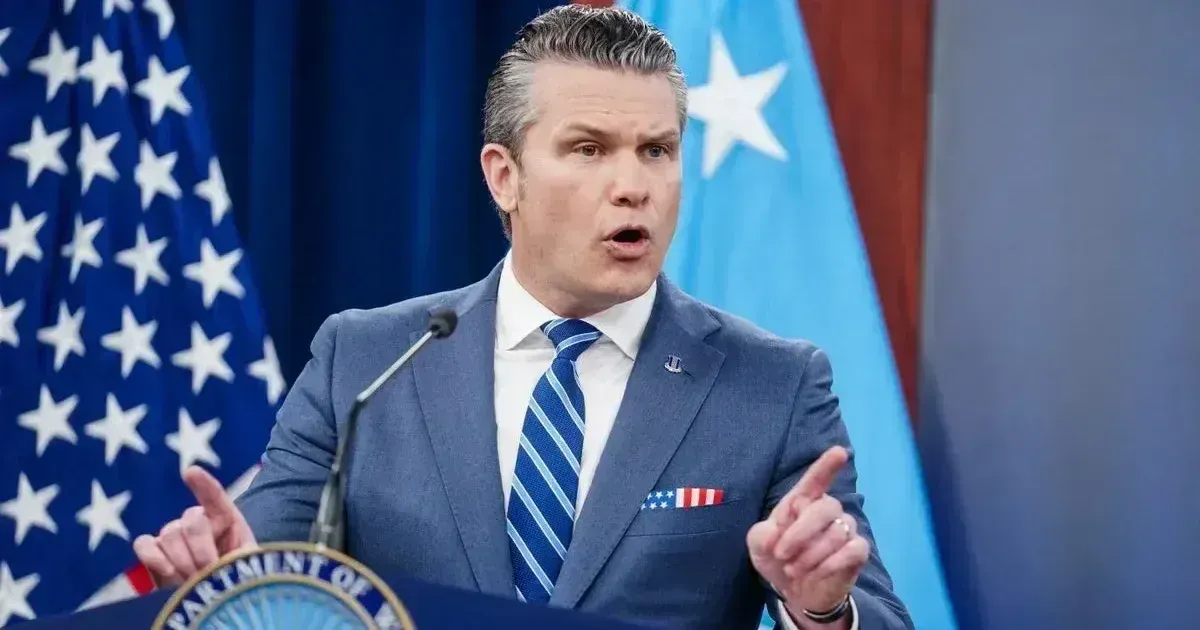
The Hormuz dispute has moved from diplomatic pressure to competing claims about control. Hegseth is trying to present the US position as restraint rather than retreat. Defense Secretary Pete Hegseth said the Iran ceasefire was not over even after U.S. and Iranian forces exchanged fire around the Strait of Hormuz. On May 5, 2026, Hegseth framed the U.S. operation to guide commercial vessels through the waterway as separate from the broader ceasefire with Tehran. The denial matters because allies and rivals are watching whether Washington still intends to enforce shipping access. If the statement sounds defensive, Iran can claim political momentum even without changing the military balance.
The Pentagon said the mission, known as Project Freedom, is meant to reopen one of the world's most important shipping corridors after weeks of stalled traffic and military pressure. Hegseth described a U.S. defensive umbrella over the strait, using the phrase "red, white and blue dome" to describe destroyers, aircraft, drones and surveillance assets protecting peaceful commercial vessels.
The message was deliberately narrow. Hegseth said Washington was not seeking a fight with Iran, but he warned that U.S. forces would respond if American or international commercial traffic came under attack. That posture leaves the ceasefire officially intact while allowing the Navy to use force during the Hormuz mission.
Ceasefire Line Remains Unclear
Reporters pressed Hegseth on whether the exchange of fire meant the ceasefire had effectively collapsed. He said it had not, calling the operation a distinct project. He also said President Donald Trump would ultimately decide whether a future escalation crossed the threshold into a ceasefire violation.
That answer leaves a major ambiguity. If missiles, drones or small boats are used against U.S. assets during a shipping escort, the Pentagon can describe its response as defensive. Iran can describe the same event as a violation or provocation. The legal and diplomatic line between maritime protection and renewed war remains unsettled.
Shipping Signal
The ambiguity is not accidental. Washington needs room to respond to attacks without declaring the ceasefire dead, while Tehran benefits from challenging the operation without formally abandoning the truce. That creates a dangerous middle zone where both sides can claim restraint while still using force.
For the Pentagon, that middle zone is also a messaging problem. Hegseth can insist that the United States is not capitulating, but the credibility of that statement will depend on what commanders do if a vessel is threatened during the mission. The first confrontation at sea will test whether the policy is a narrow rescue operation or the opening stage of a longer deterrence campaign.
Hegseth also rejected suggestions that the United States had capitulated on its demands. The point was political as much as operational. Washington wants to show that reopening the strait is not a concession to Iran, while also telling allies that the current U.S. role will not be permanent.
Temporary Mission, Permanent Stakes
Hegseth said the U.S. mission is intended to be temporary and that other nations will need to take responsibility for securing shipping. That is a practical challenge. Countries that depend on Gulf energy have a direct interest in open sea lanes, but committing naval assets to a live standoff with Iran carries serious risk.
Iranian officials and state-linked media have described the U.S. presence as an intrusion into regional waters. U.S. officials describe the mission as protection for international commerce. Those competing narratives matter because they shape how each side justifies the next move if another exchange occurs.
Shipping companies are watching the distinction closely. A formal ceasefire can reduce the risk of wider war, but commercial operators care about the practical ability to move vessels without missile, drone or small-boat threats. If insurers and shipowners do not believe the corridor is safe, the diplomatic label will matter less than the operational reality.
That is why Hegseth's temporary-mission language matters. A short U.S. escort push can open a window for trapped vessels, but a durable reopening requires a broader arrangement that convinces commercial operators, allied navies and regional governments that traffic will not be exposed again the moment U.S. ships pull back.
The political risk is that both audiences can read the same mission differently. Supporters can see resolve because U.S. warships are moving toward the strait. Critics can see a concession because the operation avoids broader retaliation. Hegseth's denial is therefore less a closing argument than an attempt to hold the policy line until shipping movement proves whether it works.
Hormuz Escorts Could Preserve the Truce or Normalize Armed Encounters
The Hormuz standoff is now a test of whether the United States can turn a tactical security push into a broader maritime framework. Destroyers and aircraft can protect a convoy, but they cannot by themselves create a durable political settlement over who guarantees passage through the strait.
The immediate risk is that both sides keep the ceasefire language alive while treating Hormuz as a separate arena for pressure. That may prevent a formal collapse of the truce, but it also normalizes armed encounters around commercial shipping. The longer that pattern continues, the harder it becomes to separate defensive escort operations from renewed military escalation.
For global markets, the question is not whether Hegseth can describe the mission clearly from the Pentagon podium. It is whether ships actually move, allies join the burden and Iran decides the cost of challenging the operation is too high. Until those conditions are met, the ceasefire remains politically alive but operationally fragile.