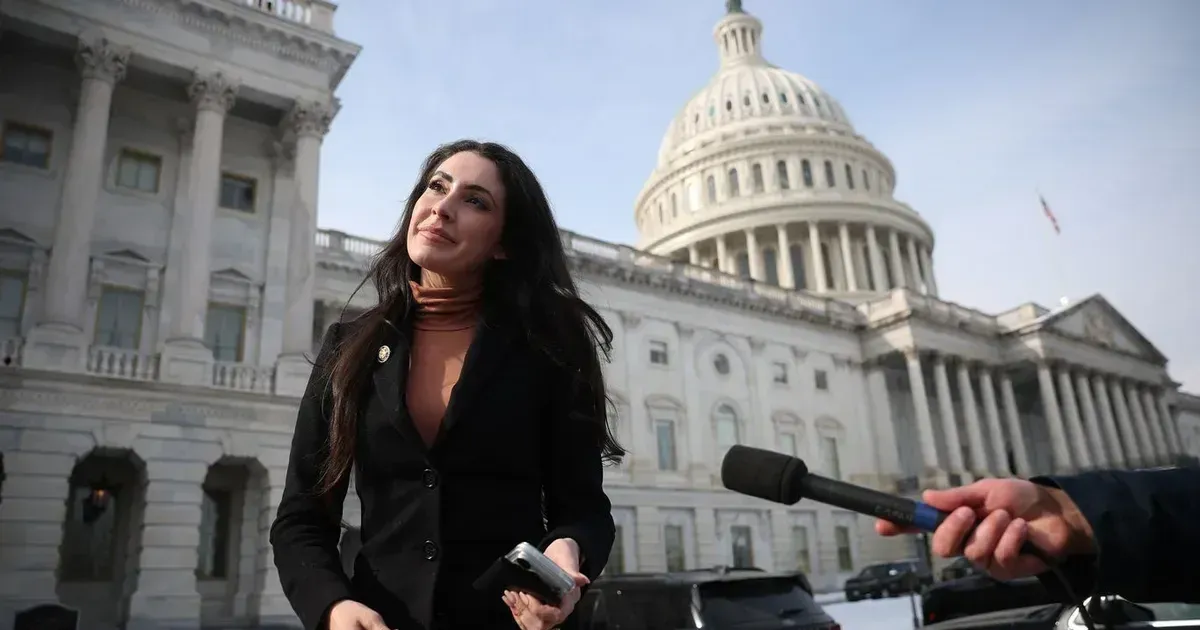
Speaker Mike Johnson faced a widening insurrection on Wednesday as a core group of hardline conservatives paralyzed the lower chamber to demand immediate Senate action on the SAVE America Act. This tactical maneuver has effectively stalled the legislative calendar, forcing leadership to reconsider its strategy for both routine and essential governance. Republican rebels are now voting against even the most noncontroversial measures to signal their refusal to proceed without a vote on the voter eligibility overhaul.
Donald Trump designated the legislation as his primary legislative priority for this Congress, putting immense pressure on party leaders to bypass Democratic resistance. Conservative lawmakers insist that federal law must be strengthened to require documentary proof of citizenship for voter registration in federal elections. Yet the path forward in the Senate remains blocked by a Democratic majority that views the proposal as an unnecessary barrier to ballot access. 40 House Republicans broke ranks on Tuesday to defeat a measure extending the Small Business Innovation Research program, a bill that had previously cleared the Senate with zero opposition.
House Freedom Caucus Halts Routine Legislation
Representative Brandon Gill of Texas emerged as one of the most vocal proponents of the current blockade, dismissing the importance of small business programs in favor of the voting bill. Gill stated that the American people do not care about the business measure compared to the SAVE America Act and expressed a personal lack of interest in the former. The position reflects a growing exhaustion among the MAGA wing of the party with standard procedural norms that they believe fail to yield results. House Republicans who joined the revolt argue that passing minor bills while the voting overhaul remains stalled is a betrayal of their mandate.
Representative Anna Paulina Luna of Florida urged her colleagues to maintain the pressure by opposing any rule that advances Senate-originated legislation. This includes must-pass items like the reauthorization of the Foreign Intelligence Surveillance Act, which traditionalists in the party consider essential to national security. In turn, Mike Johnson must now decide whether to negotiate with the holdouts or rely on a coalition of Democrats to pass basic funding and authorization bills. By contrast, reliance on the opposition party often results in a further erosion of support from the conservative base. House Republicans are watching closely to see whether their leader will buckle under the pressure of these internal demands.
"A 'we tried' vote on the SAVE America Act is worse than doing nothing. It's a deliberate attempt to mislead the American people," Rep. Eric Burlison posted on X.
Burlison and his allies are demanding more than a symbolic gesture from the upper chamber. They seek a scenario where Senate Republicans use every procedural tool available to force a final vote. Meanwhile, the blockade has left the House floor in a state of suspended animation. Committees continue to meet, but the uncertainty surrounding the floor schedule makes it difficult for any committee chair to plan for the coming weeks. The dispute is about the utility of minority power in a divided government.
Senate GOP Fracture Over Filibuster Tactics
Senator Mike Lee of Utah has taken the lead in the upper chamber, drawing the ire of some colleagues by pushing for more aggressive maneuvers to bring the SAVE America Act to the floor. Lee argued that the party should be willing to grind Senate business to a halt until the legislation receives a fair hearing. Still, many veteran senators are wary of tactics that could jeopardize other Republican priorities or lead to a permanent change in filibuster rules. Internal friction is becoming step by step visible as the conference debates whether a failed vote is better than no vote at all.
Senate Majority Leader John Thune currently finds himself caught between the demands of his most conservative members and the reality of a 60-vote threshold. Some MAGA-oriented Republicans are pressuring Thune to implement a talking filibuster, forcing Democrats to hold the floor for days to defend their opposition. Separately, there are even whispers of attempts to eliminate the 60-vote requirement for this specific measure, though such a move lacks broad support within the conference. Donald Trump has publicly signaled that he expects his allies to do whatever is necessary to secure the bill. Even so, the math in the Senate remains stubbornly against the GOP.
Trump Voter Eligibility Mandate Testing Party Unity
Donald Trump continues to exert significant influence over the legislative process from Mar-a-Lago, frequently communicating with House and Senate allies about the SAVE America Act. His insistence on this bill as the centerpiece of the Republican agenda has turned a standard policy debate into a test of loyalty. For instance, lawmakers who were once considered reliable votes for leadership are now looking over their shoulders at potential primary challengers who might weaponize a vote for routine legislation against them. This atmosphere has made compromise nearly impossible. The SAVE America Act has become a proxy for the larger battle over the direction of the Republican Party.
Senate Democrats have dismissed the bill as a solution in search of a problem, pointing to existing laws that already prohibit non-citizens from voting in federal elections. Majority Leader Chuck Schumer has indicated that the bill will not receive floor time under his watch, calling it a partisan distraction. In fact, many Democrats believe the current House revolt is a sign of Republican dysfunction rather than a serious policy push. They are content to watch the GOP struggle with its internal divisions while the legislative clock runs down. To that end, the standoff appears likely to persist through the spring session.
Democratic Obstruction and the 60-Vote Hurdle
Legislative analysts suggest that the current deadlock could have long-term implications for the 119th Congress. If the House continues to block Senate bills, the ability of the federal government to function will be severely impaired. According to some aides, Speaker Mike Johnson is exploring ways to package the voter proof requirement with other essential funding bills to force a Senate confrontation. But such a strategy would likely lead to a government shutdown if Democrats refuse to budge. The risk of a fiscal crisis is now a real possibility as the SAVE America Act remains the focal point of the struggle. Democratic leaders have signaled they are prepared for a shutdown if it means defending current voting laws. They argue that the proof-of-citizenship requirement would disenfranchise millions of legitimate voters who do not have easy access to passports or birth certificates. Supporters of the bill counter that public confidence in the electoral system is at an all-time low and requires bold action. The two sides are farther apart than they have been on almost any other issue this session. House Republicans are not showing any signs of backing down from their current course of action.
The Procedural Cost of the SAVE Act Standoff
Institutional rot in the legislative branch often disguises itself as ideological purity. The current spectacle in the House, where a handful of members can effectively shut down the world’s most powerful deliberative body over a bill that has no chance of passing the Senate, is a symptom of a broken system. Speaker Mike Johnson is discovering that presiding over a slim majority is less like leading a caucus and more like managing a hostage situation. By allowing the SAVE America Act to become a litmus test for Republican loyalty, Donald Trump has successfully outsourced his campaign platform to the House floor, regardless of the collateral damage to governance.
Hardline conservatives are right about one thing: the era of the "polite vote" is over. However, their current tactics of blocking routine business like small business research extensions serve only to highlight their own impotence in a divided government. They are burning down the barn to protest the price of grain. The Senate will not move on this bill because the rules of the chamber were designed specifically to prevent this kind of ideological steamrolling. If House Republicans want to lead, they must learn the difference between a legislative strategy and a theatrical performance. For now, they seem content with the latter, even if it means the machinery of the state grinds to a halt. This is not principled opposition; it is a retreat from the actual responsibilities of power.