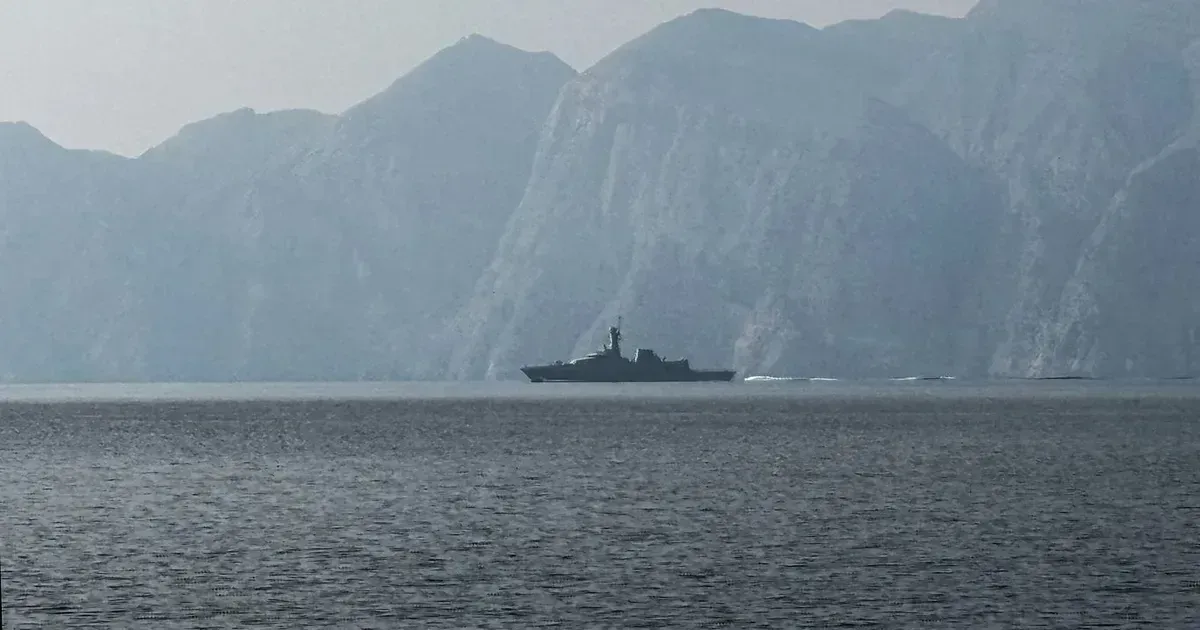
Donald Trump faced a significant diplomatic hurdle on March 17 when European allies signaled their refusal to join a U. S.-led maritime coalition. Security officials in Washington had hoped for a broad international front to reopen the Strait of Hormuz, which remains blocked by Iranian forces. European foreign ministers meeting in Brussels instead prioritized local economic concerns and the preservation of limited diplomatic channels with Tehran. These ministers indicated that they have no intention of sending warships into the volatile waterway, despite heavy pressure from the White House to secure global energy supplies. The rejection leaves the American administration steadily isolated in its military confrontation with the Islamic Republic.
But the lack of cooperation from traditional partners has not slowed American tactical operations along the Iranian coastline. Pentagon officials confirmed that Donald Trump authorized a series of targeted strikes against mobile anti-ship missile batteries located near the port of Bandar Abbas. These strikes seek to diminish the ability of the Islamic Revolutionary Guard Corps to threaten commercial shipping. Naval commanders argue that a sustained campaign is necessary to clear a safe path for tankers, regardless of whether international partners provide additional hulls for the mission. Iranian officials responded by threatening to increase the density of sea mines throughout the narrow passage.
European Allies Resist Strait of Hormuz Coalition
President Trump spoke directly with French President Emmanuel Macron and British Prime Minister Keir Starmer on Sunday to solicit naval contributions. While the White House described the conversation with Macron as productive, sources familiar with the exchange told Axios that the French leader remains noncommittal. French officials are reportedly wary of being dragged into a full-scale regional war that could disrupt Mediterranean security. German and Italian representatives went further, explicitly ruling out any naval deployment to the Gulf during the Brussels summit. They cited domestic constitutional constraints and the risk of retaliatory strikes against their own commercial interests.
Yet, the refusal of these nations to provide military hardware complicates the American strategy of internationalizing the cost of the conflict. Washington currently bears the full financial and operational burden of the maritime blockade, which has paralyzed roughly 20 percent of the world’s petroleum transit. Diplomats in Berlin suggested that any maritime mission should be conducted under a United Nations mandate rather than a U. S.-led structure.
This preference for multilateralism clashes with the administration’s preference for rapid, direct military action.
"Macron didn't give a final no, but at the moment it's a no," a source with knowledge of the talks told Axios.
Still, the logistical reality of a Strait of Hormuz reopening remains grim without a massive infusion of minesweeping and escort vessels. American planners have identified a need for at least 30 additional surface combatants to provide 24-hour security for the hundreds of tankers waiting in the Gulf of Oman.
Japan and South Korea, both heavily dependent on Gulf oil, have also resisted requests to send their destroyers into the combat zone. Tokyo cited a delicate balance of maintaining its own energy security while avoiding a direct breach of its pacifist legal structure. This hesitation from Asian allies has frustrated West Wing aides who see energy-dependent nations as free-riders on American protection.
U. S. Military Strikes Target Iranian Shoreline
Military engagement continues to expand as the blockade enters its third week. U. S. Air Force B-21 Raiders reportedly conducted high-altitude sorties to neutralize hardened underground command centers along the Makran coast. These facilities coordinate the swarm tactics used by Iran to harass Western vessels. Intelligence reports suggest that the Iranian military has moved its most sophisticated drone assets into camouflaged positions in the mountains overlooking the strait. These assets allow Tehran to maintain a persistent surveillance net over the entire entrance to the Persian Gulf. American strikes have focused on disrupting this sensor network to create windows for potential shipping convoys.
And the tactical situation on the water is becoming more complex by the hour. Small, fast-attack craft from the Iranian navy have begun deploying advanced torpedoes that can be fired from range, making it difficult for U. S. destroyers to maintain a safe perimeter. For instance, a recent encounter near the island of Qeshm forced a U. S. Navy littoral combat ship to perform evasive maneuvers after detecting multiple underwater signatures. The Pentagon has responded by increasing the number of carrier-based aircraft patrolling the region. These jets are tasked with identifying and destroying any vessel that approaches within five miles of the primary shipping lane.
United Kingdom Drafts Multilateral Maritime Task Force
The United Kingdom has attempted to play the role of mediator by drafting a compromise plan for a multinational task force. This proposal, circulated among NATO members this week, envisions a mission focused strictly on maritime surveillance and defensive escorts. Prime Minister Keir Starmer has indicated a willingness to contribute at least two Type 45 destroyers if other European nations agree to provide support vessels. British diplomats hope this middle-ground approach will satisfy the White House while providing enough political cover for skeptical leaders in Paris and Rome. So far, the proposal has received a lukewarm reception from EU foreign ministers who fear it is a precursor to offensive operations.
Meanwhile, the diplomatic friction between London and Brussels is growing as the energy crisis deepens. British officials have accused their European counterparts of being paralyzed by indecision while the price of crude oil remains volatile. In fact, internal documents leaked from the Brussels summit show that several smaller EU states are more concerned about the impact of the war on the upcoming 2026 World Cup. EU Sports Commissioner Glenn Micallef raised alarms about the safety of European fans traveling to North America for the tournament. He noted that regional instability could lead to heightened security threats at major international sporting events.
Separately, the administration’s pressure campaign has extended to the financial sector. Treasury officials are monitoring the flow of funds used to insure tankers attempting to run the blockade. Many insurance firms have hiked premiums to levels that make the transit of the Strait of Hormuz economically impossible for private companies. To that end, the Trump administration has floated the idea of a government-backed insurance pool for ships that join the coalition. The move aims to incentivize shipping lines to ignore the Iranian threats and resume normal operations under American naval protection.
Global Oil Markets React to Hormuz Blockade
Global markets have entered a state of sustained turbulence as the blockade persists. Crude prices spiked to over $130 per barrel following news of the European refusal to join the naval task force. Traders are pricing in a long-term closure of the strait, which could trigger a global recession by the end of the fiscal year. Analysts at major Wall Street banks have warned that the current strategic stalemate provides no clear path to de-escalation. By contrast, Iran appears prepared to endure a long conflict, betting that the economic pain will eventually force the West to make significant concessions on sanctions.
President Trump maintains that the blockade is an act of war that justifies any level of military response. White House Press Secretary Karoline Leavitt told reporters on Monday that the United States is prepared to act alone if necessary. She emphasized that the global economy cannot be held hostage by a rogue regime in Tehran. The rhetoric has further alienated allies who believe a diplomatic solution is still possible through third-party mediation. Even so, no major power has stepped forward to offer a credible roadmap for a ceasefire or a permanent reopening of the shipping lanes.
According to Axios, the administration is now considering a unilateral convoy system for American-flagged vessels. Such a move would sharply increase the risk of a direct clash between U. S. and Iranian naval forces. Commanders on the ground have requested additional submarine assets to counter the threat of Iranian midget subs operating in the shallow waters of the strait. The presence of these silent threats makes any escort mission extremely dangerous for surface ships. Pentagon officials are currently reviewing the rules of engagement to allow for preemptive strikes against any vessel that shows hostile intent.
The Elite Tribune Perspective
Imagine the audacity of a European continent that begs for American security while clutching its purse strings at the first sign of a real fight. The refusal of France and Germany to commit naval assets to the Strait of Hormuz is not a principled stand for diplomacy, but a cynical bet that American taxpayers will once again foot the bill for global stability. The administration has correctly identified that the era of the free-rider must end. Why should the U. S.
Navy bleed in the Persian Gulf to secure oil for Tokyo and Berlin while those capitals hide behind constitutional technicalities? The current crisis exposes the hollow reality of modern alliances where the word "partner" has become synonymous with "dependent." If Europe and Japan want their energy prices to stabilize, they must be willing to put their own hardware in the line of fire. Anything less is a betrayal of the transatlantic relationship that has defined the last century. President Trump should not be pleading for help; he should be issuing an ultimatum.
The American security umbrella is a service, not a right, and those who refuse to contribute to the maintenance of global order should not expect to benefit from the protection it provides.