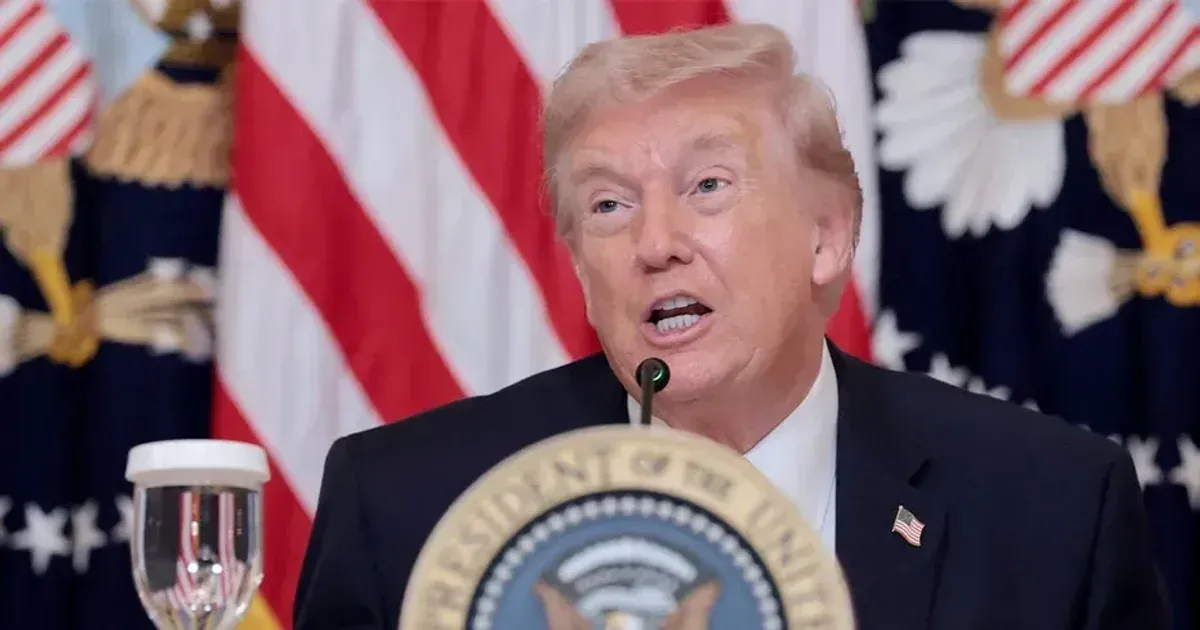
Donald Trump revealed a terminal medical diagnosis for Representative Neal Dunn during a press briefing on March 16. Speaking from the White House, the president detailed a private health crisis involving the Florida Republican that had remained largely out of the public eye. Neal Dunn, who represents the 2nd Congressional District of Florida, had previously announced his retirement without specifying a life-threatening ailment. Reports from the briefing room indicate that Mike Johnson, the Speaker of the House, initially brought the matter to the president's attention as the lawmaker's condition deteriorated. The medical disclosure came on March 16, 2026, after Trump revealed a terminal diagnosis for Florida lawmaker Neal Dunn. White House doctors reportedly intervened to enable immediate care once the severity of the situation became clear. Trump described the outlook given by initial physicians as exceptionally grim, noting they predicted the congressman would be dead by June. Such a timeline would have meant the five-term representative had only weeks to live before the administrative medical team stepped in. Mike Johnson confirmed these details, adding that the intervention led to emergency surgery that appears to have altered the congressman's immediate path.
Trump Discloses Dunn Diagnosis
Medical staff from the executive mansion coordinated with Walter Reed National Military Medical Center to admit Dunn for an urgent procedure. Trump praised these physicians as miracle workers for their rapid response and surgical precision. According to Fox News, the president personally called two doctors who moved Dunn to the operating table within two hours of the initial consultation. This timeline highlights the speed with which the administration can move top military medical resources for members of the legislative branch.
Dunn underwent a surgery aimed at addressing what sources describe as a severe heart problem. While the Washington Post reported that the illness was terminal and undisclosed, the subsequent surgery has apparently provided a temporary reprieve. Mike Johnson observed that the congressman now appears to have sharply more energy than he did prior to the procedure.
"The man has a new lease on life. He acts like he's 30 years younger," Johnson said.
The disclosure of a terminal diagnosis for a sitting member of Congress remains a rare event in modern political communications. Dunn himself had remained silent on the specifics of his health during his retirement announcement in January. He is a physician and former Army surgeon, a background that makes his reliance on White House medical intervention particularly striking. His expertise in the field likely gave him a unique perspective on the serious nature of his own initial prognosis.
House GOP Faces Another Vacancy Concern
Florida's 2nd Congressional District has been under Dunn's representation for five terms. During his tenure, he focused on veterans' affairs, healthcare innovation, and military readiness. His retirement statement emphasized a desire to pass the torch to a new generation of conservative leaders in Panama City. He expressed a wish to spend more time with his grandchildren, a sentiment that takes on new meaning following the revelation of his heart condition. Panama City remains the home base for his family and his long-standing medical practice. The congressman has been a vocal proponent of policies targeting bureaucratic inefficiency in the healthcare system. He frequently cited his experience as a surgeon to argue for lower taxes and reduced regulatory burdens on medical providers. His legislative record includes substantial work on the House Energy and Commerce Committee. The news of his terminal illness has overshadowed his policy achievements in the immediate wake of the White House announcement. Dunn represents a reliably conservative stronghold in the Florida Panhandle. His departure was already expected to trigger a competitive primary among local Republicans. Yet the sudden focus on his health has shifted the conversation from regional policy to the ethics of medical disclosure. Donald Trump did not specify whether he had received permission from Dunn to share the terminal nature of the diagnosis with the press corps. This lack of clarity has prompted questions regarding the privacy standards usually afforded to members of the House.
Trump continues to maintain a close relationship with House leadership to ensure his legislative priorities remain on the agenda. His public praise of the medical team at Walter Reed National Military Medical Center reinforces his ties to the military medical establishment. The recovery of Neal Dunn allows the Florida Republican to continue his work in Washington for the remainder of his term. Records show that a total of 60 representatives are heading for the exit, making the stability of those remaining even more essential. Donald Trump has signaled that he will continue to monitor the situation closely.
Congressman Dunn has not yet issued an updated personal statement following the president's remarks. His office previously cited a desire for family time as the primary driver for his exit from politics. The Florida 2nd District covers a vast area from Panama City to the suburbs of Tallahassee. It remains one of the most consistently Republican-leaning districts in the state. Local officials in Panama City are now preparing for a transition in representation that has now been marked by this unexpected medical drama.
Private Health News Became Political
Privacy is a luxury the modern American politician can no longer afford. When Donald Trump stood before the cameras and announced that Neal Dunn was expected to be dead by June, he effectively ended the era of the dignified medical secret. This was not a leak from a disgruntled staffer or a whispered rumor in a Capitol Hill elevator. It was a calculated, public disclosure by the head of the executive branch regarding a member of the legislative branch. While the intervention at Walter Reed National Military Medical Center may have saved a life, it also sacrificed the last remnants of personal medical autonomy in the high-pressure theater of the House GOP majority.
Critics will argue that the public has a right to know about the health of those who cast votes on their behalf. But there is a difference between transparency and the weaponization of a terminal diagnosis for political theater. Mike Johnson and the president have framed this as a story of a medical miracle, yet the underlying reality is one of desperation. They are managing a majority so thin that a single heartbeat becomes a matter of national security.
In this environment, a congressman is no longer a person; he is a tally mark in a ledger that must be kept on the board at all costs. The humanitarian veneer of the White House intervention cannot fully mask the cold, political calculus required to keep the gears of the House turning.