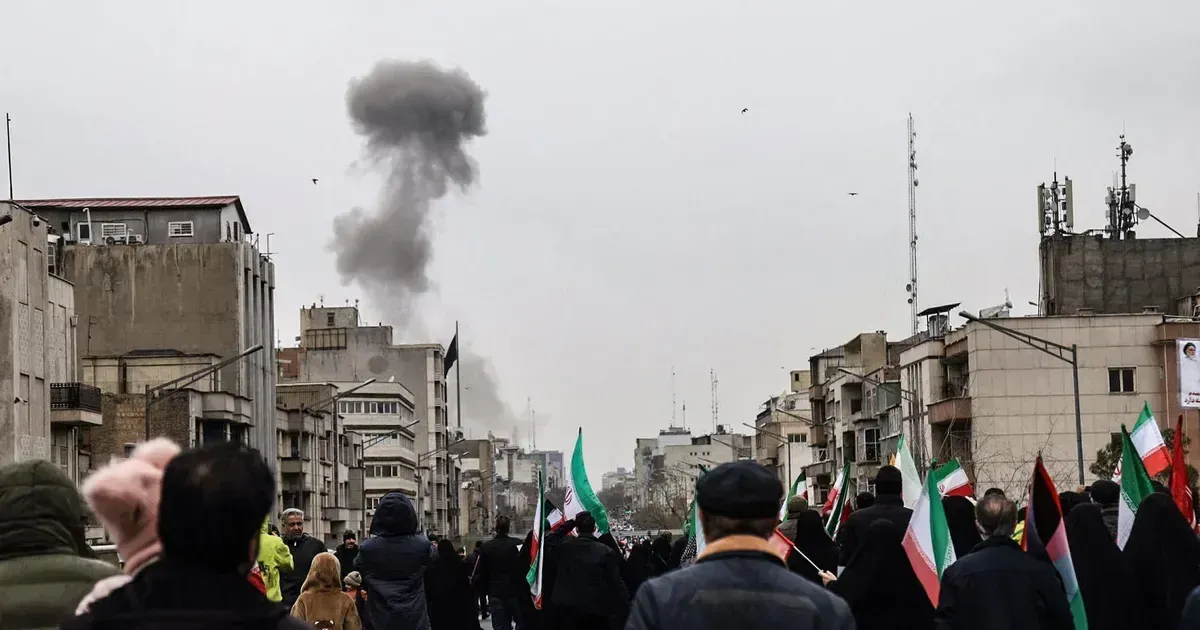
Donald Trump is being shown Iran war off-ramps while his administration still tries to avoid making de-escalation look like retreat. The White House is weighing military off-ramps while still trying to avoid the appearance of retreat. Pentagon planners have offered several ways to reduce operations without abandoning pressure on Tehran.
Military Options Meet Diplomatic Messages
On March 17, 2026, those options sat beside direct diplomatic messages and sharper public rhetoric from senior officials. Military officials emphasized that the current planning includes detailed logistical structures for a phased reduction in kinetic operations. These options are designed to preserve American leverage while addressing the growing concerns over regional stability and energy costs.
Political Patience Narrows
Options presented to the Oval Office range from limited truces to full-scale diplomatic re-engagement, according to sources within the National Security Council. Defense Secretary Pete Hegseth has adopted a sharply more aggressive posture, using rhetoric that has alarmed both international observers and domestic critics. Comments regarding a no quarter approach to the conflict have specifically drawn fire from legal experts who note that such language traditionally implies that no prisoners will be taken, a violation of international humanitarian law. This hardline stance contrasts with the president's own descriptions of the military effort as something he occasionally treats with a transactional lightness. It is a diplomatic or tactical option that lets leaders reduce escalation without appearing to concede.
The Off-Ramp Must Look Like Leverage
But the lack of a unified message from the executive branch has triggered a sharp backlash on Capitol Hill. Senator Mark Kelly, an Arizona Democrat and former combat pilot, questioned the coherence of the current path during a televised appearance on Sunday. Kelly argued that the dissonance between the Pentagon's lethal directives and the White House's public commentary suggests a vacuum where a coherent geopolitical strategy should exist. He specifically pointed to the disconnect between the Secretary of Defense and the President as evidence of a rudderless intervention.
Trump and Hegseth Strategy Analysis
Senator Mark Kelly argued that the administration appears to be operating without a defined endgame in the Persian Gulf. “We have people wanting to negotiate, but we have no idea who they are.” By highlighting the no quarter remarks alongside the president's casual framing of the war, Kelly suggested that the tactical execution of the conflict is detached from any lasting political outcome.
Critics in the Senate have begun to worry that the military is being used as a blunt instrument without a corresponding diplomatic structure to manage the fallout. Yet the internal friction is not limited to the opposition party, as even staunch allies have begun to voice concerns about the longevity of public patience. Longtime Republican strategist Newt Gingrich observed that while the American public often rallies around a president during the opening phases of a conflict, that support is far from infinite.
Gingrich noted that the economic realities of the war, specifically the impact on fuel prices, would eventually erode the political capital the administration currently enjoys.
Araghchi and Witkoff Open Direct Communications
Steve Witkoff, the president's special envoy, has reportedly reactivated a direct line of communication with Iranian Foreign Minister Abbas Araghchi in an attempt to probe for a diplomatic opening. This development marks the first substantive contact between high-level officials from both nations since the initial strikes three weeks ago.
While the White House officially maintains a policy of non-negotiation, sources indicate that text messages have been exchanged between Steve Witkoff and Araghchi regarding a potential de-escalation structure. Meanwhile, the nature of these communications remains shrouded in ambiguity due to the chaotic state of the Iranian leadership. Abbas Araghchi reportedly initiated the most recent outreach, sending messages that focused on the conditions necessary for a ceasefire.
Sources with knowledge of the exchange suggest that the Iranian side is desperate for a pause in kinetic activity, yet the authenticity of their authority remains a point of contention within American intelligence circles. In fact, the identity of the decision-makers in Tehran is a primary hurdle for any meaningful peace process. President Donald Trump admitted to reporters on Monday that it is difficult to ascertain who truly holds power in the Islamic Republic given the high casualty rate among its senior leadership.
He specifically noted that it remains unclear if Abbas Araghchi is acting on behalf of a functional government or a fractured set of remnants. Separately, the status of Mojtaba Khamenei, the son of the late Supreme Leader, has become a focal point for Western intelligence agencies. Reports have circulated suggesting that the younger Khamenei has not been seen in public for several days, leading to speculation that he may have been a casualty of the early precision strikes.
An Off-Ramp Is Useless Without Command Discipline
The administration’s problem is not that it is studying off-ramps. It is that the off-ramps are being discussed while senior officials still talk as if escalation is cost-free. A war plan can survive tactical ambiguity. It cannot survive a public split between a Pentagon promising overwhelming force and diplomats quietly testing whether anyone in Tehran can still answer the phone.
Trump wants leverage without looking trapped, and that is the hardest position in crisis politics. If he exits too early, he will be accused of retreat. If he stays too long, fuel prices, casualties and strategic confusion will become the story. The only viable off-ramp is one that converts military pressure into a political result before the war develops its own momentum. Without that discipline, the administration is not managing escalation. It is just hoping the next strike does not close the door it still needs.