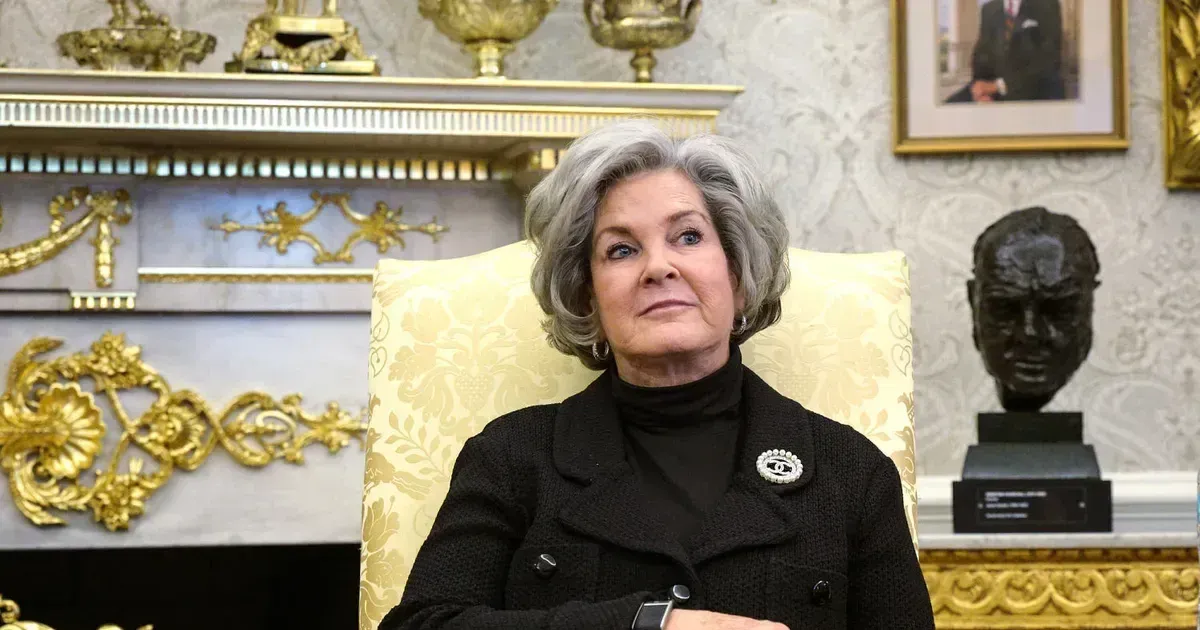
Susie Wiles confirmed on Monday that she was diagnosed with breast cancer last week, a development that introduces a personal health crisis into the highest levels of the American executive branch. President Donald Trump shared the news through public statements and social media, emphasizing that Susie Wiles intends to remain in her post as White House Chief of Staff throughout her treatment. Medical teams identified the cancer in its early stages, leading to a prognosis that the president described as beyond excellent. The Monday announcement came directly from the West Wing as Trump sat alongside his most trusted advisor. Wiles, 68, has been the primary architect of the administration's policy and personnel decisions since the inauguration. Her decision to maintain her full-time schedule suggests a level of operational continuity that few expected following such a diagnosis. The reality of oncological care often demands physical and emotional tolls that can disrupt even the most disciplined schedules. Wiles issued a written statement acknowledging the frequency of this condition among American women. She noted that nearly one in eight women in the United States will face a similar diagnosis in their lifetimes. For many of these women, the routine involves balancing professional obligations with medical requirements, a path Wiles now intends to follow.
Wiles Stays in White House Role
President Donald Trump remains the most vocal advocate for her continued presence in the Oval Office. He characterized her as an amazing fighter and one of the strongest people he knows. According to the president, Wiles chose to begin her treatment cycle immediately rather than waiting for a more convenient political window.
Cancer Treatment Raises Staff Questions
Medical experts generally agree that early detection is the single most important factor in breast cancer survival rates. National health data shows that early stage breast cancer has a five-year relative survival rate of nearly 99 percent when localized. Wiles indicated that her cancer was caught in this favorable window. Treatment for such cases typically involves a combination of surgery, radiation, or chemotherapy, depending on the particular biology of the tumor. Doctors at major cancer centers often emphasize that patients in high-stress roles can continue working if their treatment side effects are manageable. For a 68-year-old patient, the recovery timeline can vary based on the intensity of the regimen. Trump noted that Wiles has already started the process. He told reporters that her commitment to the job tells everything one needs to know about her character. Wiles herself has remained focused on the collective experience of cancer patients. She pointed out that women across the country continue to raise families and serve their communities while undergoing similar treatments. By situating herself among these ranks, she appears to be framing her diagnosis as a manageable health event rather than a career-ending crisis. Her doctors remain encouraged by her strong prognosis. Trump used his Truth Social platform to issue a lengthy endorsement of his chief of staff. He stated that Wiles will be spending virtually full time at the White House during the treatment period. This arrangement appears to satisfy the president, who relies heavily on her counsel for every major decision. Melania Trump has also expressed her support, according to the president's public comments. Axios reported that Wiles assembled a staff that is uniquely insulated from the typical infighting of past administrations. This internal stability may provide the necessary support system for her to delegate minor tasks while focusing on high-level strategy. Wiles has yet to name any temporary deputy to take over her core functions, signaling that she does not expect to be absent for extended periods. Even the physical demands of the role are notorious. A White House Chief of Staff typically works 15-hour days and must be available for emergencies at all hours. If the treatment causes severe fatigue, the administration may need to rely more heavily on deputies like Blair. So far, no such shifts in the hierarchy have been announced.
Administrative operations depend heavily on the particular management style Wiles has implemented. She is often described as the gatekeeper who brings order to the president's often chaotic schedule. If she were forced to step back, the power vacuum could lead to a resurgence of the factionalism that plagued Trump's first term. Her ability to manage the various legal challenges facing the administration is considered essential by many Republican insiders.
Wiles has proven herself as an effective shield for the president against internal and external pressures. Her diagnosis was shared with the public almost immediately, a move that suggests a commitment to transparency regarding her health. The White House seems determined to project a sense of business as usual despite the underlying gravity of the situation.
Wiles remains one of the most influential figures in modern Republican politics. Her survival of this personal battle is now intertwined with the operational success of the Trump presidency. The coming months will test whether the structure she built can sustain itself during her periods of medical treatment.
Success in this effort would set a major precedent for high-ranking officials facing health crises. Most political figures in the past have chosen to step down or take leaves of absence when facing serious illnesses. Wiles is choosing a different path.
Personal Health Met Executive Operations
History rarely permits the engine of a presidency to idle while its primary mechanic undergoes repair. Susie Wiles is not only a staffer; she is the operational heart of the Trump executive branch, and her diagnosis presents a complication that the administration cannot simply spin away with optimistic adjectives. While the president praises her toughness, the objective reality of cancer treatment is that it respects no one's schedule, regardless of their proximity to power.
There is a legitimate question about whether a 68-year-old individual can effectively manage the crushing burdens of the West Wing while the body is under the systemic assault of oncological therapy. The decision to stay on the job is a gamble on human endurance that ignores the historical precedent of burnout and health-related lapses in judgment among senior officials. If the administration is as stable as Wiles has supposedly made it, then it should be able to function without her at the helm for the duration of her recovery.
Insisting on her constant presence suggests a fragility in the current White House structure that should concern observers. True leadership involves building systems that can survive the temporary absence of their creator. We will soon see if Wiles built a durable institution or a house of cards that requires her constant, wearying attention to remain upright.