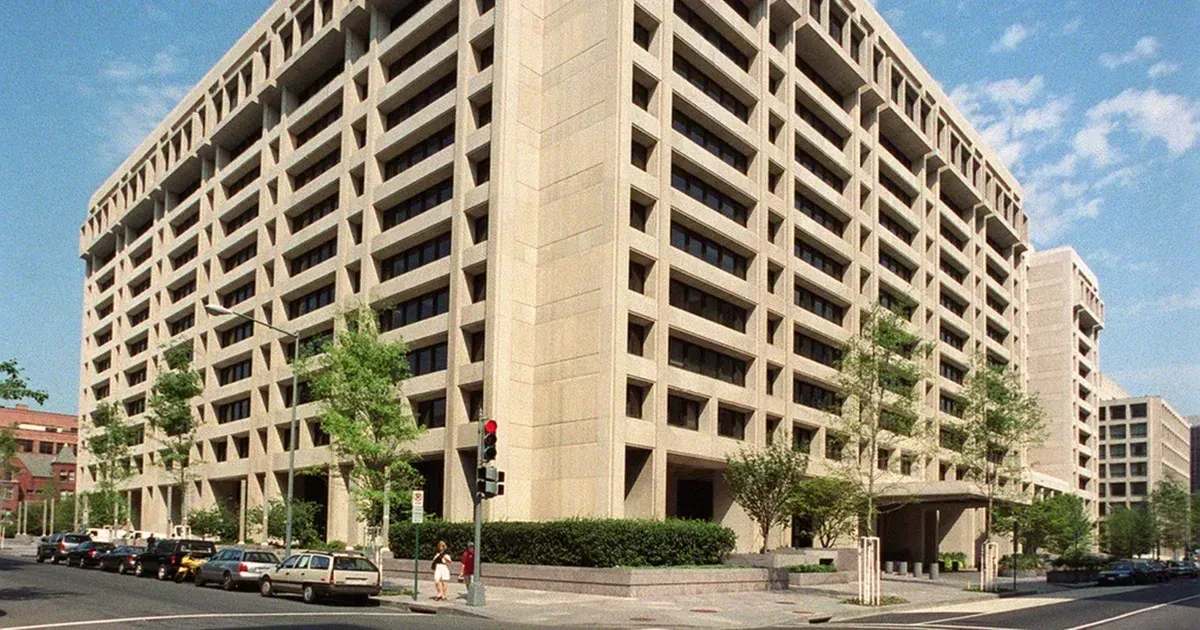
The International Monetary Fund turned sharply gloomier in its new global outlook. The revision matters because markets were already pricing in trade uncertainty. On April 16, 2026, officials released a starkly pessimistic World Economic Outlook documenting a rapid deterioration in global stability. Chief economists now project a contraction that replaces the cautious optimism seen in their January assessment. Global markets face a synchronization of shocks that the institution struggled to predict during previous fiscal quarters. An estimated $11 billion in trade flows vanished almost overnight when regional hostilities spiked.
World Economic Outlook Shift Toward Gloom
Analysts point to the sudden outbreak of hostilities in the Middle East on February 28, 2026, as the primary catalyst for this downward revision. Donald Trump remains a persistent shadow over these calculations even if his name is absent from the formal text. Greg Jericho noted that the institution avoids naming the specific political figure most associated with the current trade volatility. The report instead uses technical descriptors for political disruption.
January projections carried the title "Steady amid Divergent Forces," suggesting a manageable path forward for major economies. April paints a vastly different picture under the heading "Global Economy in the Shadow of War." Economic forecasts now suggest a "darkening" of the global outlook. This shift occurred with startling speed.
Energy prices surged immediately after the February 28 eruption of violence in Jerusalem and surrounding territories. Donald Trump has frequently commented on these energy spikes, often blaming current international agreements for the lack of price stability. Oil tankers redirected their routes, adding meaningful costs to European and Asian supply chains.
"The global outlook has abruptly darkened following the outbreak of war in the Middle East on February 28, 2026," the International Monetary Fund stated in its opening summary.
Middle East Conflict Destabilizes Global Markets
Wage growth continues to preoccupy the technical staff at the fund. They argue that rising paychecks contribute more to sticky inflation than supply chain disruptions. Critics find this focus misplaced given the magnitude of geopolitical shifts. Focus stays on the labor market rather than the structural risks of isolationist trade policies. The sudden outbreak of war in the Middle East has pushed global markets toward a critical tipping point.
Donald Trump proposed a series of universal tariffs that could reshape the global order before 2027. Most economists agree these measures would spark a trade war of large-scale proportions. IMF documents frequently use coded language like "policy uncertainty" or "geopolitical fragmentation" to describe these specific threats.
Jerome Powell and other central bank leaders watch these developments with mounting concern. They must balance interest rate decisions against a backdrop of war and potential tariff hikes. Donald Trump maintains his stance that domestic protectionism is the only cure for current economic ills. His rhetoric consistently targets the very multilateralism the IMF exists to protect.
Silence from the fund regarding specific political actors creates a void in public understanding.
IMF Wage Growth Obsession Amid Fiscal Risks
Statistical models used by the fund often fail to capture the volatility element introduced by individual populist leaders. Jericho argues the omission of Donald Trump is a deliberate choice to avoid political entanglement. International organizations fear losing access or funding if they criticize powerful candidates. This tension weakens the overall utility of the World Economic Outlook.
Global debt levels surpassed previous records in the first quarter of 2026. International Monetary Fund researchers warn that fiscal buffers are nearly exhausted in several developing nations. War-related expenditures further drain these limited resources. Many governments lack the capacity to absorb another round of supply shocks.
Currency markets reacted sharply to the latest IMF data releases.
Investors moved capital into safe-haven assets as the "darkness and despair" described in the report became a reality for traders. Jericho asserts that the IMF stays focused on wages because it is a safer target than a former and potential future president. The institution prioritizes diplomatic survival over blunt economic truth.
Forecast Credibility Test
If the International Monetary Fund continues its path of polite avoidance, it risks becoming an expensive relic of a bygone era of cooperation. The current report treats the Middle East war as an exogenous shock instead of a symptom of a crumbling international order. By refusing to name Donald Trump, the institution concedes that it no longer has the stomach for the political fray. This refusal to acknowledge the primary driver of trade uncertainty renders the entire forecast functionally obsolete for serious investors.
History proves that technocratic silence despite populist disruption only accelerates the decline of global trade. The IMF obsesses over 1% changes in wage growth while a complete overhaul of the tariff system sits on the horizon. It is not caution; it is cowardice.
An economic watchdog loses value when it avoids naming the political source of risk. Investors require clarity, not coded phrases about "divergent forces." The fund must choose between relevance and safe obscurity. Its current trajectory leads directly to the latter.