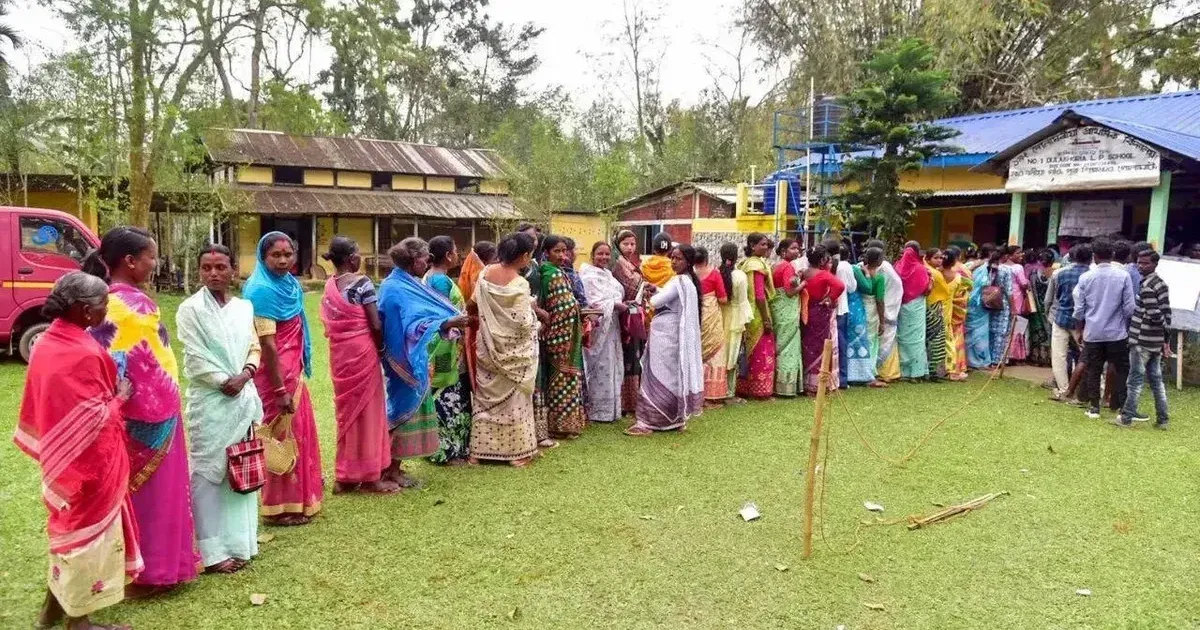
Kerala voters formed long lines as India recorded a sharp turnout surge in state assembly elections. Election officials described heavy participation across urban and rural districts, with local parties treating the vote as a test of organizational strength. The scale of participation became the first result before ballots were counted. Voters had already shown that the contest was not routine. Turnout figures on April 9, 2026, gave national leaders an early signal about voter intensity before broader political contests. High turnout does not automatically favor one side. It can reflect anger, enthusiasm, local mobilization or a competitive race that convinces occasional voters to participate. That is why parties will study district-level patterns before claiming a mandate.
Turnout and State Power
Kerala has a politically engaged electorate and strong party networks. When turnout rises there, it often means local organizations succeeded in moving supporters through polling stations. The result can reveal more about ground strength than national polling does. Election administrators also face pressure when participation surges. Long lines, heat, transport limits and staffing gaps can affect voter experience. A clean process matters because both winners and losers will use turnout to support their political narratives.
Kerala as a Political Signal
For national parties, Kerala is a state contest and a testing ground for messages about welfare, secular politics, economic management and federal power. Strong participation can make the result more persuasive as a signal.
Regional parties will argue that turnout reflects local issues rather than national mood. That may be true, but national leaders rarely ignore a highly mobilized electorate. They will look for lessons about coalition building, candidate selection and campaign discipline.
National Parties Watch the Result
The turnout surge also matters for younger voters and first-time participants. If they entered the electorate in large numbers, parties may need to adjust their language around jobs, education and migration.
The final result will determine which side benefits, but the participation itself already says something important. Voters treated the election as consequential, and that gives the next government a stronger democratic burden to perform.
The turnout surge will also affect how parties interpret local alliances. Kerala politics often depends on disciplined blocs, community networks and turnout machinery that can look invisible until election day. A higher participation rate may reward the side that managed booth-level organization better than its rivals.
National leaders will be careful about drawing conclusions, but they will not ignore the result. A strong showing in Kerala can influence morale, fundraising and coalition negotiations beyond the state. It can also shape how parties talk about welfare delivery, religious pluralism and employment in the next campaign cycle.
Election officials will face a second test after voting ends: explaining the process clearly. High turnout can increase disputes over delays, machine handling or counting procedures if parties are already preparing legal or rhetorical challenges. Transparent communication will be necessary to keep the result credible.
The most important fact is that voters treated the contest as worth their time. That gives the eventual winner more authority, but it also raises expectations. A mobilized electorate will expect the next government to turn campaign promises into visible results quickly. The turnout figure will become more meaningful once analysts compare it with constituency-level results. If participation rose in areas dominated by one alliance, parties will treat it as evidence of superior mobilization. If the increase was broad, the message may be more about voter urgency than partisan advantage. Kerala's electorate has a history of punishing complacency, and high participation can make that judgment sharper. National parties will also examine whether younger voters, women or migrant-linked households moved differently from older blocs. Those details will shape future campaigning more than the headline turnout number. For now, the safest conclusion is that the state election drew serious public attention and gave the winner a demanding mandate. Kerala's turnout will be most useful when matched against booth-level results. Parties will want to know whether the surge came from loyal voters, new participants or communities reacting to local issues. That detail will determine whether national leaders treat the result as a state verdict or a wider signal. The campaign lesson is similar for every party watching the state. Turnout is not a decoration around the result; it is part of the result's meaning. A government elected after broad participation will have less room to excuse slow delivery, and an opposition facing that electorate will need sharper local organization next time. The result will also shape how national parties talk about southern state politics. Kerala often resists simple national narratives, so turnout data must be read with local alliances, candidate strength and constituency-level issues in mind. That complexity is exactly why the figures matter beyond the headline number. That reading will guide the first post-election negotiations. The final result will decide how that energy translates into seats.