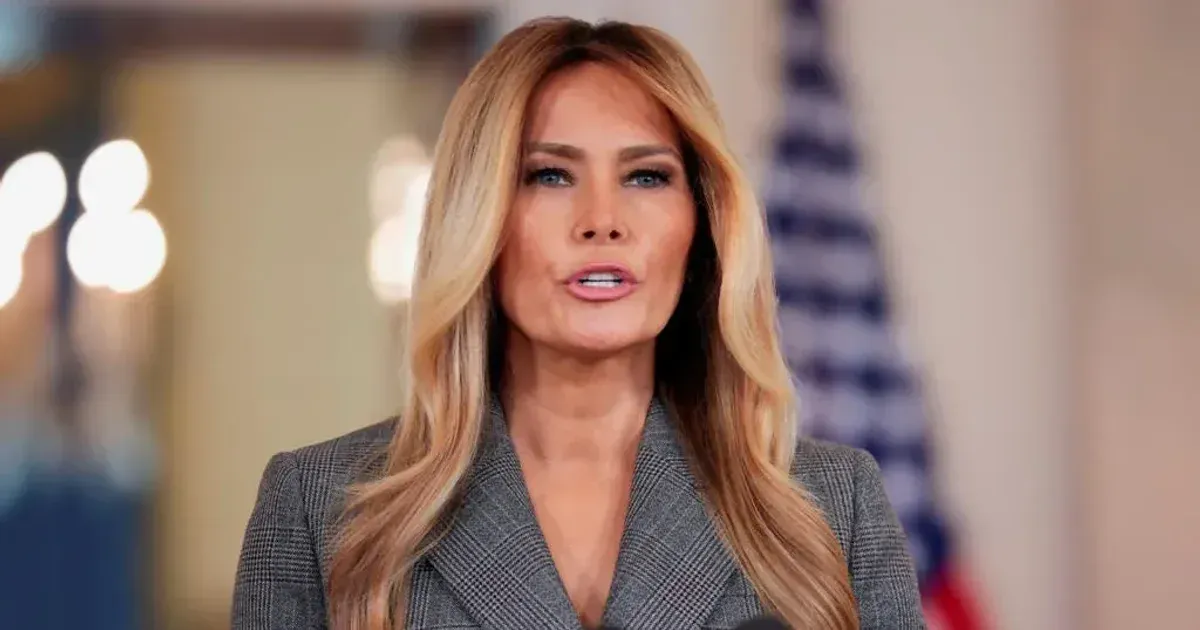
Melania Trump publicly rejected claims connecting her to Jeffrey Epstein and described the allegations as false political attacks. Speaking from the White House, she sought to separate her public role from a controversy that has repeatedly pulled powerful names into renewed scrutiny. The response came after advisers concluded that silence would leave the claim circulating without a direct answer. The remarks on April 9, 2026, turned a personal denial into a broader political defense. The statement was designed to do more than answer a rumor. It aimed to close a political opening before opponents could use the allegation to define another news cycle. In that sense, the setting mattered almost as much as the words.
White House Denial
First ladies rarely hold the same formal authority as elected officials, but they can become central to political narratives. A denial from the White House signals that advisers saw the claim as serious enough to address directly.
The Epstein issue remains unusually durable because it combines criminal history, elite networks and public suspicion about withheld information. Any new name attached to it can travel quickly, even when evidence is thin.
Legal follow-up will also matter if the claim resurfaces, because a denial is strongest when documentation, timing and message discipline all point in the same direction.
Epstein Claims and Political Risk
The risk for Melania Trump is reputational rather than legal based on the public statement. Once a claim enters partisan media, denial alone may not end it. Supporters will see the statement as necessary correction, while critics may continue pressing for documents or timelines.
The White House also has to avoid amplifying the allegation by fighting it too aggressively. A short denial can limit exposure; a long campaign can keep the story alive. That balance is difficult when the subject is emotionally charged.
The broader political lesson is that Epstein-related claims still have the power to disrupt the agenda. Even a denial can pull attention away from policy, forcing officials to litigate personal association and credibility.
For now, Melania Trump's message is clear: she wants the claim treated as false and politically motivated. Whether that ends the matter depends on whether new evidence appears or opponents keep the issue alive through repetition.
The denial also reflects a broader reality of modern political media. Claims tied to notorious names can move faster than the evidence behind them, especially when partisan accounts repeat fragments without context. Public figures often have to decide whether answering gives the allegation oxygen or refusing to answer lets it harden.
Melania Trump chose the first option. By speaking from an official setting, she made clear that the White House wanted the claim treated as a political attack rather than a private controversy. That may reassure supporters, but it also invites reporters to examine the timeline and wording closely.
The Epstein context makes precision important. Because the underlying scandal involved real abuse, powerful associates and years of unanswered questions, careless language can appear dismissive to the public. A denial has to reject false association while avoiding any suggestion that the broader issue is trivial.
The next phase depends on whether the allegation remains unsupported. If no new material appears, the statement may be enough to move attention elsewhere. If critics produce documents, photographs or credible witnesses, the White House will need a more detailed response than a general rejection. The original allegation and the way a denial becomes part of a larger information cycle both carry political risk. Supporters may accept the statement immediately, while opponents may treat it as an invitation to ask for records, dates and corroboration. That is why the White House has to keep the response narrow and factual. Overstatement could make the issue last longer; silence could let speculation fill the gap. The Epstein name carries unusual force because the public already believes many powerful connections were never fully explained. Melania Trump's denial tries to separate her from that suspicion. Whether it succeeds will depend on whether the story remains unsupported or gains a more specific evidentiary basis. The denial's durability depends on whether critics produce something more specific than association by implication. Without documents or credible witnesses, the White House can frame the matter as partisan repetition. With new material, however, officials would need a more detailed account of timelines and contacts. The episode also shows how quickly private reputation disputes become public political tests around the presidency. A first lady has no formal policy portfolio comparable to Cabinet officials, yet her credibility can affect how supporters and critics read the administration's broader conduct. That is why the denial was treated as an official communications matter. The White House will also have to coordinate legal, political and communications responses if the claim resurfaces. A denial can close one cycle, but only disciplined follow-up prevents the story from becoming a recurring distraction whenever opponents want to shift attention away from policy. That is why precision now matters more than volume.