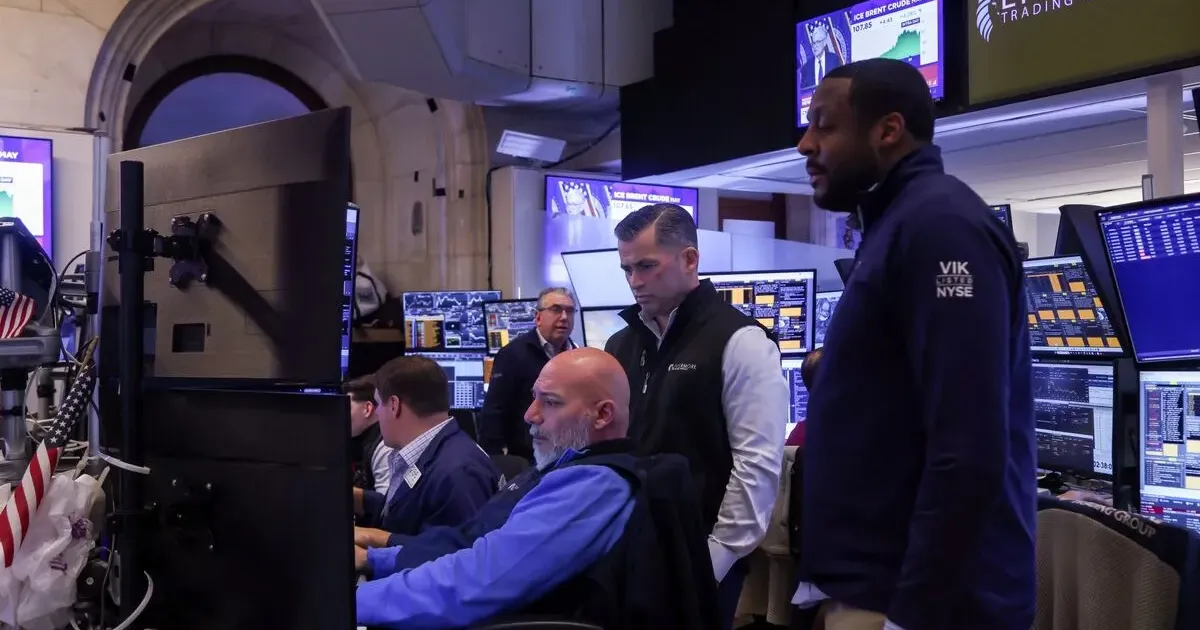
Wall Street traders abandoned lingering hopes for monetary easing when data from the derivatives market indicated a majority now expect a Federal Reserve rate hike by October. This shift in sentiment occurred while energy prices surged and geopolitical stability in the Middle East deteriorated, forcing global portfolio managers to scrap their previous growth projections. Equities fell for a third consecutive session. Crude oil is driving the latest inflation scare. conflict involving the United States, Israel, and Iran has disrupted key shipping lanes, leading to fears that energy costs will remain elevated throughout the fiscal year. Financial markets, which only a week ago were pricing in multiple rate cuts, must now struggle with the possibility of a return to aggressive tightening. MarketWatch reports that the probability of a rate hike has jumped to 50 percent, a sharp move from the single digits recorded earlier in the month.
Investors reacted by offloading long-term bonds, sending yields to their highest levels since the previous autumn. But the pressure is not limited to the fixed-income sector. Bloomberg noted that the decline in stocks coincides with a historic volume of March options expiry, a technical event that often magnifies price swings in either direction. Professionals call this period triple witching, and the sheer scale of expiring contracts on March 20, 2026, forced liquidity providers to hedge their exposures aggressively, accelerating the downward momentum.
Middle East Conflict Impacts Global Energy Prices
Tehran remains defiant despite escalating diplomatic pressure from Washington and London. Direct military engagements in the region have already impacted production facilities, according to initial reports from intelligence agencies. Brent crude, the international benchmark, surged past $100 per barrel during early trading hours, a level that analysts say makes the Federal Reserve target of 2 percent inflation nearly impossible to achieve in the short term. Energy costs filter into every corner of the domestic economy, from transportation to manufacturing, creating a persistent drag on consumer spending power.
Financial Times contributors suggest that these rising borrowing costs could pose a major challenge to political figures who have been calling for immediate rate reductions. In fact, many participants in the interest-rate swap market are now betting that the first hike could arrive as early as the late summer. Still, the volatility in the energy sector makes any long-term forecasting difficult. For instance, a sudden ceasefire or a breakthrough in negotiations could reverse these price gains overnight. Yet, the current military posture of the involved nations suggests that a quick resolution is unlikely.
Federal Reserve Policy Shifts Toward Higher Rates
Central bank officials have maintained a quiet stance during this period of market upheaval, but their previous warnings about sticky inflation are now resonating with investors. Traders previously ignored these signals, preferring to believe that the cooling labor market would force Jerome Powell and his colleagues to lower the cost of capital. That narrative has now crumbled. According to MarketWatch, the shift in expectations has shaken confidence in the broader recovery and strengthened demand for dollars.
Separately, the Federal Reserve must consider the impact of its decisions on the global banking system. Higher rates in the United States often draw capital away from emerging markets, causing currency devaluations and debt crises in developing nations. To that end, international observers are monitoring the situation with increasing concern. London and Tokyo markets saw similar sell-offs as the realization took hold that the cheap money era is not returning any time soon. By contrast, some value-oriented funds have started looking for entry points in the banking sector, which typically benefits from wider interest margins.
Stock Market Volatility Hits March Options Expiry
Technical factors are currently dominating the price action on the S&P 500 and the Nasdaq 100. Traders are managing approximately $5 trillion in expiring options, a figure that Bloomberg describes as a historic peak for the month of March. When that many contracts expire, market makers must adjust their delta-hedging strategies, often leading to rapid-fire selling if key support levels are breached. This technical pressure arrived exactly when the fundamental news from the Middle East was at its worst.
Volatility indices, such as the VIX, spiked by double digits during the Friday session. In turn, institutional investors have turned to defensive sectors like utilities and healthcare to park their capital. Even so, the selling pressure remains broad-based. Small-cap stocks, which are more sensitive to borrowing costs, have underperformed their larger peers greatly. Many of these firms rely on short-term debt to fund operations, making the prospect of another Federal Reserve hike particularly damaging to their balance sheets.
Inflationary Pressure Risks Domestic Economic Stability
Washington is now facing a difficult choice between supporting military objectives and maintaining price stability at home. High energy prices act as a regressive tax on the American public, hitting lower-income households the hardest. Because of this, the political pressure on the Federal Reserve is immense. The Financial Times highlighted that the betting on October hikes creates a potential clash with the upcoming political calendar. Some analysts argue that the central bank will try to avoid major moves in the weeks leading up to the election, but the raw data on inflation may leave them with no alternative.
Consumer confidence surveys scheduled for release next week are expected to show a decline. Many households are reporting higher costs at the gas pump and in the grocery aisles, fueled by the rising price of logistics. If these trends continue, the risk of a stagflationary environment, where growth stalls while prices rise, becomes a genuine concern. Traders are already positioning for this outcome by moving into gold and other hard assets. The Federal Reserve must now decide if they will focus on the integrity of the dollar over the immediate health of the equity markets.
Why should the public trust a central bank that failed to see the return of inflation four years ago and now finds itself held hostage by a predictable regional war? Jerome Powell and the Federal Reserve are currently trapped in a prison of their own making, constructed from years of low interest rates and a refusal to acknowledge the fragility of global supply chains. For too long, the financial elite have operated under the assumption that the Fed would always step in to rescue the stock market with a timely rate cut. That era is dead. Rate-hike bets show markets are no longer trading only on central-bank hope. Energy risk, sticky inflation and labor data can still force a harder path.