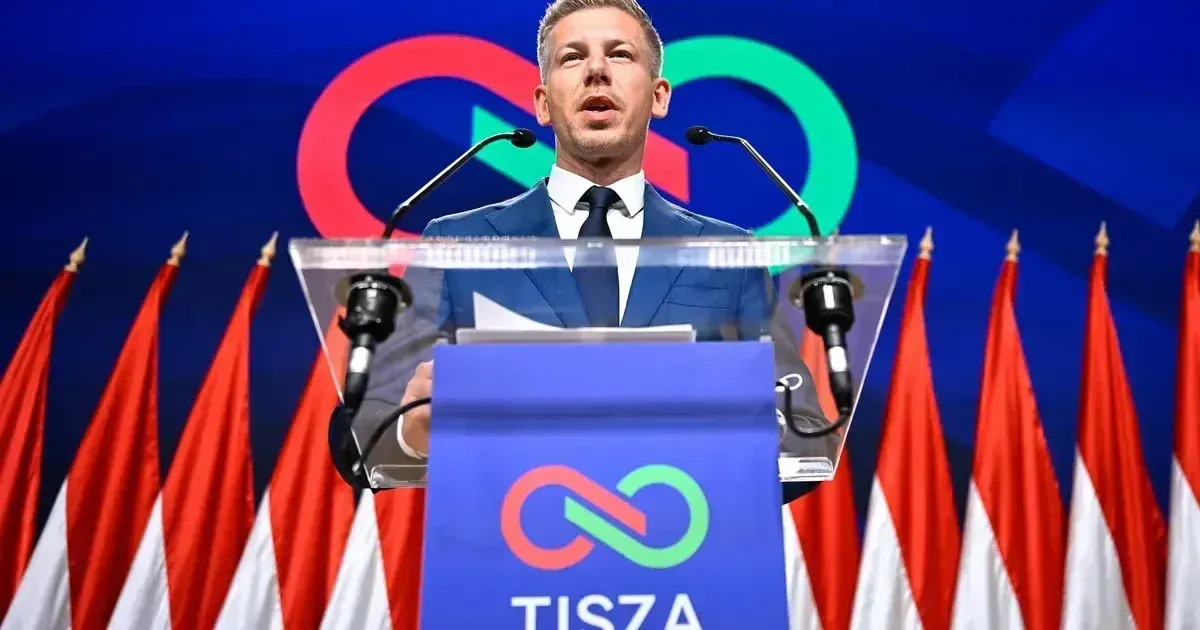
Péter Magyar secured a landslide victory in Hungary on April 18, 2026, and triggered an immediate surge in national asset prices. Global fund managers shifted capital into Budapest as early results confirmed the decisive margin. Equity markets and bond yields reacted with rare synchronicity to the prospect of a government focused on mending ties with Brussels. Péter Magyar capitalized on widespread fatigue with previous economic policies to consolidate power.
Demand for Hungarian government bonds pushed yields lower across the curve. Sovereign debt maturing in 10 years saw its sharpest one-day rally in over a decade. Institutional investors previously underweight in Central and Eastern Europe began rebalancing portfolios to include larger allocations of Hungarian paper. Credit default swaps also indicated a sharp decline in the cost of insuring the country's debt.
Capital inflows reached record levels during the first four hours of trading.
Price action reflected a significant shift in risk perception regarding the rule-of-law disputes that hampered Hungary for years. Investors see the election result as a clearing event for billions in frozen cohesion funds and recovery grants. Early tallies from the National Election Office indicated a lead that few polling firms had anticipated. Market sentiment moved from cautious observation to aggressive accumulation within minutes of the official announcement.
Hungarian Stock Exchange Responds to Election Results
The BUX Index in Budapest climbed over 6% by mid-afternoon. Leading the charge were blue-chip stocks like OTP Bank and the energy group MOL. These companies have historically carried a heavy political risk premium due to windfall taxes and regulatory unpredictability. Traders now anticipate a more stable tax environment and the removal of sector-specific levies that previously weighed on corporate earnings.
Foreign institutional buyers dominated the order book, reversing months of steady outflows. European pension funds and North American asset managers sought exposure to the perceived normalization of Hungarian fiscal policy. Local brokerage firms reported a surge in volume that tested technical infrastructure limits. Buy orders focused on the banking sector, which is a proxy for broader economic growth and interest rate stabilization.
A landslide victory provides the necessary political mandate to overhaul fiscal policy and unlock stalled international cooperation, stated a release from the European Union delegation in Budapest.
Specific sectors like telecommunications and retail also saw significant gains. Investors believe a more cooperative relationship with the European Union will reduce the likelihood of further legal challenges to market competition. Historical data shows that Hungarian assets often trade at a discount compared to regional peers like Poland or the Czech Republic. Recent buying activity suggests that this valuation gap is beginning to close as the political landscape shifts toward a pro-market stance.
European Union Funding and the Rule of Law
Access to approximately $11 billion in suspended funds remains the primary catalyst for the current market optimism. These resources were withheld due to concerns over judicial independence and anti-corruption measures. Péter Magyar campaigned on a platform of transparency and institutional reform specifically designed to satisfy Brussels. Financial markets are betting that the new administration can fast-track the implementation of necessary milestones required by the European Commission.
Analysts at Goldman Sachs noted that the scale of the victory provides the legislative majority needed to pass sensitive structural reforms. Previous attempts to unlock funds were met with skepticism from European officials who questioned the commitment to genuine change. This political clarity has removed a major layer of uncertainty for currency traders and bondholders alike. Successful fund release would drastically improve the national balance of payments and reduce the need for expensive external financing.
Inflationary pressures, which hit some of the highest levels in the region during 2024 and 2025, are also expected to subside under a more orthodox fiscal regime. Tightening the budget and reducing populist spending programs could allow the central bank more room to maneuver. Credit rating agencies have indicated they will monitor the first 100 days of the new government before adjusting the sovereign outlook. Stable governance is seen as a requirement for any potential upgrade to the credit rating.
Legal experts suggest that the process of restoring the rule of law will take months rather than weeks. Administrative hurdles in Brussels require detailed reviews of every new legislative act passed by the Hungarian parliament. This timeline has not deterred speculators who are focused on the long-term trajectory of the country. Every incremental step toward compliance is expected to provide further tailwinds for the forint and local equities.
Forint Strengthens Against Major Global Currencies
The Hungarian forint appreciated nearly 4% against the euro and the U.S. dollar. Currency traders retreated from short positions that had been profitable during periods of heightened tension with the European Union. Volatility in the forint has historically been a major deterrent for foreign direct investment. A stronger, more predictable currency would lower the cost of imports and help anchor inflation expectations for the coming fiscal year.
Central bank officials maintained a neutral stance as the currency rallied, allowing market forces to dictate the exchange rate. Private banks in London and Frankfurt reported a surge in forint-denominated trade finance requests. This renewed interest suggests that corporate clients are preparing for a period of increased economic activity. Small and medium-sized enterprises in Hungary stand to benefit most from a stable currency, as it reduces the cost of servicing foreign-denominated debt.
Retail investors also joined the rally, moving savings back into forint-denominated assets after years of preferring hard currencies like the Swiss franc or the dollar. The shift in domestic confidence is a critical indicator of long-term stability. Trading desks noted that the velocity of the forint's rise surpassed even the most optimistic forecasts. Markets now wait to see if the initial euphoria can be sustained through the first phase of cabinet appointments and policy declarations.
Long-term success depends on the ability of Péter Magyar to balance populist expectations with the rigid requirements of international lenders. Public debt remains elevated, and the cost of servicing that debt consumes a significant portion of the national budget. Reforming the energy sector and reducing dependence on single-source suppliers will be a priority for the incoming ministry. These challenges are significant, but the immediate market reaction indicates a strong belief that a new period of economic management has begun.
Market Policy Readout
Capitalist fervor often blinds market participants to the grinding machinery of European bureaucracy. While the rally in Hungarian assets suggests a clean break from the past, the reality in Brussels is far more pedantic. The European Commission does not release billions of euros based on election results or charismatic speeches. It requires cold, hard legislative proof of judicial independence and anti-corruption enforcement. Investors are currently buying the rumor of reform, but the actual delivery of that reform involves dismantling deep patronage networks that will not vanish overnight. Is the market overestimating the speed of this transition? Historical precedents in Central Europe suggest that technical compliance with EU mandates is a multi-year process involving constant litigation and administrative delays. Péter Magyar faces the unenviable task of satisfying a frustrated electorate while simultaneously imposing the fiscal discipline demanded by international markets. The duality often leads to policy paralysis or, worse, a return to the very populism that the markets believe they have just escaped. The current euphoria ignores the structural rot that ten years of isolationist policy have embedded in the Hungarian bureaucracy. Institutional investors are likely walking into a classic value trap. They see a cheap market and a new face, but they ignore that Hungary remains a small, open economy highly susceptible to external shocks. A stronger forint might help inflation, but it will simultaneously hurt the export-driven manufacturing base that is the nation's backbone. The bet on Péter Magyar is a bet on a miracle. Real reform is rarely a straight line.