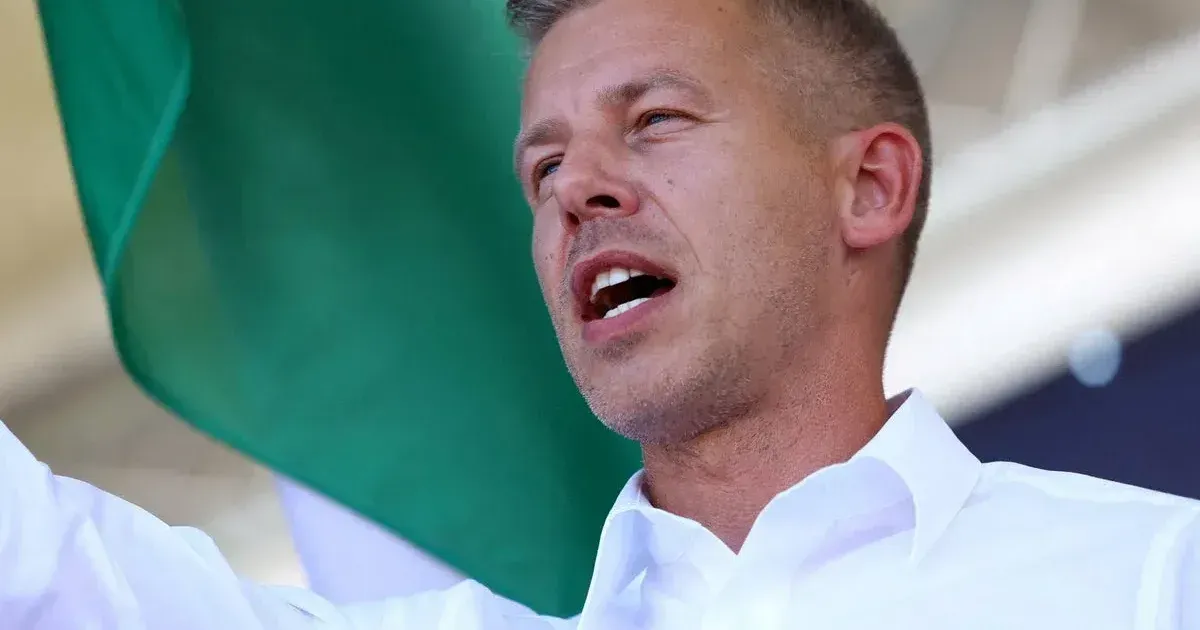
Péter Magyar secured a decisive victory that overhauled the political environment of Central Europe by ousting longtime leader Viktor Orbán. Orbán addressed supporters in Budapest after preliminary counts confirmed his Fidesz party lost its long-held grip on Parliament. By April 15, 2026, data from the National Election Office showed the newly formed Tisza Party clinching 136 seats in the 199-member chamber. The result ended a political era built around centralized power and control over public institutions.
Preliminary results suggest a crushing defeat for the nationalist movement that governed Hungary since 2010. While Fidesz managed to retain 56 seats, the loss of its supermajority and the executive office marks the end of an era defined by illiberal democracy. Minor parties like Mi Hazánk secured only 7 seats, leaving the opposition with a clear mandate to reform the national constitution and judicial systems. Péter Magyar declared the result a victory for transparency and European cooperation.
Records from voting centers indicate a participation rate of 66 percent, the highest level of engagement in the country’s democratic history. Voters in urban centers like Budapest and traditionally conservative rural regions alike showed a preference for the Respect and Freedom party, commonly known as Tisza. This surge in civic participation overwhelmed the established Fidesz ground game and polling projections. Long lines remained at polling stations in Debrecen and Szeged well past the official closing time of 7:00 p.m..
Tisza Party Wins Parliamentary Supermajority
Magyar’s political rise began with his departure from the Fidesz inner circle where he previously held positions in state-owned enterprises. His campaign focused on dismantling the corruption networks he once witnessed firsthand, appealing to a segment of the electorate tired of systemic graft. He mobilized hundreds of thousands of protesters through social media and grassroots rallies throughout 2025 and early 2026. The strategy successfully bridged the gap between traditional left-wing voters and disillusioned conservatives who felt abandoned by the ruling elite.
The result was painful for Fidesz. Orbán delivered his concession speech with a somber tone, acknowledging the shift in public sentiment after nearly two decades at the helm. He described the outcome as a severe blow to the national conservative movement he helped build across the continent. His departure removes a key ally for conservative movements in the United States and other European nations. Analysts note that Orbán’s alliance with various far-right figures abroad failed to insulate him from domestic economic frustrations. The intensity of the campaign reflected how desperately Viktor Orbán fought for survival in the months preceding his loss.
Voter Turnout Sets New National Record
High inflation and a stagnant manufacturing sector eroded the populist appeal that sustained the previous government for so long. Although Fidesz emphasized migration and traditional family values during the campaign, exit polls showed that the cost of living was the primary concern for 42% of voters. Péter Magyar capitalized on this by proposing an economic package aimed at strengthening the middle class and reducing dependence on Russian energy imports. His platform connected with young professionals who had previously looked for opportunities abroad.
International observers from the OSCE monitored the election process and reported high levels of transparency at the polling stations. While some noted the uneven media environment preceding the vote, the sheer volume of ballots cast for the opposition made the results indisputable. State-run television channels, which had exclusively praised Orbán for years, were forced to report the win as the numbers became undeniable. The transition of power is expected to begin within the next ten days.
Economic Discontent Weakens Orban Control
Discontent within the civil service also played a role in the ouster of the incumbent prime minister. Many mid-level bureaucrats and teachers joined the protests led by Magyar in the months leading up to the election. Their grievances included stagnant wages and the politicization of public education. These groups provided the organizational backbone for the Tisza party, serving as poll watchers and neighborhood coordinators on election day. The mobilization of the public sector signaled a collapse of the internal loyalty that Orbán relied upon to maintain his administration.
Magyar’s background as a former insider provided him with unique insights into the vulnerabilities of the Fidesz machine. He released several recordings during the campaign that allegedly showed high-ranking officials discussing the manipulation of court documents. These revelations caused a series of resignations in early 2026, further destabilizing the government. The scandals proved too consequential for the traditional Fidesz media outlets to ignore or successfully spin.
European Union Funding Impacts Electoral Outcome
European Union leaders in Brussels expressed cautious optimism about the election result and the potential for a renewed partnership with Hungary. The frozen funds, totaling roughly 20 billion euros, are now subject to negotiation between the Magyar transition team and the European Commission. Restoration of these funds would provide the new government with immediate capital to address infrastructure needs and healthcare reform. This financial leverage was a significant factor in the electoral debate throughout the spring.
Critics of the outgoing prime minister point to the degradation of democratic institutions as his primary legacy. During his sixteen years in power, Orbán oversaw the rewriting of the constitution and the packing of the constitutional court with loyalists. These changes were designed to ensure long-term control, but they ultimately could not stop a unified opposition movement. Magyar now inherits a government structure that he has vowed to dismantle in favor of a more traditional system of checks and balances.
Political scientists suggest that the Hungarian result may serve as a blueprint for opposition movements in other illiberal democracies. The strategy of using a former insider to lead a grassroots movement proved more effective than the previous efforts of fractured opposition coalitions. By focusing on corruption and economic competence, Magyar avoided the ideological traps that Fidesz used to divide the public in previous cycles. This victory places Hungary at the center of a potential pro-European shift in the region.
Hungary After the Supermajority
Western observers often overestimate the permanence of strongmen who manage to capture every lever of the state. Viktor Orbán spent sixteen years constructing a political fortress designed to be impenetrable, yet it crumbled in a single day because he ignored the fundamental rule of populism: you cannot feed the people with ideology alone when the currency is failing. Péter Magyar did not win because he was a more gifted orator or a visionary philosopher. He won because he was a technician who understood exactly how the Fidesz machine functioned and where to place the crowbar to make it snap.
He turned the regime’s own obsession with centralized control into a liability by making the prime minister personally responsible for every economic failure. The victory is not a simple return to the status quo of the mid-2000s. Magyar is a nationalist himself, albeit one who prefers the boardroom to the barricades. Brussels would be foolish to expect a compliant satellite state; instead, they will likely find a leader who demands the frozen billions while maintaining a pragmatic, Hungary-first agenda. The real test begins now. Ousting a strongman is a matter of mobilization, but governing a nation with a hollowed-out judiciary and a polarized populace is a matter of endurance. Magyar has the mandate, but he also inherits a debt-laden economy and a bureaucracy still staffed by loyalists who have nowhere else to go. Power is fragile.