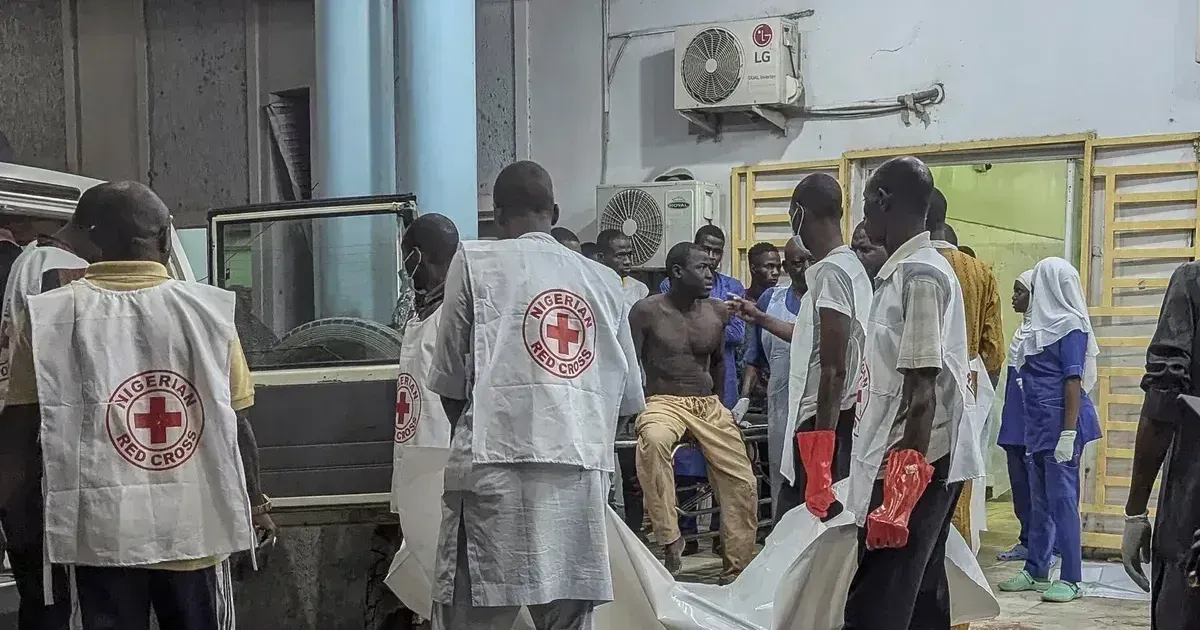
Nigerian military officials confirmed that a misdirected airstrike hit a crowded market in Yobe state. By April 15, 2026, the Nigerian Air Force faced renewed scrutiny over targeting procedures and rules of engagement. Early reports from local authorities and humanitarian organizations indicated a heavy civilian toll. While the intended target involved jihadist insurgents, the munitions landed among civilians engaged in trade.
Amnesty International dispatched researchers to the site to interview survivors and document the scale of the destruction. Preliminary findings from the human rights organization suggest that at least 100 people died instantly or succumbed to injuries shortly thereafter. Many others suffered severe burns or shrapnel wounds, overwhelming the modest medical facilities in nearby towns. Residents in the Yobe region have long lived under the shadow of conflict, yet this incident represents one of the deadliest errors in recent military history. Local hospitals reported a surge in pediatric cases, as children often accompany their parents to these rural trading hubs.
Yobe Market Massacre Death Toll Rises
Blood stained the dry earth of the marketplace where thousands had gathered to buy grain and household goods. Farmers from surrounding villages converged on this hub to sell their produce before the rainy season begins. When the first explosion occurred, most traders assumed it was a suicide bombing by local militants. Panic surged through the crowd as a second detonation leveled several permanent structures near the center of the square. Dust and smoke obscured the sky for hours, preventing immediate rescue efforts by local volunteers. Ground teams later found bodies scattered across a wide radius, indicating the use of high-yield explosives.
Military leaders in Abuja acknowledged the incident late in the day. They categorized the event as a misfire, a term frequently used to describe intelligence failures or technical malfunctions in the cockpit. Strategic commanders had intended to hit a staging area used by the Islamic State West Africa Province (ISWAP). Instead, the coordinates provided to the pilots led them directly to the civilian gathering. Military spokespersons declined to provide the specific type of aircraft involved in the mission. Nigerian Air Force officials stated that a high-level board of inquiry will investigate the cause of the discrepancy.
Grief-stricken families began the grim task of identifying their relatives among the debris. Traditional leaders in Yobe called for an immediate cessation of air operations until safety protocols are reviewed. Funerals started within hours of the strike, following the religious customs of the predominantly Muslim community. Mass graves became a necessity as the local morgues reached capacity before sunset. Tension in the state capital remains high as residents demand accountability from the central government.
Nigerian Air Force History of Tactical Failures
Past operations by the air wing have frequently resulted in similar tragedies. Records show that in January 2017, a jet bombed a displacement camp in Rann, killing approximately 115 people. More recently, a drone strike in December 2023 killed scores of civilians during a religious festival in Tudun Biri. These recurring errors suggest a systemic problem within the military intelligence apparatus. Analysts point to a reliance on faulty human intelligence rather than sophisticated signals monitoring. Pilots often operate under high pressure to eliminate moving targets, leading to split-second decisions that prove fatal for non-combatants.
Precision-guided munitions were supposed to minimize these risks. Nigeria has spent billions of dollars on modernizing its fleet, including the acquisition of A-29 Super Tucano aircraft and Chinese-made drones. Despite these investments, the coordination between ground spotters and aerial platforms appears fractured. Tactical units often fail to verify the presence of civilians before authorizing a strike. This latest event in Yobe highlights the persistent gap between technological capability and operational execution. Critics argue that the haste to show progress against the insurgency comes at an unacceptable human cost.
Amnesty International Documents Survivor Accounts
Researchers collected dozens of testimonies from those who escaped the blast. One trader described hearing a low hum before the horizon erupted in flames. Another survivor lost four siblings who were selling livestock just meters from the impact point. These accounts contradict the military narrative that the area was a known insurgent stronghold. Amnesty International emphasized that the market was a known civilian site with no visible military presence. The organization is now calling for an independent judicial commission to investigate the chain of command.
Rules of engagement for the Nigerian military theoretically prohibit strikes in densely populated areas. Commanders must follow a strict verification process before clearing a pilot to engage. In reality, the fluid nature of the insurgency leads to frequent deviations from these protocols. Insurgents often hide among civilian populations, complicating the target identification process. However, the use of heavy ordnance on a known market day suggests a catastrophic failure of basic reconnaissance. Defense analysts suggest that the pressure to produce results before the upcoming election cycle may be influencing risk assessments.
Reforming the military justice system is a priority for human rights advocates. Current laws make it difficult for civilians to sue the Ministry of Defense for negligence. Compensation packages for victims are often handled through opaque administrative channels instead of transparent court proceedings. Without significant legal consequences, the incentive to change operational behavior stays low. The Yobe strike is a focal point for a broader national debate on the balance between national security and the protection of civil liberties. Public trust in the armed forces continues to erode with every unforced error.
Accountability After the Strike
Abuja has perfected the art of the bureaucratic apology while changing absolutely nothing about its lethal incompetence. This latest slaughter in Yobe is not a tragic accident; it is the predictable outcome of a military culture that treats civilian life as an acceptable rounding error in the war on terror. The Nigerian Air Force has been caught in this loop for nearly a decade, receiving upgraded hardware from global powers while its internal intelligence chains remain rotted by corruption and negligence. By labeling 100 dead traders a misfire, the high command is signaling that the objective of neutralizing ISWAP outweighs the constitutional duty to protect its own citizens.
The international community shares the blame. Western governments continue to greenlight arms sales to a regime that repeatedly bombs its own marketplaces and displacement camps. They prioritize regional stability over human rights, yet these strikes do more to radicalize the youth than any jihadist sermon ever could. Every errant bomb creates a vacuum of authority that insurgents are all too happy to fill. If Nigeria wants to win this conflict, it must stop treating its northern states like a free-fire zone where the burden of proof rests on the dead. The Nigerian military is currently its own worst enemy.