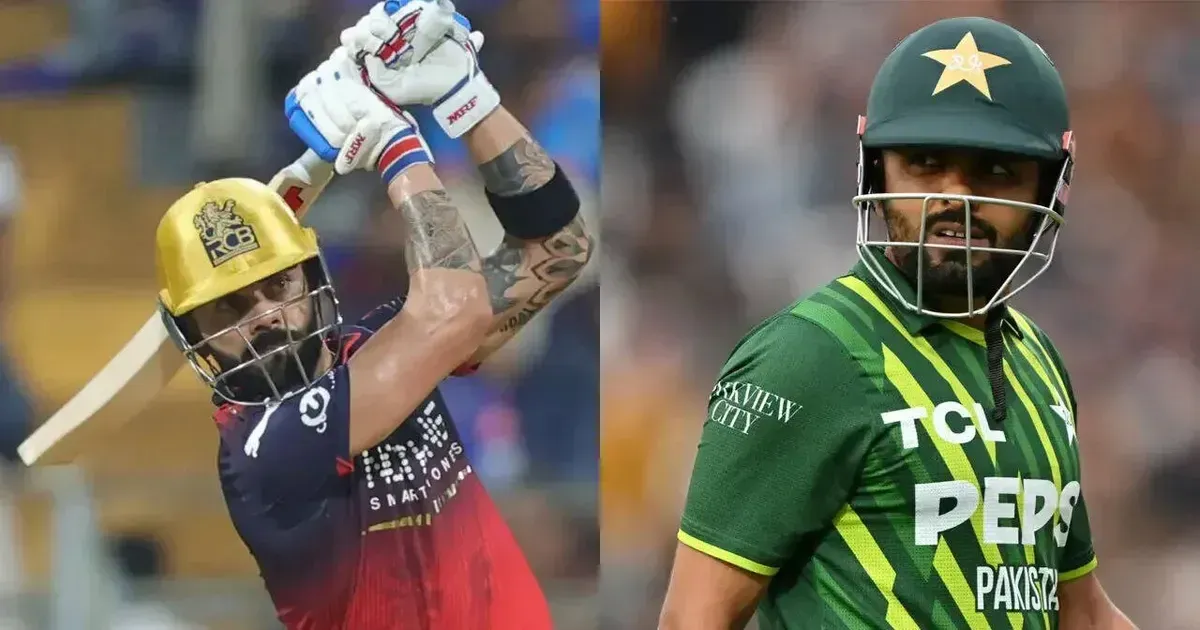
Virat Kohli walked onto the pitch at Wankhede Stadium to achieve a feat no other batter in the Indian Premier League had managed before. Entering the contest against the host team, Kohli needed only a modest tally to secure his place in the record books as the first player to surpass 1,000 runs against a single opponent in this competition. The achievement arrived during a high-stakes evening where the atmosphere in Mumbai matched the historical weight of the performance. Spectators watched as the former Indian captain methodically dismantled the bowling attack, proving that his longevity in the shortest format remains a product of technical discipline rather than mere aggression.
Mumbai Indians won the toss and elected to field, a decision that initially seemed standard for the evening conditions at Wankhede. This choice backfired almost immediately when Royal Challengers Bengaluru openers began finding the boundary with clinical precision. Kohli did not act alone in this assault, finding a reliable partner in Phil Salt. Their cooperation at the crease dictated the pace of the powerplay, forcing the Mumbai captain to rotate bowlers early in a desperate attempt to break the rhythm. The scoring rate hovered near ten runs per over, placing the fielding side under immediate psychological pressure.
Wankhede Stadium Hosts Record-Breaking Performance
Batteries of cameras flashed every time the ball touched Kohli’s bat during the early stages of the innings. He reached the four-digit mark against Mumbai Indians with a characteristic stroke, cementing a statistical dominance that spans nearly two decades of franchise cricket. Records kept by league officials show that Kohli has consistently targeted the Mumbai bowling unit across different venues, yet doing so at their home ground added a layer of symbolic finality. The milestone puts clear daylight between him and other prolific run-scorers who have struggled to maintain such high averages against the five-time champions.
Phil Salt complemented the veteran’s steady approach by launching a blistering offensive from the other end. While Kohli focused on placement and strike rotation, Salt took greater risks against the pace bowlers. His contribution of 78 runs arrived in a flurry of boundaries that allowed Kohli the space to reach his milestone without the pressure of a stagnant scoreboard. Such a dynamic shifted the burden of performance entirely onto the Mumbai spinners, who found little grip on a surface that favored the batters. The scorecard reflected a rare total lack of control from the Mumbai bowling department during the first ten overs.
Phil Salt and Virat Kohli Establish Opening Dominance
Partnerships of this magnitude often define the outcome of T20 matches long before the final ball is bowled. The 120-run stand between Salt and Kohli represented more than a healthy start; it was a structural collapse of the Mumbai defensive plan. By the time the partnership was finally broken, the foundation for an imposing total had been poured. Analysts noted that the pair maintained a strike rate that never dipped below 140, even during the introduction of tactical field changes meant to curb their scoring. The scoreboard moved with a relentless efficiency that left the home crowd uncharacteristically quiet.
The explosive 120-run opening partnership between Virat Kohli and Phil Salt powered Royal Challengers Bengaluru to a strong start against Mumbai Indians. Cricket historians will look at this match as the moment Kohli surpassed the partnership benchmarks set by other global icons. He now holds the record for the most century stands in T20 history, moving past both Chris Gayle and Babar Azam. This 47th century partnership highlights Kohli’s ability to adapt to different opening partners over the years, from Chris Gayle to the current generation. Consistency in forming these large stands has become the hallmark of his late-career evolution. The ability to anchor an innings while a teammate explores a more volatile scoring path is a skill Kohli has perfected.
Babar Azam and Gayle previously shared the limelight for their ability to dominate the opening phase of T20 matches. Kohli now stands alone at the summit of this particular metric, having participated in 47 separate stands of 100 runs or more. Comparing these three legends reveals that Kohli’s success often stems from his lower dot-ball percentage. Gayle relied on boundary-heavy bursts, whereas Kohli maintains pressure through constant movement between the wickets. The physical conditioning required to maintain this style of play at his age is a subject of frequent discussion among team trainers.
Numbers provided by the league indicate that Kohli’s conversion rate of starts into substantial partnerships is higher than that of Babar Azam. While the Pakistani captain is known for his elegant stroke play, Kohli’s aggressive running often forces fielding errors that inflate the partnership totals. Sunday’s performance at Wankhede was a practical demonstration of this pressure-cooker tactic. Mumbai fielders were forced into several rushed throws that resulted in overthrows, further padding the RCB total. The statistical gap between Kohli and his peers continues to widen with every season.
Milestone Pressure for RCB
Reliance on historical data suggests that individual milestones like Kohli’s 1,000-run mark against Mumbai Indians are often dismissed as vanity metrics, yet this view ignores the psychological warfare inherent in modern T20. When a single player dominates a franchise so thoroughly for so long, it ceases to be a statistical quirk and becomes a systemic failure of that franchise’s scouting and tactical departments. Mumbai Indians has had over a decade to solve the Kohli puzzle, and their failure to do so on April 12, 2026, exposes a stagnation in their analytical approach. The decision to field first was a blunder born of overconfidence in a bowling lineup that has lacked a genuine enforcer since the departure of their golden-era greats.
Kohli’s surpassing of Babar Azam and Chris Gayle in century partnerships is the definitive answer to critics who claimed his game was too traditional for the evolving T20 landscape. By anchoring a 120-run stand with Phil Salt, he demonstrated that he is the ultimate facilitator of contemporary power-hitting. He provides the insurance policy that allows hitters like Salt to swing without reservation. This role is far more valuable than the raw strike rate of a specialist finisher because it guarantees a competitive total regardless of middle-order collapses. Mumbai’s defeat was not a matter of bad luck. It was a failure of imagination. Kohli is not just playing cricket. He is conducting an exercise in institutional humiliation.