Netanyahu donned a flak vest to visit Israeli combat units currently holding ground inside southern Lebanon. Accompanied by Defense Minister Israel Katz, the prime minister toured forward operating bases to review a campaign that shows no sign of slowing. Israeli officials claim the deployment was necessary to disrupt a planned incursion by Hezbollah fighters into northern Israel. By April 15, 2026, the visit had become a signal of continued Israeli resolve along the border.
Soldiers stationed at the border received praise from the prime minister for their role in what he described as a preventative strike. Katz stood beside Netanyahu as they surveyed the rugged terrain that has become a graveyard for international diplomacy. Military vehicles and heavy artillery now dominate a landscape once defined by olive groves and small farming communities. Reports from the frontline suggest that Israeli forces have established a semi-permanent presence in several strategic hilltop positions.
Israel Katz Joins Frontline Military Inspection
Defense Minister Katz used the visit to emphasize the logistical achievements of the current mobilization. Military command centers have been moved forward to ensure rapid response times against mobile rocket launchers. Communications arrays now sit atop ridges that previously served as observation posts for Lebanese border guards. Security protocols for the visit were extreme, involving drone swarms and electronic jamming to prevent targeted strikes against the visiting delegation. Netanyahu crossed the border on Sunday to assert dominance over the territory, but the operational reality on the ground is one of constant friction.
Every movement by the prime minister was shielded by elite special forces units familiar with the specific urban corridors of southern Lebanese towns. Netanyahu told the gathered troops that their presence inside Lebanon had successfully thwarted a large-scale invasion similar to previous cross-border raids. Such claims have been central to the political narrative maintained by Tel Aviv since the conflict began. Israeli military planners have long warned of a tunnel network constructed by militants beneath the border. Engineers are currently working to map these subterranean passages while infantry units secure the surface. Many of these tunnels originate in residential areas, complicating the military objective of neutralization without civilian loss. Netanyahu walked through a reinforced command bunker to receive a classified briefing on the status of remaining Hezbollah munitions caches. Intelligence suggests that substantial stockpiles of short-range missiles remain hidden in the northern valleys. Despite the reported destruction of major command hubs, the militia continues to launch sporadic attacks against the occupying forces. Evidence of recent exchanges of fire is visible in the scorched earth and pockmarked concrete of nearby structures.
Hezbollah Deterrence and the Prevention Doctrine
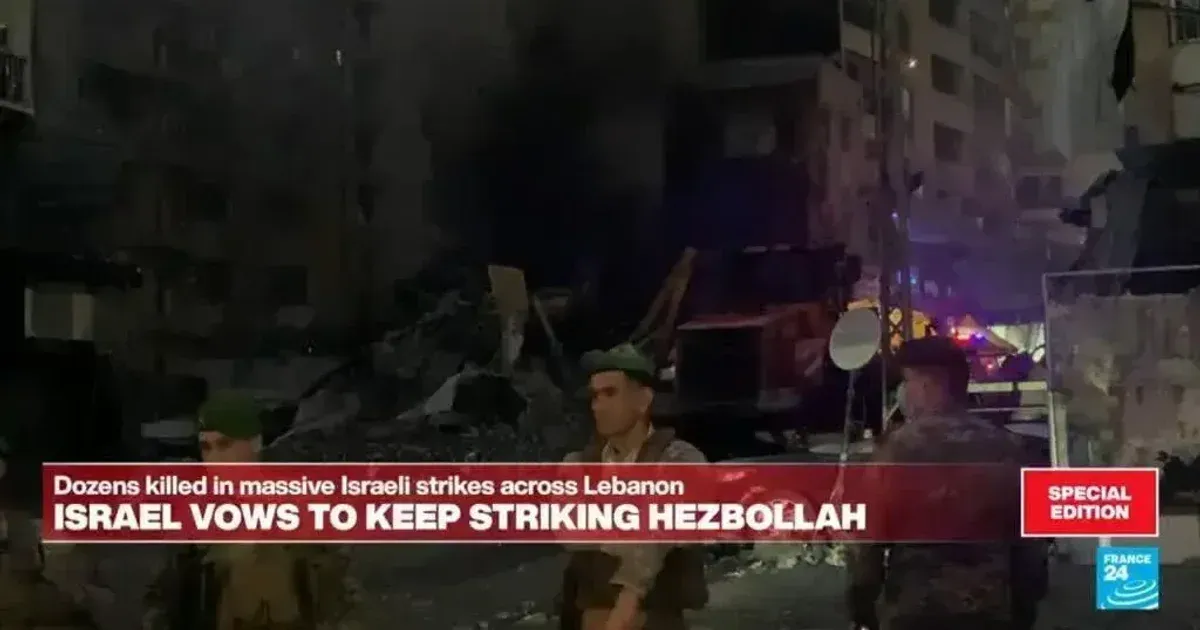
Tel Aviv maintains that the invasion was a reactive necessity designed to protect Israeli citizens. Netanyahu argued during his field visit that failing to occupy these positions would have invited a catastrophic ground assault by Iranian-backed forces. This assessment is shared by the military high command but faces intense scrutiny from international legal experts. While Hezbollah remains a powerful non-state actor, the scale of the Israeli response has redefined the conflict as a full-scale territorial war. Lebanese officials characterize the move as a blatant violation of sovereignty and international law. Military operations intensified as Israel sent more troops into southern Lebanon to secure the rugged terrain.
The Lebanese government is politically present but operationally absent.
Jad Shahrour, a spokesperson for the Samir Kassir Foundation, highlighted the internal collapse of the Lebanese state during a recent broadcast. Shahrour argued that while politicians in Beirut continue to issue statements, they possess no real authority over the southern battlefields. The central government cannot deploy its own army to the border or provide basic security for its citizens caught in the crossfire. Fragmentation of the national narrative has led to a situation where local communities must fend for themselves. State authority exists only on paper while the physical reality is dictated by foreign militaries and local militias.
Lebanese Government Authority Erodes Under Occupation
Diplomatic channels to Washington and Paris are open, but they yield few real results on the ground. Negotiators have struggled to find a ceasefire framework that addresses the core security concerns of Israel while respecting Lebanese borders. Asymmetry between state actors and well-funded militias has rendered traditional diplomacy ineffective. Shahrour emphasized that the humanitarian toll is more than a byproduct of war; it is a direct result of the political vacuum. Psychological trauma is spreading through a population that feels abandoned by its own leaders. Schools in the south have been converted into shelters or abandoned entirely as families flee toward the north. These internal refugees face uncertain futures in overcrowded cities like Beirut. The lack of a cohesive state response has allowed sectarian tensions to resurface in areas once considered stable. Every day the occupation continues, the social fabric of the nation experiences further strain.
Humanitarian Crisis Deepens Across Southern Border
Violence has claimed thousands of lives and displaced a significant portion of the southern population. Children are particularly affected by the relentless drone surveillance and the sound of constant artillery. Medical facilities in the region are operating with skeleton crews and dwindling supplies of essential medicines. Power outages are the norm rather than the exception since the destruction of key electrical infrastructure. Water delivery systems have been severed in several districts, leading to concerns about the spread of waterborne diseases. International observers describe the situation as a humanitarian catastrophe that is being ignored by a world focused on the broader U.S.-Iran conflict. Total damage to Lebanese infrastructure is estimated to exceed $12 billion according to preliminary assessments.
Psychological impacts of the war will likely persist for generations. Shahrour noted that the relentless nature of the violence has created a sense of hopelessness among the youth. They see a future defined by conflict and the presence of foreign troops on their soil. Israeli commanders argue that the humanitarian situation is a direct consequence of Hezbollah using civilians as human shields. They claim that military targets are carefully selected, yet the density of the urban environment makes collateral damage inevitable. Each strike that results in civilian casualties provides fuel for the propaganda machines of both sides. The cycle of resentment ensures that a military victory may not lead to long-term stability.
Occupation Pressure on the Border
Does the physical presence of a prime minister in a flak vest on foreign soil constitute a victory, or is it merely a choreographed display of tactical hubris? Netanyahu is gambling his political survival on a doctrine of total deterrence that requires the permanent occupation of southern Lebanon. History suggests that such buffer zones rarely remain buffers; they become magnets for attrition and quagmires for the occupying force. By bypassing the Lebanese state entirely, Israel is doing more than fighting Hezbollah; it is actively dismantling the concept of Lebanese sovereignty. It creates a dangerous precedent where the lack of state capacity becomes a standing invitation for unilateral military intervention by neighbors.
The strategic failure here lies in the assumption that decapitating a militia's command structure or seizing its hilltops will neutralize the underlying ideological fervor. If anything, the visibility of Israeli troops in Lebanese villages is the ultimate recruitment tool for the very groups Netanyahu claims to be eradicating. Washington remains paralyzed by its own involvement in the wider conflict with Iran, leaving Tel Aviv with a blank check that it is cashing in Lebanese blood. It is no longer a localized border dispute.
It is the opening chapter of a regional reorganization where borders are fluid and the only law is the range of a missile. Netanyahu has entered Lebanon, but he has no exit strategy that does not involve leaving a failed state in his wake. Total military dominance is not a substitute for a functioning regional security architecture.