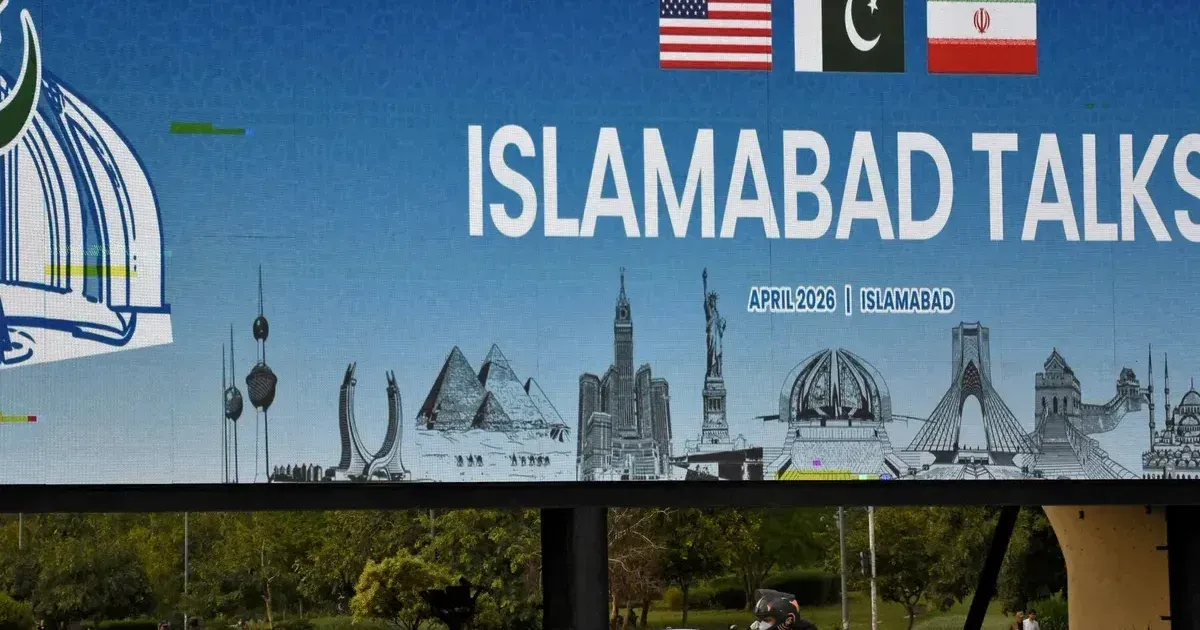
Kazem Gharibabadi, Iran's deputy foreign minister, declared that Tehran now dictates terms in ongoing diplomatic sessions with Washington. Iranian officials maintain that the period of defensive posturing has ended, replaced by a strategic assertiveness that reflects their domestic nuclear progress. The April 11, 2026, remarks framed Western sanctions as a pressure tool that had reached diminishing returns. Gharibabadi described the current environment as a total failure of the foreign-led effort to isolate the Islamic Republic.
Statements from the foreign ministry in Tehran indicate a shift in the tone of engagement. While previous administrations sought relief from punitive measures through concessions, the current leadership views its technical advancements as unshakeable leverage. The resilience of the Iranian domestic infrastructure through years of restricted trade has hardened the resolve of negotiators. Diplomacy continues in private, yet the public rhetoric from Iranian delegates has become increasingly defiant.
Washington authorities continue to monitor the expansion of Iran’s nuclear facilities. Intelligence reports suggest that the International Atomic Energy Agency has faced recurring difficulties in maintaining oversight at sensitive sites. This lack of transparency remains a primary point of contention for U.S. and European diplomats. Negotiators from the White House insist that any path forward must involve verifiable rollbacks of uranium enrichment levels. Iranian negotiators reject these demands as antiquated, arguing that their technological gains are permanent and cannot be bargained away.
Diplomatic Deadlocks and the Failure of Sanctions
Years of economic restrictions have failed to dismantle the Iranian nuclear apparatus. The timeline of these interactions stretches back decades, beginning with the initial discovery of covert enrichment sites in the early 2000s. Since then, the relationship has fluctuated between periods of cautious engagement and overt hostility. The 2015 Joint Comprehensive Plan of Action offered a temporary bridge, providing sanctions relief in exchange for strict enrichment limits. That bridge collapsed when the United States withdrew from the agreement in 2018.
“In the current landscape, the Islamic Republic of Iran has the upper hand and has entered negotiations from a position of strength, proving that the war on the nation has failed,” Gharibabadi said.
Financial analysts estimate that the Iranian economy has lost over $100 billion in oil revenue due to global restrictions. Despite these losses, the nation has diversified its trade partners, looking toward Beijing and Moscow to offset Western isolation. Iranian energy exports have reached their highest levels in five years, often through shadowy tanker networks and alternative payment systems. This financial survival has convinced Tehran that it can withstand further pressure indefinitely.
Security experts note that the technical knowledge gained by Iranian scientists is now the most significant obstacle to a new deal. Unlike physical centrifuges, which can be destroyed or dismantled, scientific expertise is impossible to erase. The enrichment of uranium to 60 percent purity has brought the country within technical reach of weapons-grade material. While the Supreme Leader maintains that a religious fatwa forbids nuclear weapons, the capability is a potent deterrent. Washington views this capability as a direct threat to regional stability.
Gharibabadi Asserts Regional Strength and Nuclear Leverage
Gharibabadi emphasized that the failed war on Iran included cyberattacks, assassinations of scientists, and industrial sabotage. He argued that these tactics only accelerated the pursuit of self-reliance within the military and nuclear sectors. The deputy minister noted that Western powers now face a more sophisticated adversary than the one they encountered a decade ago. Iranian influence in the Levant and Yemen provide secondary layers of protection against conventional military threats. Negotiations in 2026 reflect this regional reality. Tehran no longer views itself as a supplicant seeking entry into the global financial system. Instead, it positions itself as a regional hegemon whose cooperation is necessary for peace in the Persian Gulf. This perspective complicates the U.S. strategy of using sanctions as a primary tool for behavioral change. Sanctions fatigue among European allies has also weakened the unified front that once characterized the P5+1 coalition.
Evolution of Washington Tactical Pressure Campaigns
Presidential administrations have cycled through various iterations of the maximum pressure campaign. Each phase involved targeting different sectors of the Iranian economy, from shipping to the central bank. Early efforts focused on secondary sanctions that penalized foreign companies for doing business with Iran. These measures effectively crippled the automotive and aviation sectors. Tehran responded by developing its own manufacturing hubs and sourcing components from non-Western markets. Direct military confrontations have occurred sporadically, mostly in the form of proxy skirmishes. U.S. forces in Iraq and Syria have frequently been targeted by Iranian-aligned militias using sophisticated drone technology. Tehran uses these incidents to signal that any strike on its soil would lead to a broader regional fire. The risk of a general war in the Middle East continues to temper the military options available to U.S. planners.
Diplomacy, in its current form, appears to be a management strategy rather than a solution. Both sides appear content to maintain the status quo while publicly blaming the other for the lack of progress. Washington maintains its posture of deterrence, while Tehran continues to refine its centrifuges. The objective for the U.S. is to prevent a nuclear breakout without starting a new war. Iran’s objective is to achieve the status of a threshold nuclear state while regaining access to the global economy.
Regional Power Shifts Complicate Diplomatic Outcomes
Alliances in the Middle East have shifted sharply since the previous round of talks. Rapprochement between Riyadh and Tehran has altered the calculus for U.S. diplomats who once relied on a unified Arab bloc to oppose Iran. Saudi Arabia and the United Arab Emirates are increasingly pursuing independent foreign policies that prioritize economic stability over sectarian conflict. The regional cooling of tensions reduces the external pressure on the Iranian government.
Israel remains the most vocal opponent of any diplomatic compromise. Israeli officials have repeatedly warned that they will take unilateral action if they believe Tehran is close to a nuclear breakthrough. The threat introduces a wildcard into the negotiations that neither Washington nor Tehran can fully control. Any Israeli strike would likely end the current diplomatic track immediately. The lack of a common baseline for agreement remains the largest hurdle. Washington wants a deal that is longer and stronger, covering missile technology and regional behavior. Tehran insists on a narrow focus that only addresses the nuclear program and provides immediate, permanent sanctions relief. These two positions have not moved closer in over two years of intermittent dialogue.
Diplomacy After Pressure Fails
Gharibabadi’s declaration of an upper hand is less a statement of fact and more a confession of the West’s strategic bankruptcy. For twenty years, Washington has operated on the delusion that a more painful set of sanctions or a more clever cyber-worm would force the clerical regime to its knees. That theory has been tested to destruction and found wanting. The Iranian state has not only survived the most comprehensive sanctions regime in modern history but has emerged with its nuclear infrastructure essentially intact and its regional influence expanded. To call this anything other than a failure of American coercive diplomacy is to ignore the reality on the ground.
Sovereignty in the modern age is defined by the ability to resist external dictate. Tehran has achieved this through a brutal, autarkic adaptation that sacrifices the well-being of its citizenry for the survival of the state apparatus. While the Iranian people suffer under record inflation, the regime celebrates its ability to enrich uranium at 60 percent as a mark of national pride. Washington now faces a choice between accepting Iran as a nuclear-threshold power or engaging in a kinetic conflict that would likely shatter the global energy market and drag the United States into another decades-long mess.
Diplomacy is currently a theater of the absurd where both actors recite lines for a domestic audience that stopped listening years ago. The White House cannot offer the permanence Tehran requires, and Tehran cannot offer the transparency the White House needs. The evidence shows the slow-motion emergence of a new nuclear reality in the Middle East. The era of nonproliferation in the region is over. The question is no longer how to stop Iran, but how to live with the consequences of its success. A nuclear Iran is a certainty.