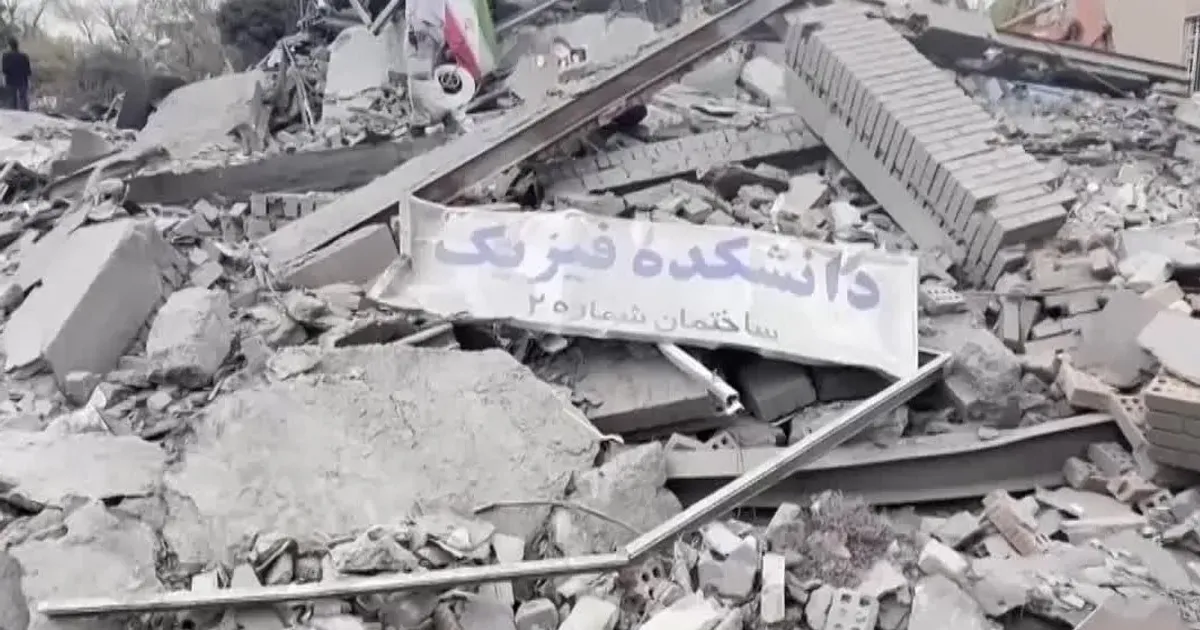
The campus warning turns education infrastructure into a conflict concern. Universities are being pulled into a wider military narrative. Iranian officials declared on The warning landed inside a wider argument over campus security. March 30, 2026, that recent strikes against domestic academic institutions would trigger military responses against Western campuses in the Middle East.
High-ranking commanders within the Revolutionary Guard issued a joint statement condemning what they described as a coordinated campaign of sabotage targeting the intellectual heart of the nation. Security footage from earlier today showed smoke rising from the physics laboratory at Tehran University after a series of low-altitude drone incursions. Similar reports emerged from Isfahan and Shiraz, where technical colleges reported serious infrastructure damage to their server rooms and research facilities. Iranian state media claimed these operations were orchestrated by foreign intelligence agencies intent on stalling the nuclear and aerospace programs of the country.
Tehran authorities characterize the incidents as an escalation of the enduring shadow war involving regional competitors. Foreign Minister Hossein Amir-Abdollahian spoke via video link to regional counterparts, asserting that academic institutions should remain beyond the scope of kinetic warfare. Military leaders, however, adopted a far more aggressive tone during a press conference in the capital. They suggested that if Iranian classrooms are no longer safe, then American satellite campuses in nearby countries will face equivalent risks. These warnings specifically mentioned facilities located in Qatar and the United Arab Emirates, where several US-based universities maintain a meaningful physical presence. Security across these Gulf institutions reached its highest alert level within hours of the announcement.
Retaliation is no longer a matter of if, but where.
American Universities in the Persian Gulf
Academic institutions from the United States have built an enormous footprint in the region over the last two decades, particularly within the Qatari Education City complex. Branch campuses of Georgetown University, Carnegie Mellon, and Northwestern University operate within a few hundred miles of the Iranian coastline. These schools host thousands of international students and represent a multi-billion dollar investment in regional soft power. Iranian officials argued that these campuses serve as recruitment hubs for Western intelligence agencies. Tehran maintains that the proximity of these institutions to American military bases makes them legitimate targets under their doctrine of proportional response. US State Department officials issued a travel advisory shortly after the Iranian threat went public.
"We view these educational centers as extensions of sovereign soil, and any violation of our academic integrity will be met with a reciprocal response against the centers of Western indoctrination in our backyard," an Iranian military spokesperson stated on state television.
Diplomatic circles in Doha and Abu Dhabi expressed immediate concern over the possibility of asymmetric attacks. Security at NYU Abu Dhabi and the American University of Sharjah was visibly increased, with local police establishing checkpoints at every entrance. Qatari officials reached out to Tehran to seek clarification on the specific nature of the threats. Despite these diplomatic efforts, the rhetoric from the IRGC continued to harden throughout the evening. Military analysts in Washington warned that Iran could use proxy militias in Iraq or Yemen to carry out strikes on these educational targets. This would allow Tehran to maintain plausible deniability while still delivering a painful blow to American interests.
Historical Patterns of Academic Violence in Iran
Iranian universities have long been the primary battleground for the ideological soul of the Islamic Republic. Student protests in 1999 nearly toppled the reformist government of Mohammad Khatami after security forces raided a dormitory. Violent clashes also defined the 2009 Green Movement, where the Basij militia entered several campuses to suppress demonstrations against disputed election results. More recently, the 2022 protests saw Sharif University of Technology become a site of intense conflict between students and riot police. These internal cracks often invite external interference, as foreign actors seek to exploit the tension between the youth and the ruling elite. Current leaders in Tehran view the March 30, 2026, attacks as an extension of this historical struggle.
Education officials in Tehran emphasized that the recent strikes differed from previous internal unrest because the weaponry used was clearly foreign. They pointed to the assassination of nuclear scientists, many of whom held professorships, as a precedent for the targeting of intellectuals. Past incidents involving Stuxnet and other malware also targeted the technical capabilities of the university system. Iranian leaders now argue that the West has declared open war on the scientific progress of the nation. By framing the defense of universities as a matter of national survival, the government is attempting to unify a fractured student body against a common external enemy. Whether this strategy succeeds depends on the scale of the promised retaliation.
Retaliation Threats and Regional Security
Global oil markets reacted sharply to the news, with Brent crude futures rising nearly 4% on fears of a wider conflict. Shipping lanes in the Strait of Hormuz remained open, but maritime insurers increased premiums for vessels docking in the northern Gulf. Iranian naval exercises scheduled for next month were moved forward to April 5, 2026, according to satellite imagery. Defense analysts suggest that a retaliatory strike could take the form of a large-scale cyberattack on the administrative networks of US universities. Such a move would disrupt the records and financial systems of thousands of students without the political risks of a kinetic bombing. Tehran, however, hinted at more direct measures in its official communiques.
Western intelligence agencies monitored increased activity at Iranian missile sites shortly after the sun set in Tehran. This movement could be a defensive posture or a preparation for a coordinated launch. Regional observers noted that the threat against universities is a new and dangerous variable in the Middle East security equation. It puts non-combatant civilians and international students in the direct line of fire. United Nations officials called for restraint from all parties, but their pleas found little resonance in a region braced for impact. Military planners in the US Central Command are currently reviewing contingency plans for the evacuation of American citizens from the Gulf. The standoff continues as both sides wait for the next moves.
Campus Security Escalation
Campus threats carry symbolic weight because universities represent state capacity, elite training and international exchange. That makes them tempting rhetorical targets in a widening conflict.
The practical concern is whether warnings translate into real risk for branch campuses, research partnerships and students in exposed regions.