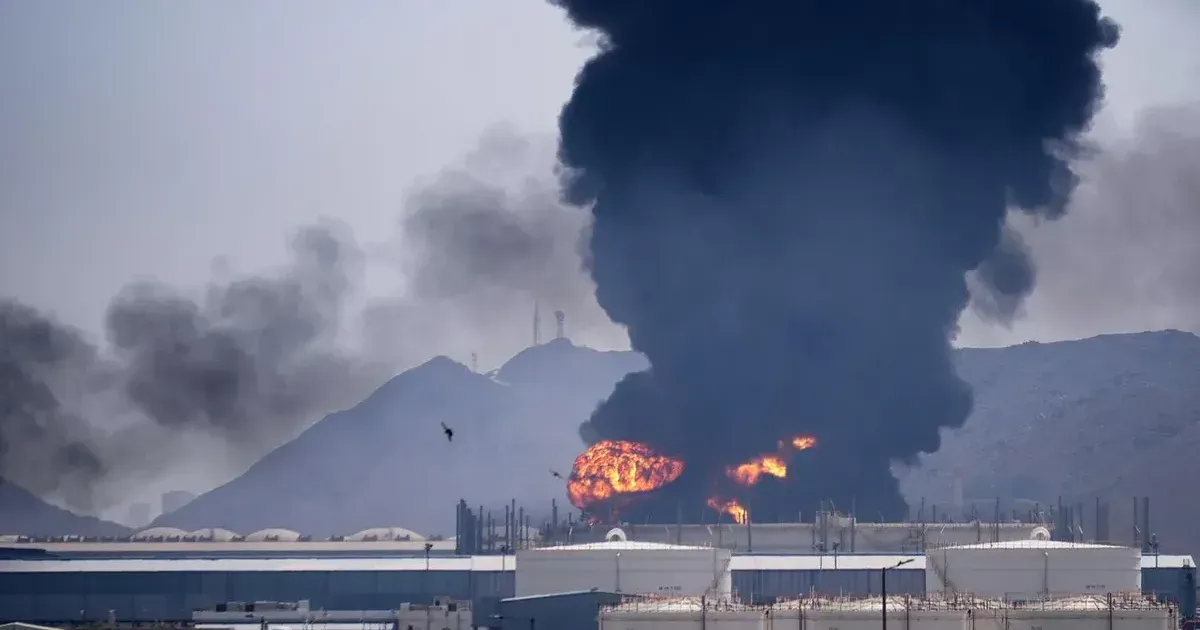
Baghdad became a focal point of the widening regional conflagration on Saturday. Iranian forces launched a direct missile strike against the United States Embassy compound, hitting a helipad inside the high-security Green Zone. This assault came as the conflict involving the United States, Israel, and Iran entered its third week of sustained military operations. The attack signaled that the Kharg Island raid had moved beyond a contained military episode and into a wider regional cycle of retaliation. Initial reports from the scene indicated that while the missile struck the intended target, casualty figures remain unconfirmed by the State Department. Sirens blared across the Iraqi capital for nearly twenty minutes while air defense systems engaged multiple incoming threats. Security contractors stationed at the facility reported violent vibrations felt across the diplomatic quarters. Local authorities in Baghdad cordoned off the streets leading to the Green Zone immediately. The strike represents the most direct confrontation between Tehran and Washington since the current round of hostilities began earlier this month.
The embassy strike turned the Kharg Island raid into a regional retaliation cycle rather than a contained military episode.
Baghdad Embassy Hit After Kharg Raid
Iranian military officials described the move as a proportionate response to recent American strikes on their sovereign territory. The helipad at the embassy is a critical transport link for diplomatic personnel and high-ranking military advisers. Damage to the landing site disrupts the ability of the United States to rotate staff or conduct emergency evacuations in the heart of Iraq. Witnesses reported a plume of black smoke rising from the compound shortly after the impact. "The strike on the helipad is a direct test of American diplomatic immunity in the region," a State Department official said. Meanwhile, the conflict spilled over into neighboring territories with varying degrees of success for regional defense systems. Debris from an intercepted Iranian drone fell onto an oil facility in the United Arab Emirates during the same window of time as the Baghdad attack. Local emergency services responded to a fire at the site, which was brought under control after several hours. No deaths were reported at the Emirati facility, but the incident highlights the vulnerability of energy infrastructure across the Persian Gulf. Air defense batteries in Abu Dhabi had been on high alert for seventy-two hours prior to the interception. This retaliation followed a series of coordinated air raids by American and Israeli jets targeting Iranian maritime assets. Both nations have increased their naval presence in the Strait of Hormuz to protect commercial shipping interests. The drone debris caused localized structural damage to a storage tank holding crude oil destined for European markets.
Energy Infrastructure Raises the Stakes
American bombers focused their primary efforts on Kharg Island earlier in the week. The island acts as the principal export terminal for Iranian crude oil, handling approximately 90 percent of the nation's energy exports. Intelligence reports suggested that the facility suffered catastrophic damage to its primary loading jetties and storage infrastructure. Disruption at this location removes millions of barrels of oil from the global market daily.
Energy analysts in London and New York observed a sharp spike in Brent crude prices following the news of the terminal's destruction. Analysts expect prices to remain unstable as long as the maritime routes remain under threat. The tactical decision to strike the island was intended to drain Tehran's financial resources, which fund proxy groups across the Middle East. Iranian officials have since vowed to make the region unsafe for any oil tankers under Western flags.
But the military tension is not confined to the deserts and seas of the Middle East. Security concerns have migrated to the domestic front, where federal authorities are struggling with a surge in radicalized activity. the connection between foreign wars and domestic safety has never been more visible to the American public.
Domestic Security Enters the Frame
New York City police and federal agents disrupted a violent plot targeting the mayoral mansion on Friday evening. Two men, whom authorities describe as being inspired by the Islamic State, attempted to bring powerful homemade explosives to a protest at Gracie Mansion. The protest involved a far-right group gathered to voice opposition to city policies. Federal prosecutors allege the suspects intended to maximize casualties by detonating the devices in the middle of the dense crowd. Officers recovered the explosives after a traffic stop near the Upper East Side. The devices contained shrapnel and high-grade chemical accelerants designed to cause severe fire damage. This plot highlights a growing trend of foreign-inspired actors using domestic political unrest as a cover for mass casualty events. Both suspects are now being held in federal custody without bail as the investigation continues into their digital footprints and potential overseas contacts.
Federal investigators are also looking into whether the timing of the NYC plot was synchronized with the escalation in the Middle East. Preliminary data from digital forensics suggests the suspects were monitoring Iranian state media in the hours leading up to their arrest. One of the suspects had allegedly shared propaganda videos showing the strikes on American assets in Iraq. The intersection of state-sponsored warfare and lone-wolf radicalization presents a complex challenge for urban law enforcement agencies. Budgetary constraints at the Department of Justice and the FBI are complicating the response to these complex threats. Recent legislative sessions resulted in major funding cuts for counter-terrorism units and cyber-intelligence divisions. These reductions forced the closure of several regional task forces that previously monitored domestic extremist groups. Current agents report that they are working with fewer resources while the threat volume continues to increase.
The FBI has had to prioritize only the most immediate threats to life, often leaving lower-level radicalization cases unexamined. The lack of funding has also slowed the process of vetting intelligence received from international partners. The national security apparatus is being asked to do more with less during a period of active warfare. Senior officials in Washington have warned that these cuts could lead to critical intelligence gaps at a time when Iran is seeking to project power through unconventional means.
Security in New York City remains at its highest level in over a decade. Patrols around diplomatic missions and energy hubs have doubled since the Baghdad strike. Even the strain on local resources is evident as the city prepares for further protests and potential retaliatory actions. The current climate suggests a long period of heightened vigilance for both military and civilian populations.
Two Fronts Are One Warning
Ignoring the dual-front nature of modern warfare invites catastrophe. The strike on the Baghdad Embassy and the foiled plot at Gracie Mansion are not isolated incidents, but rather two sides of the same coin in a global struggle for dominance. While the administration pretends that surgical strikes on Kharg Island can contain Iranian aggression, the reality is that Tehran has successfully exported the conflict to the streets of the West. It is the height of strategic incompetence to hollow out the FBI and Department of Justice during a hot war with a nation that has spent decades perfecting asymmetric tactics.
Washington elites have consistently prioritized ideological budget battles over the basic safety of the American populace. We are effectively fighting a war with one hand tied behind our backs while the enemy exploits our internal divisions. If the United States continues to ignore the link between foreign military policy and domestic security, the next homemade bomb will not be intercepted at a traffic stop. The arrogance of assuming that oceans provide protection in a digital and globalized era is a luxury we no longer possess.
We must either commit to full spectrum security or expect the violence of the Middle East to become a permanent fixture of the American experience.