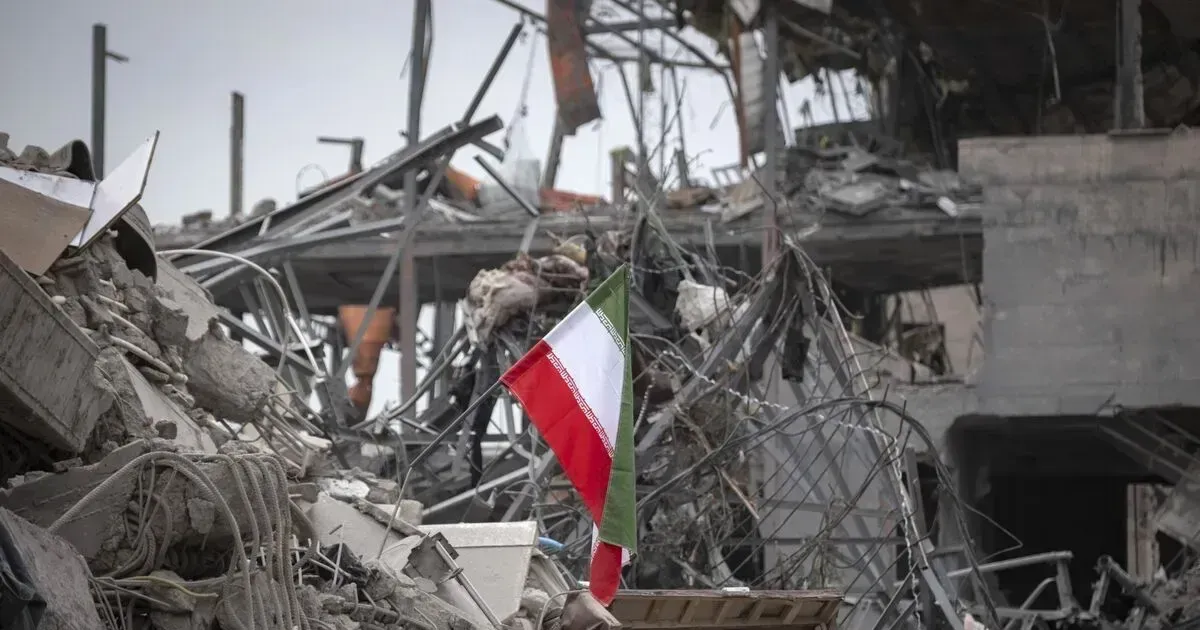
US naval assets conducted precision strikes against Iran's primary oil terminal at Kharg Island, sending plumes of black smoke across the Persian Gulf. On March 14, 2026, defense officials in Washington confirmed the operation targeted military infrastructure situated on the island, which serves as the loading point for roughly 90 percent of Iran's crude oil exports. Images from the region show fire crews struggling to contain a blaze near the Sea Island terminal, a deep-water berth capable of handling very large crude carriers. Military analysts suggest the strikes used Tomahawk cruise missiles launched from the Red Sea.
Tehran responded with immediate warnings of asymmetric retaliation against Western energy interests. Iranian officials claimed the strike is a direct act of war and vowed to broaden the scope of the conflict beyond its borders. Intelligence reports indicate the Islamic Revolutionary Guard Corps has placed its fast-attack naval wings on high alert. The official state news agency reported that any damage to Iranian sovereign energy assets would be met with reciprocal strikes on American-linked facilities in the Middle East.
US Strike Paralyzes Kharg Island Export Hub
Kharg Island sits approximately 25 kilometers off the coast of Iran and functions as the juggernaut of the nation's economy. It features a large tank farm with a storage capacity of 23 million barrels of crude oil. The island's T-jetty can accommodate tankers of up to 275,000 deadweight tons, making it irreplaceable for Iranian logistics. Recent satellite imagery confirms structural damage to the island's southern power plant and several radar installations. Satellite data also shows at least two VLCC tankers clearing the area shortly after the first explosions were heard. Pentagon spokesperson John Kirby stated the mission aimed to degrade Iranian military capabilities used to harass shipping in the Strait of Hormuz. He declined to comment on collateral damage to the oil loading infrastructure itself. But sources within the maritime insurance industry report that all loading operations at the terminal have ceased indefinitely. Shipping firms have begun rerouting vessels away from the northern Persian Gulf to avoid the escalating crossfire. These vessels now face increased transit times and higher fuel costs.
Iran warned it will target American-linked oil and energy facilities in the Middle East if its own infrastructure is attacked, reiterating its threat after the US bombed military targets on the critical outpost of Kharg Island.
Supply chain experts believe a prolonged shutdown of the island would remove nearly 1.5 million barrels per day from the global market. This volume is critical for Asian refineries that rely on Iranian heavy grades. In fact, crude prices surged by 7 percent in London trading as news of the bombardment reached the floors of the Intercontinental Exchange. Brent crude settled at $98.40 per barrel by mid-afternoon. Traders are now pricing in a notable risk premium for all Middle Eastern production.
Iran Threatens Regional Energy Infrastructure
Retaliation threats from Tehran often focus on the Strait of Hormuz, a narrow waterway through which 20 percent of the world's oil consumption passes. Iranian leaders have repeatedly practiced closing the strait during annual naval exercises. A blockade would isolate major producers like Kuwait, Iraq, and the United Arab Emirates from their primary customers. To that end, the US Fifth Fleet has increased patrols in the Gulf of Oman to maintain freedom of navigation. Defense contractors in the region have reportedly moved non-essential personnel to secure locations.
Diplomatic channels in Qatar and Oman remain open, yet both sides appear dug into their respective positions. Tehran insists that the American military presence is the primary driver of regional instability. Meanwhile, US officials argue that Iranian-backed proxies have forced their hand by targeting commercial tankers with suicide drones. This cycle of escalation has now reached a point where energy infrastructure is the primary target. Oil company executives in Saudi Arabia and Kuwait are tightening security at their own desalination plants and refineries.
Market participants are watching for signs of cyber activity targeting the Colonial Pipeline or European energy grids. Iran has previously demonstrated the capability to launch sophisticated digital attacks against industrial control systems. Such a campaign would create domestic political pressure in the US during an election year. Already, gasoline futures in New York have jumped to their highest level since 2022. Analysts at Goldman Sachs warned that a full disruption of Persian Gulf exports could push prices above $140 per barrel.
Global Markets Brace for Crude Supply Shock
Investors are fleeing to safe-haven assets like gold and US Treasuries as the conflict broadens. The volatility index, often called the fear gauge, has reached levels not seen since the early days of the 2020 pandemic. For one, shipping rates for tankers have tripled in the last 48 hours. Owners are demanding war-risk premiums that make many trades unprofitable at current margins. In turn, some refineries in India have begun scouting for alternative supplies from West Africa and Brazil. These shifts in trade routes are likely to persist as long as the security situation remains fluid.
The crisis highlights the fragility of the global energy transit system. A handful of geographic chokepoints control the flow of the world's most essential commodity. When these points are militarized, the economic repercussions are instantaneous. Still, the White House has signaled it will not back down from its strategy of maximum pressure on Tehran. National Security Advisor Jake Sullivan stated that the US will continue to protect its interests and those of its allies. The deployment of an additional carrier strike group to the region is underway.
Military planners are now preparing for a long-term presence in the northern Gulf. This involves positioning anti-drone systems near critical pumping stations and offshore rigs. The threat of a multi-front energy war is no longer a theoretical exercise for strategic planners. In fact, the US Department of Energy is considering another release from the Strategic Petroleum Reserve to calm the markets. Previous releases have left the reserve at its lowest level in decades, limiting the government's ability to intervene. Current stocks sit at 360 million barrels.
Energy Markets Price the Next Strike
The strike leaves traders weighing two risks at once: physical disruption at Iran's export hub and retaliatory threats against energy sites elsewhere in the region. That mix can lift crude prices even before barrels actually disappear from the market.