The pace of the Iran campaign is now part of the strategy debate. The pace of the campaign is now part of the risk. Faster tactical gains can still create longer political exposure. General Frank McKenzie told television reporters on The pace of the campaign is now part of the risk. March 30, 2026, that the American military campaign against Iran has exceeded the pace of long-term strategic simulations. Iran and its extensive terror networks have faced a high-tempo offensive that has surpassed initial timelines established by defense planners in Washington. Central Command operations entered their second month with tactical gains that military leaders suggest were not anticipated so early in the conflict. Pentagon officials now find themselves managing a theater that is moving faster than decades of tabletop exercises had previously suggested.
"The campaign against Iran is further along than we would have expected to be at this point, in all the simulations that I've seen," retired General Frank McKenzie told CBS.
Previous war games often projected a grinding stalemate or a slow degradation of Iranian capabilities over several months. Instead, the current reality involves a swift dismantling of specific command structures. Simulations conducted by the Department of Defense historically emphasized the difficulty of neutralizing dispersed terror networks, but recent technological integration has allowed for a more efficient targeting process. Military planners are now shifting focus toward consolidation and the potential for a more rapid transition to secondary objectives.
Economic Resilience Limits Energy Market Disruption
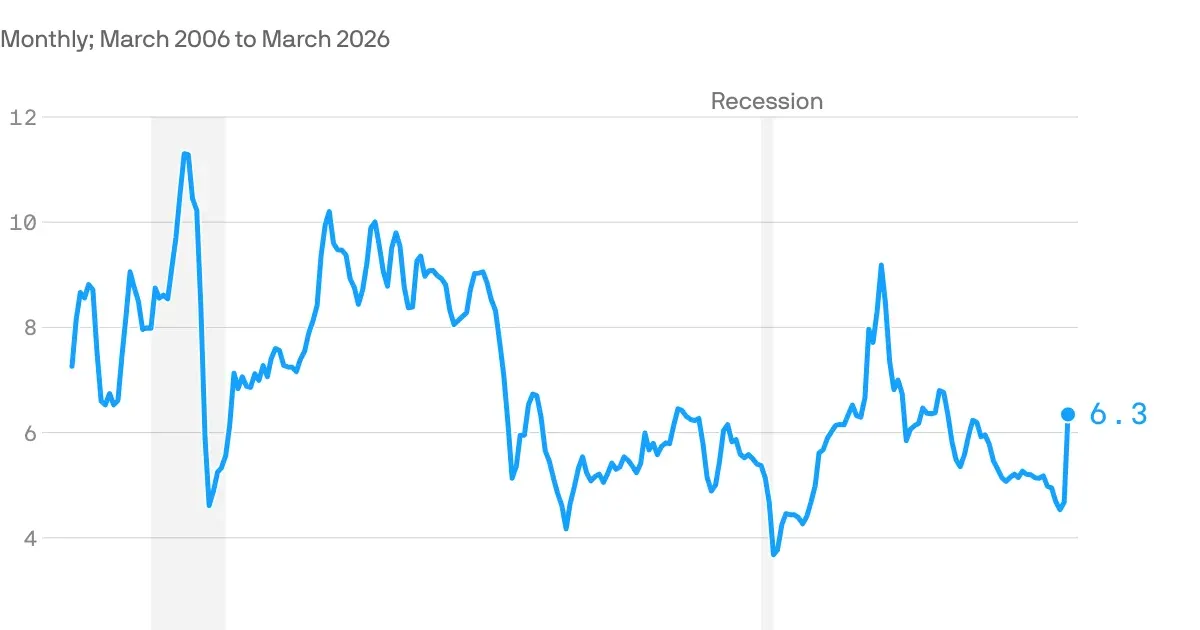
Axios analysis of Bureau of Labor Statistics data shows that the United States possesses a unique advantage in weathering the current energy shock. Iran war-triggered volatility typically would have crippled domestic markets in previous decades. Rising prices at the gasoline pump and for jet fuel certainly cause financial pressure, but the economy as a whole maintains a greater capacity to endure these hits than in the past. $3.96 is the most recent weekly gasoline price reading, representing a cost that is manageable relative to current wages.
Energy intensity within the U.S. economy has dropped sharply since the late twentieth century. Recent measures assume average hourly earnings have risen to $37.44, providing a cushion for households facing higher utility and transportation costs. While the nominal price of fuel is high, the minutes of work required to purchase a gallon of gasoline have stayed below levels seen in 2008. Households are spending a smaller percentage of their total income on energy than they did during the price surges of the previous generation. Policymakers remain wary of any severe energy market disruption that could derail the campaign's domestic political standing.
Efficiency gains provide the primary defense against market volatility.
Shift Toward Service Sector Buffers Oil Shocks
Economic activity has migrated toward service industries that demand far less petroleum than traditional manufacturing. Decades of structural shifts mean that a single dollar of U.S. gross domestic product now requires substantially less oil than it did in 1991. Manufacturing still exists, but the sectors requiring large-scale energy resources have implemented serious efficiency measures. Data from the Energy Information Administration confirms that while total oil usage has risen 23% in 35 years, GDP has grown by approximately 400% in the same timeframe.
Gasoline costs accounted for about 4% of total household expenditures in 2024. The ratio was 5.4% in 2008, a time when the economy was much more vulnerable to external energy shocks. This data indicates that the current conflict does not carry the same risk of a deep recession as the Persian Gulf War did. Wages have risen rapidly enough to offset the spike in energy costs for the average worker. Workers now exert less labor to fill their tanks than their parents did during the 1990s oil crisis.
$4 per gallon is the current psychological threshold for many consumers.
Geopolitical Stability Rests on Gas Price Management
The 1991 Persian Gulf War created an oil price shock that contributed to a recession and cost President George H. W. Bush his reelection. George H. W. Bush faced an economy that used 6.1 million barrels of oil a day with far less output. Today, the U.S. uses 7.5 million barrels, but the sheer size of the economy makes that volume easier to absorb. Political stability in 2026 depends on maintaining the perception that these costs are under control. Success in Iran will eventually come down to managing the public fear surrounding energy prices.
Franklin D. Roosevelt once famously claimed that the only thing to fear was fear itself. Modern policymakers might update that sentiment to suggest there is nothing to fear but the fear of oil prices. Political analysts note that voters often react more to the direction of price movements than to the actual price point. If gas stays around the $4 mark, the administration likely maintains the political capital necessary to finish the campaign. Crude oil markets remain sensitive to any disruption in the Strait of Hormuz, yet the domestic buffer remains strong.
Campaign Tempo Risk
A campaign that outruns simulations can look successful in the short term while creating planning gaps. Logistics, escalation control and political objectives may lag behind battlefield tempo.
That is the core risk: military speed does not automatically produce a stable end state.