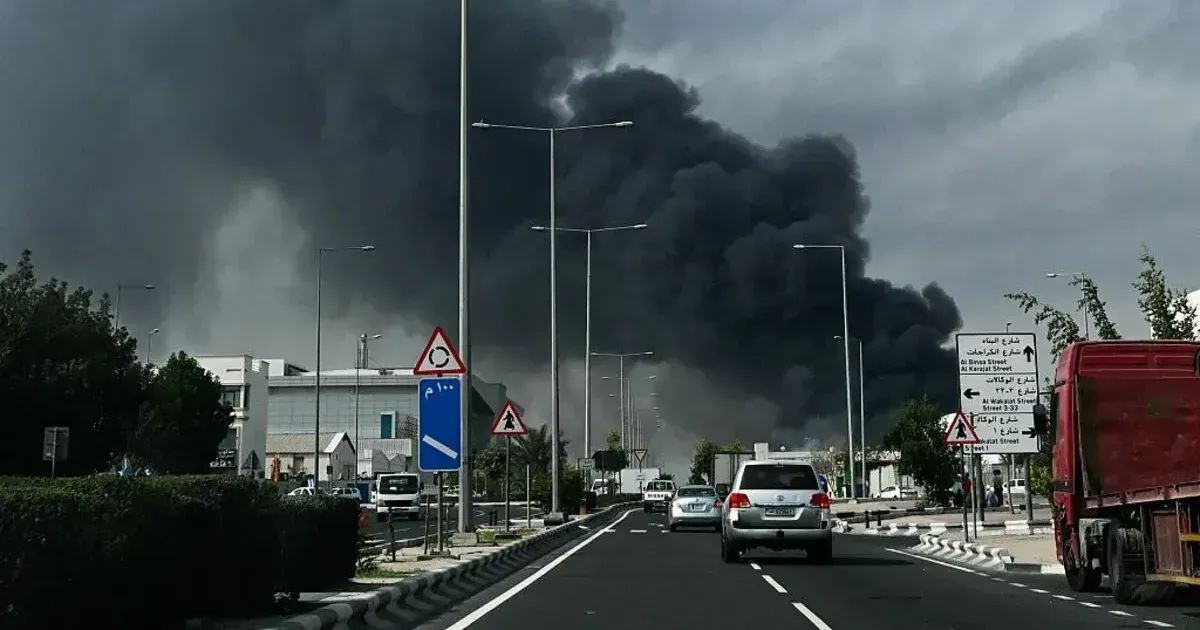
Saudi Arabia faced a sharp contraction in March 2026 as the escalating Iran war disrupted regional trade routes and energy markets. Military activities across the Persian Gulf have placed the economies of Riyadh, Abu Dhabi, and Doha under the most severe strain seen in three decades. Projections from Bloomberg Economics indicate that the region is now on track for a fiscal downturn reminiscent of the structural instability following the 1990 Gulf War. Early indicators suggest that gross domestic product across the Gulf Cooperation Council could shrink sharply if hostilities persist through the summer months. United Arab Emirates officials reported a sudden drop in logistical throughput as maritime insurance premiums reached ten-year highs in early March. Commercial traffic through the Strait of Hormuz fell by 40 percent in three weeks. This disruption has directly impacted non-oil sectors that the region spent billions to diversify over the last decade. Ports in Jebel Ali and Fujairah are operating at a fraction of their usual capacity due to the proximity of naval skirmishes. Meanwhile, Qatar maintains a risky position as its liquefied natural gas tankers navigate steadily contested waters to reach Asian markets. Analysts at Bloomberg Economics argued that the prolonged nature of this conflict menaced the fundamental stability of the region. Even minor kinetic engagements near energy infrastructure have triggered heavy capital outflows from regional stock exchanges. Investors have moved billions into gold and US Treasuries as a hedge against a total regional shutdown.
Gulf Economies Face War Pressure
Crude oil markets reacted with extreme instability as Iranian threats to energy terminals in the Eastern Province became more frequent. Saudi Aramco reported that while its primary facilities remain operational, the cost of securing these sites has surged. Military mobilization has required a shift in national spending that was previously earmarked for infrastructure projects. Public investment funds are now being diverted to cover emergency defense requirements and social safety nets for displaced populations in border regions. The impact on global supply remains the primary driver of the domestic economic crisis within the Gulf. Brent crude prices spiked above $140 per barrel, but the volume of exports from Gulf nations has plummeted. This creates a paradox where high prices cannot compensate for the physical inability to deliver products to market. For instance, several tankers bound for the European Union were forced to turn back or seek anchorage in safer waters outside the Persian Gulf. The current situation mirrors the supply shocks of 1998, when a collapse in demand and regional instability pushed the Gulf into a deep recession. The difference today lies in the higher debt-to-GDP ratios of certain regional players who borrowed heavily to fund expansion. Debt servicing costs for regional banks have risen as credit rating agencies placed several sovereign issuers on negative watch. Liquidity in the local interbank market has tightened considerably since the start of the 2026 hostilities.
Trade Routes and Oil Revenue Diverge
Saudi Arabia saw its ambitious diversification timeline hit a wall as foreign direct investment dried up in the first quarter of the year. The Neom project and other giga-projects require a stable political environment to attract the international talent and capital necessary for completion. According to Bloomberg Economics, the risk of a long-term slump is high if the $2 trillion investment pipeline remains frozen. Construction sites across the kingdom have seen a mass exodus of foreign contractors who cited safety concerns and the inability to secure equipment deliveries.
The United Arab Emirates is struggling with a sudden halt in its tourism and aviation sectors, which contribute heavily to its non-oil GDP. Dubai International Airport reported a 30 percent decline in transit passengers as international carriers rerouted flights to avoid the combat zone. Real estate transactions in the Emirates fell to their lowest level since the 2008 financial crisis as regional uncertainty dampened buyer appetite. Property developers have started delaying new launches until a ceasefire or de-escalation is achieved.
Previous regional conflicts like the 2003 invasion of Iraq did not disrupt the UAE's internal commerce to this extent. Current military technology and drone capabilities mean that inland infrastructure is no longer immune to the effects of a neighboring war. Major logistics hubs that serve as the backbone of the UAE economy are now within the operational range of various combatants. Insurance companies have responded by excluding certain Gulf territories from standard coverage zones. Qatar's financial sector is feeling the pressure of the conflict as regional liquidity pools evaporate. The Qatar Investment Authority has had to reassess its global portfolio to ensure it can support the domestic banking system if the war continues. Although the sovereign wealth fund remains one of the largest in the world, the sudden need for liquid cash to stabilize the riyal has limited its offensive investment capabilities.
The immediate concern for Doha is the safety of the North Field expansion project, which is critical for its long-term revenue. Any damage to the processing facilities or the subsea pipelines would result in a multi-year recovery process that the national budget is not prepared to absorb. Qatar's economy relies on the perception of being a safe haven, and that status is now under threat. Market participants are watching for any sign of a permanent shift in gas trade routes that could bypass the Gulf entirely.
Even the central banks of the region have attempted to coordinate a response to prevent a total currency collapse. They have injected billions into the system to maintain the various pegs to the US dollar, but these reserves are not infinite. If the war persists through the end of 2026, the cost of defending these currencies could deplete a substantial portion of the region's hard currency savings. This would force a revaluation of the social contract in many Gulf states that have long relied on state-funded subsidies.
But the most pressing issue remains the exit of skilled labor from the region. 90% of the private sector workforce in some Gulf states consists of foreign nationals who are highly sensitive to security risks. As these workers leave, the operational capacity of essential services, including healthcare and telecommunications, begins to degrade. The brain drain could have long-term consequences for the Gulf's ability to compete in the global economy after the war ends.
Oil Wealth Cannot Offset Closed Routes
Relying on the illusion of stability has cost Riyadh and Abu Dhabi dearly in this latest round of regional kinetic conflict. The vanity projects and giga-cities that define the current Gulf leadership's vision were always built on the fragile assumption that the Persian Gulf would remain a peaceful lake for trade. That assumption has been shattered by the reality of Iranian military reach and the inherent vulnerability of fossil fuel infrastructure. We are seeing the inevitable consequence of a rentier model that attempted to buy a first-world facade without addressing the deep-seated political tensions at its doorstep.
The idea that Saudi Arabia could transform into a global tourism hub while its neighbor was being pushed into a corner was always a fantasy of the highest order. Investors are now waking up to the fact that no amount of sovereign wealth can insulate a factory or a luxury hotel from a ballistic missile. The Gulf states have spent decades arming themselves for a war they are now economically incapable of fighting without destroying their own futures. If this slump persists, the social unrest that follows will be far more dangerous to these monarchies than any external adversary.
The age of the untouchable Gulf petrodollar is over, and the reckoning will be brutal for those who failed to build a truly resilient economy.