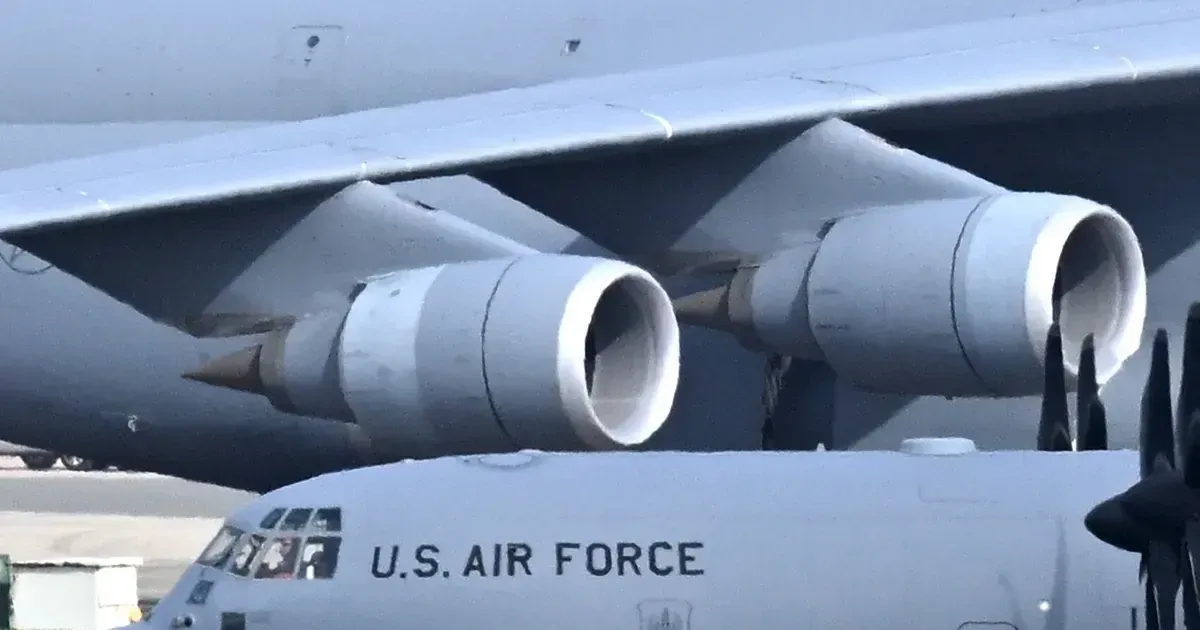
A security breach at Shannon Airport has revived Ireland's argument over neutrality and U.S. military transit. Irish police arrested a man on April 13, 2026, after a U.S. C-130 Hercules aircraft was damaged inside a restricted area. Investigators are now reviewing how the suspect crossed perimeter barriers and reached the plane. Aviation security personnel at the facility alerted the Garda Síochána immediately after motion sensors triggered an alarm along the northern perimeter fence. Patrolling units found the suspect in the vicinity of the aircraft with tools allegedly used to strike the fuselage. Damage reports indicate the exterior casing of the engine housing suffered multiple indentations. Maintenance crews are currently evaluating whether the structural integrity of the wing assembly was compromised during the encounter.
Shannon Airport Security Breach
Court documents filed after the arrest describe the suspect as a local activist known for opposing the use of Irish civilian infrastructure by foreign militaries. Prosecution lawyers stated the individual bypassed three layers of security fencing before reaching the restricted hangar area. Shannon Airport maintains a permanent police presence, yet the sprawling nature of the airfield creates challenges for total perimeter surveillance. Engineers have grounded the C-130 until a full technical inspection ensures the vessel can safely return to the skies. Airport management issued a brief statement confirming that flight operations for commercial passengers continued without interruption. Security protocols underwent an immediate review to determine how a civilian could traverse several hundred yards of open runway undetected. Preliminary findings suggest a blind spot in the infrared camera network allowed the intruder to crawl toward the military parking zone. Technicians began installing additional lighting and vibration sensors along the affected fence line on Sunday evening.
U.S. Military Transit and Neutrality
Shannon Airport occupies a controversial position in Irish foreign policy due to its role as a logistics hub for American forces. Records from the Department of Foreign Affairs show that thousands of U.S. troops pass through the facility annually on their way to deployments in Europe and the Middle East. Anti-war groups frequently organize protests at the gates, citing Ireland's constitutional commitment to military neutrality. These demonstrations occasionally result in arrests, though physical damage to aircraft happens rarely. Conflict regarding the airport's status intensified during the early 2000s when the scale of military transit surged. Critics argue that allowing armed transport planes to refuel on Irish soil violates the spirit of the Hague Convention. Government officials consistently defend the practice, noting that the aircraft do not carry munitions and the transit supports the local economy. Businesses in County Clare rely heavily on the revenue generated by visiting crews and logistics contracts tied to these stopovers.
The aircraft was targeted as part of a symbolic act of disarmament, according to a statement released by the peace organization representing the individual in custody.
Legal precedents for such actions in Ireland are complex and often result in high-profile jury trials. Previous defendants in similar cases argued that their actions were a lawful attempt to prevent greater crimes, such as the use of the aircraft in foreign wars. Most juries in the past acquitted activists on these grounds, creating a legal hurdle for prosecutors seeking harsh sentences. This legal history emboldens some protesters to take direct action against military hardware despite the risk of imprisonment.
Legal Risk for Airport Activism
Prosecutors now face the task of proving the damage was malicious and lacked a valid legal excuse under the Criminal Damage Act of 1991. The suspect faces up to ten years in prison if convicted of the most serious charges. Defense attorneys likely intend to use the trial as a platform to debate the legality of U.S. military presence in a neutral state. Public opinion in the west of Ireland is divided between those who value the economic benefits and those who fear the security risks of being a military target.
Garda detectives are examining digital records and personal communications to see if the suspect acted alone or as part of a coordinated group. Investigators seized several electronic devices during a search of a residence in Limerick city late Saturday night. No other arrests have occurred, but police sources indicate they are looking for two additional individuals seen on surveillance footage near the airport boundary. Security at other regional transit points has been heightened to prevent copycat incidents.
The neutrality question now returns to Irish politics through a security failure. Washington officials reached out to the Irish government to express concern over the security of their assets at Shannon. Diplomatic cables suggest the U.S. Embassy in Dublin requested a formal report on the breach and the steps taken to prevent future incursions. Ireland occupies a sensitive role as a non-NATO member that maintains close intelligence ties with the United States. Any perceived failure to protect military hardware could complicate future bilateral agreements regarding air travel and trade.
Domestic political pressure is mounting on the Taoiseach to clarify the rules governing foreign military stopovers. Opposition lawmakers scheduled a parliamentary inquiry to investigate the cost of policing the airport versus the revenue gained from U.S. contracts. Data suggests the Irish state spends millions of euros annually on Garda overtime specifically for airport security duties. Taxpayers are increasingly vocal about the financial burden of protecting foreign assets on civilian soil.
Ireland's Transit Dilemma
Security failures at Shannon Airport reveal a decaying infrastructure that can no longer support the weight of Ireland's contradictory foreign policy. Dublin tries to have it both ways by claiming neutrality while acting as the primary gas station for the American military machine. This arrest is not an isolated incident of vandalism but a predictable outcome of a government that ignores the domestic friction generated by its transatlantic alliances. If a single activist with a hammer can disable a multimillion-dollar transport plane, the facility is a liability, not an asset.
Aviation security is a binary state: it exists or it does not. That an intruder reached a C-130 Hercules on a high-security runway exposes a systemic rot in the oversight provided by the Garda and airport management. Washington will likely interpret this as a signal that Ireland is an unreliable partner for sensitive logistics. The diplomatic price of this security lapse will far outweigh the physical cost of a few dented engine cowlings. Ireland must choose between its pacifist identity and its role as a strategic outpost, because maintaining both is a dangerous fantasy.
Empty rhetoric about the Triple Lock mechanism does nothing to secure a perimeter fence that is clearly porous. Expect the U.S. military to eventually divert its traffic to more secure NATO bases in the United Kingdom or Germany. Shannon is failing its primary mission.