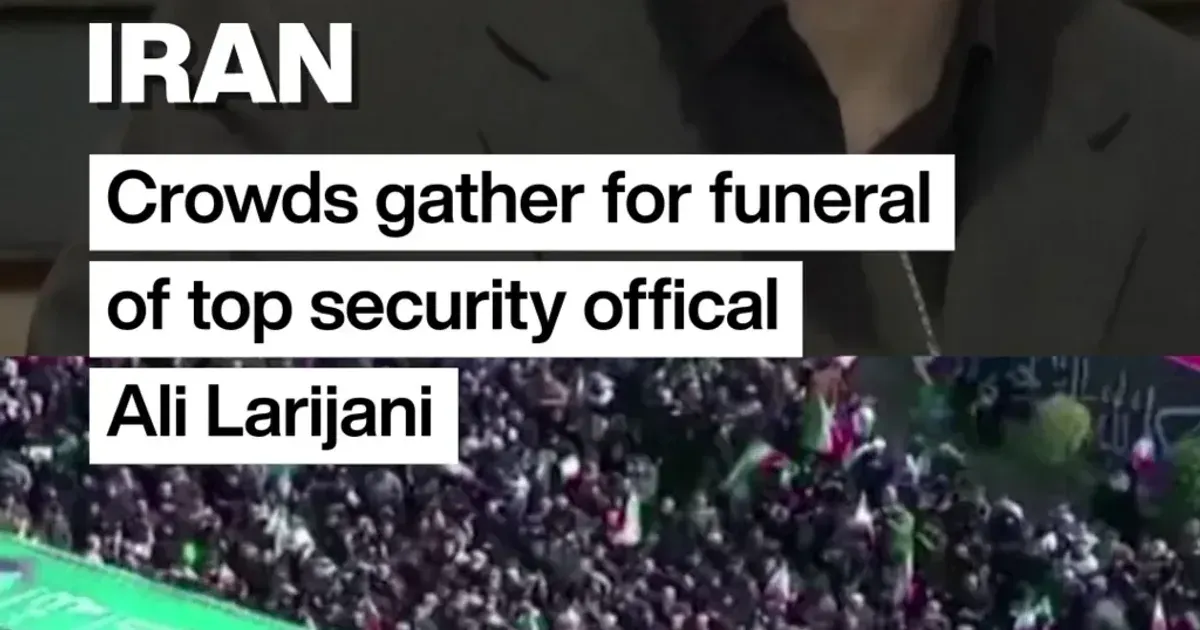
Israeli missiles decimated a high-security compound in Tehran during the early hours of March 18, resulting in the deaths of two of the most senior figures in the Iranian security apparatus. Intelligence Minister Esmail Khatib died alongside Ali Larijani, a man who functioned as the primary advisor to the late Supreme Leader Ayatollah Ali Khamenei. Government officials in Jerusalem confirmed the precision strike shortly after explosions rocked the Iranian capital. Chaos gripped the streets of Tehran as state media scrambled to manage the narrative of a decapitated leadership.
According to sources within the Iranian Revolutionary Guard Corps, the strike used bunker-busting munitions to penetrate a subterranean command center. These deaths follow the passing of Ayatollah Ali Khamenei only one month ago, leaving a vacuum at the absolute pinnacle of the Islamic Republic. While the Israeli Defense Forces (IDF) typically maintain a policy of ambiguity regarding foreign operations, military spokesmen took the unusual step of claiming responsibility for this specific mission. They cited the immediate necessity of neutralizing individuals responsible for coordinating multi-front attacks against Israeli civilians. Intelligence reports suggest that the targeted building was a nerve center for regional proxy coordination. Security analysts in London noted that the elimination of Khatib represents the most significant intelligence failure for Iran since the 2020 assassination of Mohsen Fakhrizadeh. The loss of Larijani adds a layer of political instability, given his long history as a bridge between the clerical establishment and the military elite.
Intelligence Failure and the Death of Esmail Khatib
Esmail Khatib had overseen the internal and external security of the Islamic Republic during a period of intense domestic unrest and external pressure. His tenure was defined by an aggressive stance toward dissidents and a sophisticated expansion of cyber-warfare capabilities. Israeli officials claimed his presence at the command center indicated an imminent operation involving Hezbollah and other regional actors. The strike effectively removed the architect of Iran's domestic surveillance network during a moment of profound national mourning.
Separately, the Washington Post reported that Israeli intelligence had tracked Khatib for weeks using a combination of signals intelligence and human assets on the ground. The precision of the hit suggests a level of penetration within the Iranian security services that remains unaddressed by Tehran. Even so, the Iranian government has vowed a crushing response, though its options are limited by the recent loss of its supreme ideological figurehead. Yet the technical execution of the raid highlights a disparity in military technology that the Iranian regime has struggled to bridge. Missiles struck with such accuracy that neighboring civilian structures remained largely intact, according to satellite imagery analyzed by independent monitors. This level of sophistication provides a clear message to the remaining members of the Iranian cabinet that no location is secure from the IDF's reach.
Funeral Rites for Advisor Ali Larijani
Crowds gathered in the thousands for the funeral of Ali Larijani, whose death has sent ripples through the traditional conservative power blocs of Iran. Larijani was not just an advisor but a strategist who managed the delicate relationship between the Supreme Leader and the various branches of the Iranian government. France 24 reported that the funeral became a site of intense nationalistic fervor, with mourners demanding a direct military strike against Israeli territory. The presence of high-ranking officials at the funeral indicated the regime's desire to project a facade of unity despite the obvious internal fractures.
In fact, Larijani had been instrumental in managing the succession crisis that emerged following Khamenei's death in February. His absence leaves the Guardian Council without its most experienced mediator at a time when the selection of a new Supreme Leader remains contested. By contrast, the younger generation of Revolutionary Guard commanders may see this as an opportunity to seize more direct control over the country's foreign policy. Still, the emotional weight of Larijani's death cannot be overstated for the Iranian public. He was a face of the revolution for decades, acting as the speaker of the parliament and a chief nuclear negotiator. His removal from the board at this specific juncture sharply degrades the regime's ability to engage in back-channel diplomacy with Western powers.
The killing of Esmail Khatib is a decapitation strike that targets the brain of Iran's regional intelligence gathering and clandestine operations at its most vulnerable moment.
Military analysts suggest that the timing of the strike was intended to maximize the sense of vulnerability within the Iranian capital. By hitting the intelligence minister during a period of leadership transition, Israel has forced the Iranian military to divert resources away from the front lines in Lebanon toward internal security. This defensive pivot may grant the IDF more freedom of movement in its ongoing northern offensive.
Military Escalation Across the Lebanon Border
Israeli forces simultaneously intensified their offensive in Lebanon, demolishing a strategic building in the heart of Beirut. This coordinated effort suggests a strategy of simultaneous decapitation and infrastructure destruction. While DW News reported that the Iranian president confirmed the death of Khatib, the focus of the Iranian military remains split between its own borders and those of its proxies. The destruction of the Beirut facility further isolates Hezbollah from its primary source of funding and logistical support.
Meanwhile, the Lebanese Ministry of Health reported significant casualties following the overnight strikes in the capital. The IDF maintains that these targets were strictly military in nature, housing advanced missile components and communication equipment. For instance, the building destroyed in Beirut was allegedly a transit point for Iranian-made drones destined for the southern front. Direct causation between the Tehran strike and the Lebanese operation is evident in the synchronized timing of the attacks. At the same time, the death of Khatib has left the intelligence apparatus in Beirut without a direct line to Tehran. The breakdown in the chain of command has already resulted in visible confusion among proxy commanders on the ground. Reports from the border indicate that several Hezbollah units have retreated from forward positions after failing to receive updated orders from their Iranian handlers.
Geopolitical Consequences for the Iranian Regime
The Iranian presidency now faces the daunting task of replacing its two most essential security advisors while the country is under active bombardment. It is a scenario that many in the intelligence community believed would lead to an all-out regional war. But the response from Tehran has thus far been confined to rhetoric and limited rocket fire from allied militias in Iraq and Yemen. The restraint suggests a regime that is cognizant of its own tactical limitations and the risk of a wider conflagration. In turn, the Israeli government has signaled that its campaign of targeted killings will continue until the threat from Iran's regional network is neutralized. Prime Minister Benjamin Netanyahu has repeatedly stated that no Iranian official is immune from consequences if they continue to fund and direct attacks against Israel. The decapitation of the intelligence ministry is the most potent evidence of this policy to date.
For one, the loss of these two figures complicates any potential return to the negotiating table regarding the Iranian nuclear program. Larijani was one of the few figures with the stature to sell a compromise to the hardline elements of the regime. Without his influence, the path toward a diplomatic resolution appears increasingly narrow. The current Iranian leadership is now dominated by the most hawkish elements of the security state, men who view any concession as a form of surrender. Israeli warplanes remained in the air for hours after the initial strikes, patrolling the edges of Iranian airspace to deter any immediate aerial retaliation. The show of force was intended to demonstrate that the IDF could sustain a high-tempo operation deep within enemy territory. The strikes concluded without a single Israeli aircraft being targeted by Iranian air defenses.
The Intelligence Vacuum Tehran Now Faces
Could the complete decapitation of a regional power's intelligence and advisory board actually prevent a larger war, or is Israel simply lighting a fuse that cannot be extinguished? The assassination of Esmail Khatib and Ali Larijani is not just a tactical success for the Israeli Mossad and IDF; it is a brutal demonstration of the total obsolescence of the Iranian security state. For years, Tehran has postured as a regional hegemon, yet it cannot even protect its cabinet members in the heart of its own capital.
The disparity in power is so vast that it renders the traditional concept of a 'shadow war' meaningless. We are seeing a one-sided slaughter of the Iranian old guard. The regime is now led by a collection of paralyzed bureaucrats and reactionary generals who are more interested in their own survival than in the ideological goals of the 1979 revolution. To expect a measured or strategic response from a state that just lost its brain and its institutional memory is a fantasy. Israel has calculated that the Islamic Republic is a paper tiger, and the charred remains of the intelligence ministry are the ultimate proof of that assessment. If the world was waiting for a regional war, it may have missed that the war is already over, and Iran has lost.