Prime Minister Benjamin Netanyahu’s government issued a sweeping displacement order on Wednesday for all residents living south of the Zahrani River. Israel expanded its military demands as regional tensions reached a breaking point near the northern border. This move effectively targets a region comprising 14 percent of Lebanese land. Military officials published maps highlighted in red to signal the immediate danger to civilians remaining in the area. Hezbollah militants continue to launch rockets from these southern strongholds despite the escalating threats of a ground incursion. The evacuation order became a test of whether civilians could move fast enough before the next round of strikes.
Satellite imagery and ground reports confirm that the city of Tyre has been transformed into a ghost town within hours. Residents packed vehicles with mattresses and fuel canisters to escape the projected path of Israeli strikes. Most of these families traveled north toward Sidon, where local schools and public buildings are already reaching capacity. The one million people already displaced across the country represent a humanitarian crisis that Lebanese authorities admit they cannot manage alone. Civil defense teams struggled to coordinate the exit routes as traffic gridlocked the main coastal highways. Separately, the Israeli Defense Forces (IDF) clarified that the Zahrani River is now the new demarcation line for their operations. This boundary sits further north than the Litani River, which was the previous focus of international security resolutions. Moving the line of engagement deeper into Lebanon suggests a major expansion of the buffer zone sought by Israeli planners. Lebanese officials in Beirut characterized the order as an illegal annexation of sovereign airspace and territory through military coercion. Yet the IDF maintains that Hezbollah infrastructure is embedded so deeply in these villages that only a total evacuation allows for precise targeting.
Israeli Evacuation Orders Expand to Zahrani River
Sidon has become a city of ghosts and crowded schools. In fact, the influx of people into the ancient city has triggered a collapse of basic services. Local charities reported that bread and clean water supplies are dwindling as thousands of new arrivals seek shelter every hour. Many families are sleeping in city parks or on the sidewalks because official shelters are full. Public health experts warned that the lack of sanitation in these makeshift camps will lead to outbreaks of disease. Sidon’s mayor called for an immediate international intervention to provide tents and medical supplies to the southern gateway city.
Still, the military pressure from the south shows no sign of abating. Israeli artillery batteries positioned along the border have maintained a steady rhythm of fire into the valleys south of the Zahrani River. These strikes aim to dismantle the launch sites that Hezbollah uses to target northern Israeli communities. Intelligence reports from the region suggest that Hezbollah has prepared for this scenario by hardening its underground tunnels and stockpiling long-range munitions. Military analysts believe the current bombardment is a prelude to a much larger movement of armored divisions.
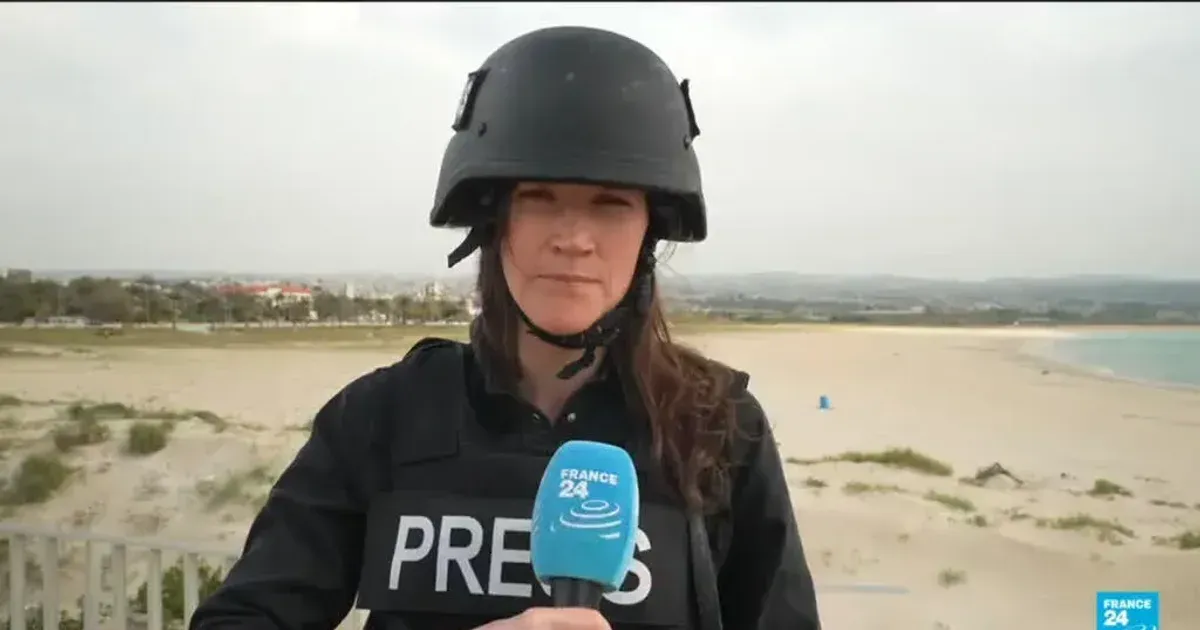
FRANCE 24's Claire Paccalin reported from the scene that the city of Tyre has been completely emptied after the latest Israeli military directives.
The empty streets of Tyre reflect the absolute fear gripping the local population. Shops are shuttered and the once-vibrant fishing harbor sits silent under a haze of smoke from nearby explosions. Only a few municipal workers remained behind to manage essential water pumps and electrical grids. Most residents believe that if they leave now, they may never be allowed to return to their ancestral homes. History in this region suggests that temporary evacuations often turn into permanent displacements.
Hezbollah Resilience Challenges European Diplomatic Pressure
European Union officials in Brussels spent Wednesday debating how to prevent a full-scale regional war. Diplomatic cables indicate that several member states are pushing for sanctions against entities that fund Hezbollah’s military wing. At the same time, other EU leaders warned that punishing Lebanon’s institutions would only accelerate the state’s collapse. There is a growing sense of helplessness in European capitals as both sides ignore calls for a ceasefire. Israel has signaled that it will no longer rely on UNIFIL forces to provide security along its northern perimeter. But the EU lacks the direct military leverage to compel Hezbollah to disarm. Intelligence sources suggest that the group’s command structure remains largely intact despite the loss of several high-ranking commanders in recent weeks. Hezbollah leaders issued a defiant statement on Wednesday, claiming that their rockets will continue to fall until the offensive in Gaza and Lebanon ceases. This circular logic of violence has trapped the civilian population in a cycle of constant relocation. European mediators are finding it nearly impossible to bridge the gap between Israeli security requirements and Lebanese sovereignty.
In turn, the French government has attempted to use its historical ties to Lebanon to broker a temporary pause. French diplomats proposed a ten-mile buffer zone that would see Hezbollah pull back its heavy weaponry. Israeli negotiators rejected this proposal, arguing that ten miles is insufficient to protect their citizens from modern anti-tank missiles. The stalemate in the diplomatic corridors is being paid for in blood on the hillsides of southern Lebanon. Every failed meeting in Paris or Brussels is followed by an uptick in the intensity of the cross-border exchanges.
Lebanon Displaces One Million People in Southern Conflict
According to Claire Paccalin, the humanitarian corridors are becoming progressively more dangerous as the bombardment moves closer to the main roads. Drivers reported seeing craters on the edges of the primary highway connecting Tyre to Sidon. The route is the only lifeline for those trying to reach the relative safety of the north. Some families have opted to take mountain passes to avoid the coastal congestion, even though these roads are slower and more exposed to drone surveillance. The psychological toll on children who have been displaced multiple times is becoming a primary concern for aid agencies.
For one, the scale of the displacement has overwhelmed the Lebanese Ministry of Social Affairs. Government offices in Beirut are struggling to process the sheer volume of requests for assistance. International NGOs have stepped in to provide hot meals and hygiene kits, but their resources are stretched thin by the global demand for aid. Many of the displaced are Syrian refugees who had already fled one war, only to find themselves caught in another. These double-displaced populations are among the most vulnerable, with no legal standing and few places to go. Europe lacks the leverage to change the calculus on the ground. Meanwhile, the economic impact on Lebanon’s agricultural sector is devastating. The southern region is the country's breadbasket, producing the majority of its tobacco, citrus, and olives. Farmers have been forced to abandon their crops at the height of the harvest season to flee the incoming shells. Without these harvests, the already fragile Lebanese economy faces a total collapse of its domestic food supply. The loss of income for thousands of farming families will have long-term repercussions for the country’s social stability.
Regional Instability Grows as Israel Considers Ground Incursion
The conflict is no longer just about border skirmishes. The sheer volume of the evacuation orders suggests that the Israeli military is clearing the battlefield for a high-intensity ground operation. Such a move would likely draw in other regional actors and further destabilize the Mediterranean basin. Experts at the Institute for the Study of War noted that the current troop movements on the Israeli side of the border match the patterns seen before the 2006 conflict. Thousands of reservists have been called up to fill the ranks of the northern command. Even so, the outcome of a ground war remains highly uncertain for all parties involved. Hezbollah has spent two decades preparing for this specific confrontation, building a sophisticated network of defenses that includes mountain bunkers and hidden missile silos. An Israeli advance into the rugged terrain of southern Lebanon would be a slow and costly effort. Military historians point out that the geography of the south favors the defender, providing ample cover for guerrilla-style ambushes. The IDF would face a much more disciplined and well-equipped adversary than it does in the urban ruins of the Gaza Strip.
By contrast, the Lebanese Armed Forces have largely remained on the sidelines of the conflict. The official military lacks the air defense systems and heavy armor necessary to challenge the Israeli Air Force. Their role has been limited to managing the flow of displaced persons and maintaining order in the northern cities. If a ground invasion occurs, the Lebanese government will face the impossible choice of resisting a superior force or allowing its territory to be occupied. The political vacuum in Beirut continues to be filled by Hezbollah’s shadow government and military apparatus.
The Strategic Cost of Emptying Southern Lebanon
Western diplomats continue to perform a well-rehearsed theater of concern while the maps of the Middle East are redrawn by artillery fire. The reality is that the European Union has become a geopolitical spectator, offering stern warnings that carry no weight in the war rooms of Jerusalem or the bunkers of Beirut. By focusing on the Zahrani River, Israel is not just seeking a buffer; it is effectively creating a no-man’s land that will be uninhabitable for a generation. The strategy of mass displacement is a blunt instrument that prioritizes immediate tactical security over any hope for long-term regional stability.
We are seeing the total failure of the post-2006 security architecture, proving that UN resolutions are worthless without a credible enforcement mechanism. While the EU frets over disarming Hezbollah, the group has only grown more integrated into the fabric of the Lebanese state through its role as a primary combatant. Expecting Lebanon to purge its own most powerful military entity is a fantasy that ignores the internal power dynamics of the Levant. Until the West is willing to back its rhetoric with actual consequences for both sides, the Zahrani River will remain a scar across a dying nation.