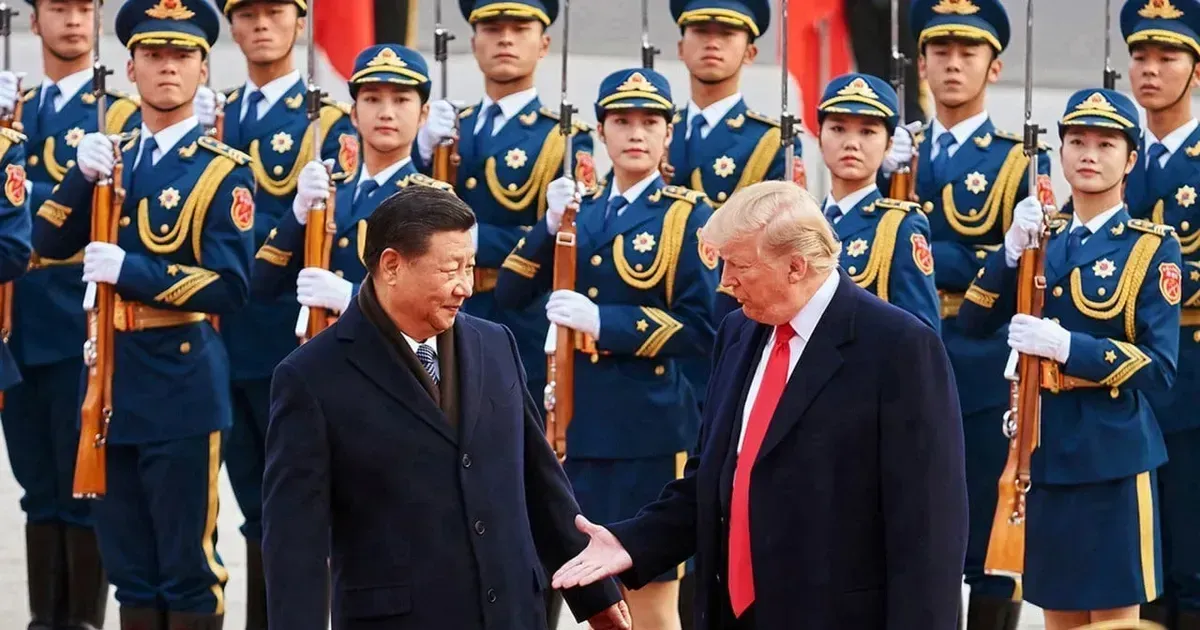
President Donald Trump notified leaders in Beijing on March 18 that he will delay his upcoming diplomatic mission to China. This decision follows a rapid escalation of military operations in the Middle East, where the United States and Israel have launched coordinated strikes against Iranian targets. White House officials cited the need for the President to remain in Washington to oversee the growing conflict with Iran. But the sudden shift in scheduling has created a diplomatic vacuum that China appears ready to exploit. The delay became a signal that the Iran war was reshaping the administration’s China calendar. Economic advisors originally viewed the visit as a necessary step to stabilize a fragile ceasefire in the ongoing trade and technology conflict. Previous negotiations had stalled over semiconductor export controls and the status of artificial intelligence research hubs in Shanghai. By contrast, the current focus has shifted entirely to the Persian Gulf. Defense priorities now outweigh the commercial interests that define the Pacific relationship.
Foreign ministries in China are widely known for their rigid adherence to protocol. Visits to the capital by foreign heads of state are typically the result of months of negotiation regarding every minute of the itinerary. Sudden cancellations are often interpreted as significant slights or evidence of administrative incompetence. Visits to China by foreign leaders are tightly choreographed and meticulously planned affairs, even by the usual standards of international diplomacy. Reports from the South China Morning Post indicate that Chinese officials are growing increasingly frustrated with the lack of predictability in the Trump administration. Logistical teams from the State Department had already arrived in the Chinese capital to begin security sweeps. They were told to cease operations and return home on short notice. Such a breach of decorum rarely occurs without long-term consequences for bilateral trust.
Beijing Diplomatic Friction and Canceled Schedules
Chinese state media has remained relatively quiet about the delay, but internal sources suggest a deepening sense of annoyance within the Central Committee. For one, the planning involved thousands of personnel across several provinces. Security protocols for a visiting US President require clearing entire city blocks and shutting down local air traffic. In fact, these preparations had already reached an advanced stage when the White House issued the postponement notice.
Meanwhile, the specific nature of Trump’s involvement in the Iran conflict has complicated the diplomatic optics. China is still a major buyer of Iranian oil through various back-channel mechanisms. Any US-led effort to degrade Iranian infrastructure directly threatens Chinese energy security. At the same time, Beijing has refrained from direct condemnation of the strikes, choosing instead to emphasize the need for regional stability. Military analysts suggest that Beijing may find itself in a stronger position because of the American distraction. Every carrier group deployed to the Middle East is one fewer vessel patrolling the South China Sea. China has previously used periods of US involvement in the Middle East to expand its maritime claims. The 2026 delay offers a similar window for tactical maneuvering in contested waters.
Middle East Conflict Reshapes Trade War Leverage
Trade negotiations are now in a state of indefinite suspension. DW News reported that the March summit was intended to finalize a deal on intellectual property protections. US businesses had hoped for a reprieve from the tariffs that have hampered the technology sector for years. Even so, the political reality of a wartime presidency makes such concessions difficult for Donald Trump to sell to his domestic base. Donald Trump often prioritizes high-profile military actions when domestic or diplomatic pressure becomes unmanageable. The decision to attack Iran has reshaped the national conversation in the United States. It has also removed the immediate pressure to resolve the trade dispute with China. Separately, the Treasury Department is monitoring the impact of the conflict on global oil prices, which have spiked to $112 per barrel since the first strikes began.
Beijing perceives this as an opportunity to renegotiate terms from a position of relative strength. China knows that the United States cannot afford a two-front geopolitical crisis. If Washington is bogged down in Tehran, it will have less appetite for a renewed trade war in the Pacific. To that end, Chinese negotiators have already begun signaling that the previous terms of the tech ceasefire are no longer acceptable.
Strategic Misalignment in the US-Israel War
Israel has long pushed for a more aggressive American stance toward the Iranian nuclear program. The current war represents the culmination of years of joint planning between the two allies. Yet the timing of the escalation has disrupted broader strategic goals involving China. Some advisors within the State Department argued for a delay in military action until after the Beijing summit. Military planners in Tel Aviv argue that the Iranian threat was too immediate to ignore. They point to intelligence suggesting a fleet of new long-range drones was ready for deployment against Israeli infrastructure. Still, the impact on the China relationship was likely a secondary consideration for Israeli leadership. Their primary concern is the existential threat posed by a nuclear-capable Tehran.
According to the South China Morning Post, Beijing was not given a formal briefing on the scale of the Iranian strikes before they occurred. This lack of communication has been taken as a sign of American disinterest in Chinese cooperation on Middle East security. China has often attempted to play the role of a neutral mediator in the region, a position that is now untenable.
White House Internal Chaos and Diplomatic Delay
Internal struggles within the Trump administration are contributing to the sense of global uncertainty. Several high-ranking officials in the National Security Council were reportedly unaware of the final decision to postpone the China trip until the last moment. This lack of internal coordination mirrors the problems seen during previous terms. The transition team for the Beijing visit had already secured hotel blocks and finalized the guest list for the state dinner.
Staffers in the West Wing are currently divided between those focused on the Middle East and those who believe China is the more significant long-term threat. Those favoring a hardline approach to Beijing are worried that the Iran conflict will drain resources and political capital. The administration is struggling to balance a reactive military strategy with a proactive economic one. Donald Trump remains confident that his personal rapport with Chinese leadership can survive a scheduling change. He has suggested that the meeting will be rescheduled for the summer. But the diplomatic damage may already be done. China’s leadership does not respond well to the whims of an unpredictable partner.
Beijing will likely use the coming months to further decouple its economy from Western dependencies. The delay gives them more time to find alternative markets for their high-tech exports. In turn, the United States may find that by the time Donald Trump is ready to visit China, the terms of the discussion have changed. The window for a mutually beneficial trade agreement is closing rapidly.
Why the China Delay Matters Beyond Protocol
Is the United States capable of maintaining a coherent foreign policy, or are we destined to be a nation that chases shiny objects into the desert at the expense of our long-term interests? The delay of the Beijing summit is a textbook example of tactical reactionary thinking overriding strategic necessity. By prioritizing a messy, open-ended conflict in Iran, the Trump administration has effectively handed Beijing a blank check in the Pacific. China values stability, choreography, and the slow grind of institutional planning.
Trump’s brand of chaotic, 11th-hour diplomacy is not just offensive to Chinese sensibilities; it is a gift to their strategic planners. We are currently watching a superpower trade its leverage over the world's second-largest economy for the privilege of another quagmire in the Middle East. If Washington believes that Israel's security concerns should dictate the timing of our most important trade negotiations, then we have already ceded our role as the primary global arbiter. It is not leadership. It is a distraction that serves no one but those who wish to see American influence in Asia evaporate. The Great Hall of the People has a long memory, and they will remember being stood up for a war of choice.