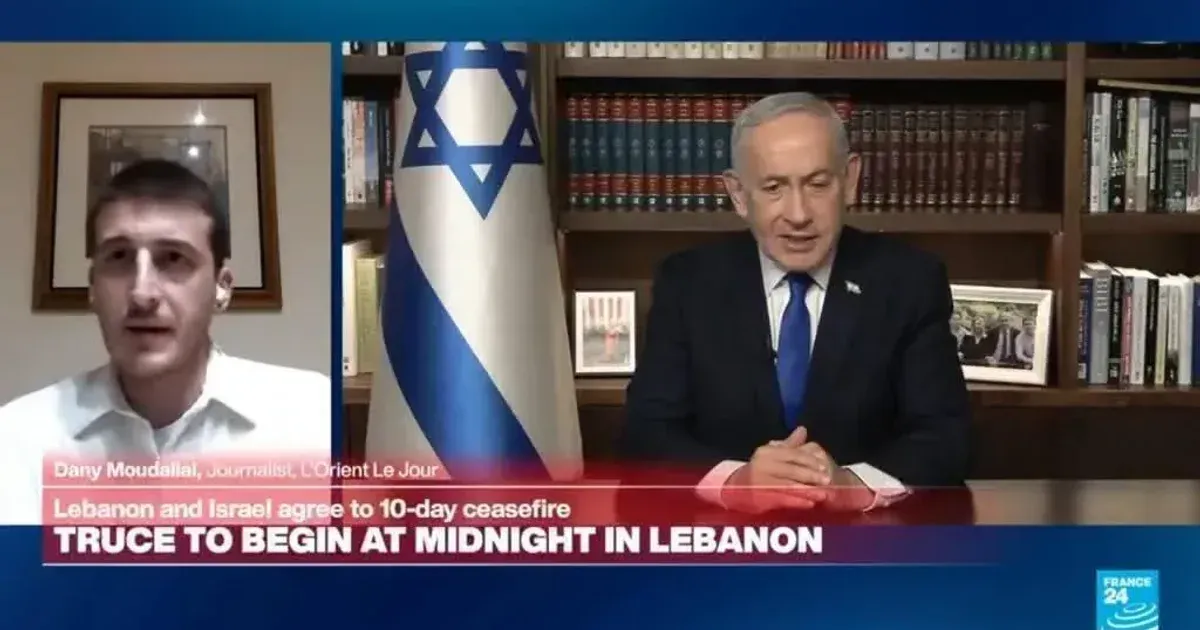
The Israel-Lebanon peace deal faces its hardest test in regional enforcement and civilian protection. The accord matters because Gaza, Syria and southern Lebanon now shape the same diplomatic field. Washington officials announced on April 18, 2026, that Israel and Lebanon have reached a ceasefire agreement to end months of border conflict. Direct negotiations between the two nations occurred in the United States, concluding with a formal truce designed to stop the cross-border violence. President Joe Biden and Prime Minister Benjamin Netanyahu confirmed the deal late Thursday evening. Lebanese authorities participated in the talks through high-level intermediaries to ensure the protection of national sovereignty. This diplomatic breakthrough seeks to resolve a conflict that has paralyzed the regional economy and displaced hundreds of thousands of civilians.
Lebanon faces a landscape of devastation despite the diplomatic breakthrough. Paramedics working for the Lebanese Civil Defense recently described a series of targeted triple-tap strikes in the southern border regions. These incidents killed four rescue workers and wounded six others during emergency recovery operations. Witnesses claim the strikes were deliberate, aiming to eliminate first responders as they provided aid to the injured. Such tactics represent a grave escalation in the danger faced by non-combatant medical personnel.
Triple-tap strikes involve a sequence of three consecutive bombings on the exact same location. Initial strikes target the primary objective, while subsequent explosions occur as first responders arrive to treat the wounded. Rescue teams in south Lebanon claim these tactics specifically neutralized civilian medical capabilities. The timing of the detonations, usually spaced six to eight minutes apart, maximizes the potential for secondary casualties among emergency crews. Documentation from the field suggests that specialized munitions were used to ensure the destruction of armored ambulances.
Medical personnel frequently find themselves in the crosshairs of modern urban warfare.
Washington Brokers Lebanon Peace Accord
Dany Moudallal, a journalist at the daily L’Orient-Le Jour, characterized the truce as a fragile arrangement during an analysis of the negotiations. While the agreement halts active shelling, it does not address the underlying territorial disputes or the presence of non-state actors in the Litani River basin. Lebanese officials expressed caution regarding the long-term viability of the Washington deal. The success of the accord depends on the willingness of both parties to adhere to the strict withdrawal schedules established by mediators. Historical tensions in the region suggest that even minor provocations could restart the cycle of violence.
Implementation of the ceasefire requires a phased withdrawal of military assets from the Blue Line. International observers from the UNIFIL mission will supervise the transition to ensure compliance. Security analysts suggest that political pressure from domestic protests in both Tel Aviv and Beirut forced the hands of national leaders. The United States has pledged financial oversight to assist with the reconstruction of border infrastructure damaged during the shelling. Military commanders on both sides remain skeptical of the diplomatic promises made by their respective cabinets.
"It was a targeted attempt to kill those trying to save lives," a Lebanese Civil Defense medic told Al Jazeera.
Documentation from Al Jazeera shows that the six wounded paramedics suffer from permanent disabilities. These strikes decimated the local emergency response infrastructure in villages like Kafr Kila and Khiam. Israel maintains that its operations target military assets, though the frequency of medical casualties raises legal questions. International humanitarian law explicitly forbids attacks on marked medical transports and personnel. The psychological impact of these strikes has deterred many volunteers from joining rescue efforts in the south.
Targeted Strikes on Lebanon Ambulance Crews
Evidence of war crimes investigations usually begins with the testimony of those on the front lines. One ambulance driver recounted waiting for the dust to settle from the first missile before moving his vehicle toward the casualties. A second missile struck as his team began loading a wounded civilian into the transport bay. He described the sound of the approaching drone as a constant reminder of the vulnerability of his crew. The third explosion occurred as they attempted to flee the area, shredding the tires of the transport vehicle and trapping the team under debris.
Survival in these zones depends on split-second decisions that often prove fatal.
Southern Lebanon is the primary theater for these tactical innovations in aerial bombardment. Military experts observe that the precision of these strikes indicates a high level of surveillance and real-time intelligence gathering. The use of thermal imaging allows operators to distinguish between combatants and rescue personnel, yet the strikes continue. Human rights organizations have called for an independent inquiry into the use of the triple-tap method in civilian areas. Without accountability, the precedents set during this conflict will likely be adopted in future regional wars.
Syrian Displacement Crisis Deepens
Migration patterns shifted dramatically as more than 227,000 people fled Lebanon for Syrian territory. This exodus occurs even as Syria struggles with its own decade-long internal instability and economic collapse. Families crossing the Masnaa border point find a nation unable to provide basic state services or housing. The lack of preparation for such a large influx has created a secondary humanitarian emergency. Many of the displaced individuals are children who have now been out of school for over two years.
Refugee camps in rural Damascus are currently at double their intended capacity. Displaced Lebanese families often share single-room apartments with three or four other households. Rent prices in Damascus rose by 400% in response to the sudden influx of desperate tenants. The Syrian government has appealed for international aid, but sanctions continue to hamper the delivery of essential supplies. Despite the ceasefire, the lack of infrastructure in their home villages prevents many from considering a return to Lebanon.
Many refugees refuse to return to Lebanon despite the April 18, 2026 ceasefire. Destruction of their original homes and the lack of electricity in southern Lebanon make repatriation a secondary priority. Syria, despite its hardships, offers a relative distance from the immediate line of fire. The economic burden of supporting over 227,000 new arrivals has pushed the Syrian pound to new lows against the dollar. Local charities provide the only safety net for those who lost everything in the crossfire.
Gaza Waste Collapse Triggers Health Risks
Sanitation systems in the Gaza Strip have reached a state of total collapse in the Deir al-Balah region. Displaced families live in tents pitched directly adjacent to mountains of uncollected household waste. Rubbish piles now tower over temporary shelters, attracting rats and insects that spread gastrointestinal diseases. The smell of decaying organic matter fills the air, creating an unbearable environment for the millions crowded into the enclave. Poor sanitation has led to the contamination of the few remaining potable water sources. Infrastructure damage prevented local authorities from accessing the primary landfill sites near the eastern border. Trucks carrying waste must navigate cratered roads, often breaking down before reaching temporary dumps. Sewage leaks into the soil further contaminate the dwindling supply of groundwater. In Deir al-Balah, children often play among the refuse, increasing their exposure to hazardous materials and pathogens. The municipal government lacks the fuel and spare parts necessary to maintain a consistent collection schedule. Humanitarian aid deliveries rarely include the heavy machinery needed for waste management. Infectious disease outbreaks are now a greater threat to the civilian population than kinetic military action. Doctors in Deir al-Balah report a spike in skin infections and hepatitis cases among children. The absence of a centralized sanitation strategy in the enclave leaves millions vulnerable to preventable illness. International health agencies warn that without immediate intervention, the Gaza Strip could face a cholera epidemic. The collapse of the waste management system is a silent killer that continues to claim lives long after the bombs have stopped falling.
Peace Deal Faces Regional Enforcement Test
A signature in a Washington ballroom cannot neutralize decades of sectarian and territorial enmity. This ceasefire is a geopolitical sedative, treating the immediate symptoms of border violence while leaving the underlying causes of instability fully intact. Diplomatic efforts frequently prioritize the cessation of kinetic action over the restoration of human dignity or civil infrastructure. The result is a tactical pause designed to let Western donors replenish their own stockpiles rather than a genuine resolution of the Levant's century-old blood feuds. Placing trust in a truce that ignores the displacement of 227,000 people and the systemic collapse of Gaza’s sanitation is an exercise in deep hubris. Stability does not emerge from the stroke of a pen; it grows from the debris of cities and the health of the children living in them. When aid is withheld and paramedics are targeted, the social contract dissolves, leaving behind a vacuum that no treaty can fill. Western powers view these accords as milestones, yet for the families in Deir al-Balah, a ceasefire does not remove the mountains of uncollected waste or the threat of hepatitis. Real power in the Middle East resides in the control of basic resources like water, electricity, and safe passage. By focusing on military lines instead of these fundamental human needs, the negotiators have built a house on sand. History suggests that temporary pauses in violence often provide both sides with the necessary time to rearm and reorganize. If the international community fails to fund the reconstruction of Lebanon and the sanitation of Gaza, the cycle of radicalization will accelerate.