Modi's national address followed a rare legislative defeat over quota changes. The speech matters because constitutional amendments require a broader coalition than ordinary bills. Narendra Modi prepared an urgent address to the nation on April 18, 2026, following the legislative collapse of a major constitutional amendment in the lower house of Parliament. National broadcasters received notification that the Prime Minister would speak at 8:30 PM, a time slot historically reserved for high-stakes policy declarations. Preparations for the broadcast began immediately after parliamentary records confirmed the defeat of a key legislative proposal.
Suspense regarding the specific topic of the speech dominated political discussion throughout the afternoon.
Modi often utilizes direct-to-camera addresses to bypass traditional media intermediaries and speak directly to the Indian electorate. Indian political observers noted that the timing aligns perfectly with the evening news cycle in New Delhi. Sources within the Prime Minister’s Office (PMO) suggest the address aims to provide a definitive narrative on the day’s parliamentary events. The 8:30 PM slot mirrors the timing used for the 2016 demonetization announcement, suggesting a matter of high national importance.
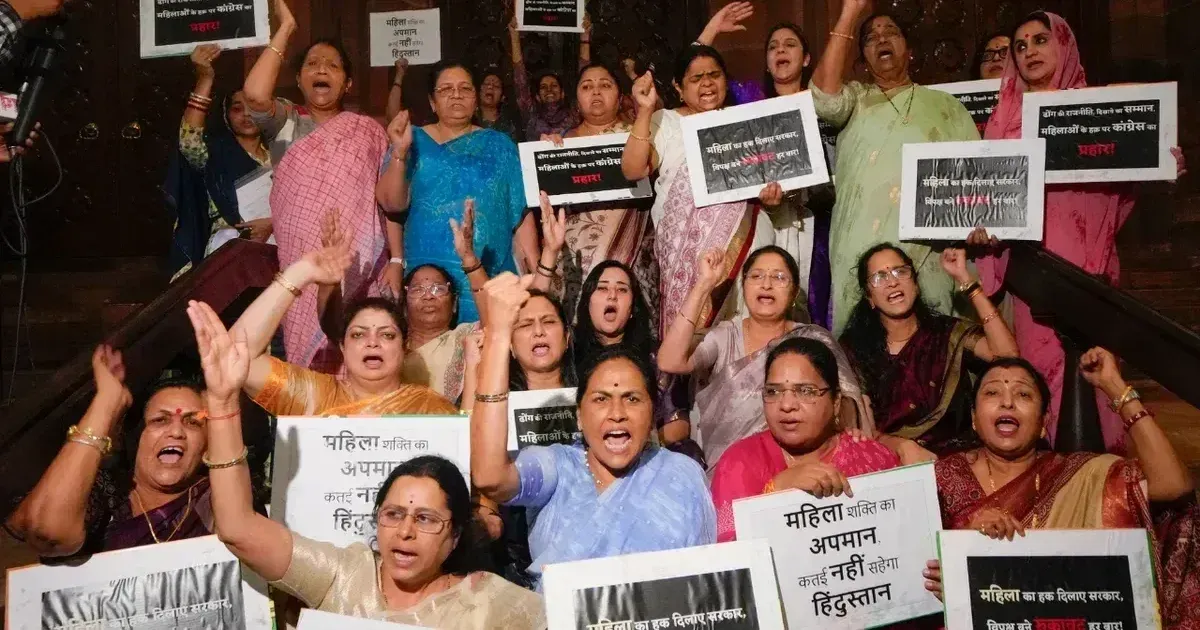
Legislative records from the Lok Sabha reveal that the government faced a significant setback regarding gender-based seat reservations. A Constitution Amendment Bill designed to modify the existing women quota law failed to secure the necessary support during a formal division of votes on Friday. This outcome surprised several analysts who expected the ruling coalition to maintain its typical legislative discipline.
Lok Sabha Rejects Women Quota Law Amendments
Friday’s session concluded with the unexpected failure of a measure intended to refine the women quota law. The Constitution Amendment Bill required a special majority to pass, meaning two-thirds of the members present and voting had to approve the text. Opposition parties used a formal division of votes to record individual preferences, a process that exposes specific dissent within the chamber. This mechanism ensures that every legislator’s stance is public and documented in the official parliamentary record.
Government whips had issued notices to all members of the ruling party to ensure full attendance for the vote.
Public data indicates that the failure to pass the bill halts a decade-long effort to finalize these specific legislative tweaks. These amendments sought to clarify how sub-quotas would apply across various demographic groups within the broader reservation framework. The Lok Sabha floor became a site of intense debate as various regional parties raised concerns about the centralization of quota authority. Ultimately, the tally fell short of the constitutionally mandated threshold.
Political strategies within the New Delhi power corridors shifted rapidly as the results became clear. While the ruling party maintains a functional majority for standard legislation, constitutional amendments demand a higher level of cross-party consensus. The women quota law remains a sensitive topic that involves complex negotiations between state interests and federal mandates. Records indicate that several allied parties may have abstained or voted against specific clauses in the bill.
Division of Votes Exposes Legislative Fractures
A division of votes in the Lok Sabha is a transparent counting process that differs from a simple voice vote. Each member uses an electronic system or paper slips to register their support, opposition, or abstention. Friday’s result showed that the government could not consolidate the two-thirds majority necessary for a Constitution Amendment Bill. This specific failure is a rare instance where the current administration’s floor management did not yield the desired outcome.
The development comes after the Constitution Amendment Bill to tweak women quota law was defeated in Lok Sabha on Friday after division of votes.
NDTV reports highlighted the immediate political tension following the vote count. Opposition leaders characterized the defeat as a sign of weakening executive influence over the legislative process. Instead of moving to the Rajya Sabha for further deliberation, the bill is now effectively stalled. The procedural dead-end requires a new strategy if the government intends to pursue the women quota law changes in the future.
Legislative experts argue that the defeat reflects deeper ideological divisions regarding affirmative action. Some parties argued that the proposed tweaks did not go far enough to protect minority interests within the quota system. Others claimed the Constitution Amendment Bill would have granted too much discretionary power to the central government. The final vote count of the Lok Sabha reflected these fragmented perspectives.
Prime Minister National Address Tradition and Timing
Narendra Modi has established a clear pattern of using national addresses during moments of legislative or economic friction. By choosing 8:30 PM, the Prime Minister ensures his message reaches the widest possible audience across India’s diverse time zones and demographics. Previous addresses at this hour have covered topics ranging from pandemic lockdowns to major currency reforms. The tradition allows the executive branch to frame its perspective before the morning newspapers go to print.
Public anticipation often leads to volatility in local markets during the lead-up to such broadcasts. Television networks across the country adjusted their programming schedules to accommodate the Prime Minister’s speech. In the past, these addresses have served to explain complex policy shifts or to rally public support for controversial measures. Given the defeat of the Constitution Amendment Bill, tonight’s speech is expected to address the legislative path forward. The women quota law is a cornerstone of the government’s social agenda, making its stagnation a significant concern for the PMO. Official statements from the ruling party have been sparse since the Lok Sabha vote concluded. Most spokespeople directed inquiries to the upcoming broadcast, signaling that the Prime Minister would be the sole voice on the matter. The centralized communication strategy is a hallmark of the current administration’s approach to crisis management. The nation now waits to see if the address will include a new policy directive or a call for renewed legislative cooperation.
Constitutional Requirements for Quota Changes
Amending the Indian Constitution is a rigorous process governed by Article 368. Any bill seeking to change the women quota law must navigate several procedural hurdles that standard laws do not face. The requirement for a special majority in both the Lok Sabha and the Rajya Sabha acts as a safeguard against unilateral executive action. Furthermore, certain amendments require ratification by at least half of the state legislatures before they can become law. Failure at the first stage in the Lok Sabha indicates a breakdown in the initial consensus-building phase. The Constitution Amendment Bill in question aimed to solve logistical hurdles in seat rotation. However, the complexity of these changes often triggers resistance from regional power brokers who fear losing influence. Legislative records show that similar bills have been introduced and defeated multiple times since the mid-1990s. The women quota law continues to be one of the most debated topics in Indian constitutional history. Market analysts are monitoring the situation for potential impacts on social spending and legislative stability. While the defeat of a single bill does not threaten the government’s survival, it complicates the broader reform agenda. The Lok Sabha remains the primary arena where these political battles are fought and decided. The upcoming address by Narendra Modi will likely set the tone for the remainder of the parliamentary session.
Quota Defeat Tests Modi Coalition
Victories are curated by the Prime Minister’s media team, but defeats require a different level of stagecraft. The 8:30 PM address is more than a scheduled update; it is an exercise in narrative recovery after the Lok Sabha floor managers failed their primary objective. When a Constitution Amendment Bill fails, it exposes a lack of internal discipline or a miscalculation of coalition stability that the PMO rarely admits. The specific defeat regarding the women quota law suggests that the administration’s grip on its legislative allies is less firm than public appearances suggest. By taking to the airwaves, Narendra Modi is attempting to transform a parliamentary setback into a populist rallying cry. He will likely frame the opposition as obstructions to progress, shifting the blame from his own party’s inability to secure a two-thirds majority to the perceived malice of his rivals. The strategy relies on the hope that the public will prioritize the intent of the women quota law over the procedural failures of its implementation. The aura of invincibility surrounding the government’s legislative machine has been punctured. If the administration cannot pass a high-profile social reform, its ability to push through more disputed economic or judicial changes is now in doubt. The address is a desperate move to reclaim the initiative. Will the address work? Only if the voters value rhetoric over results.