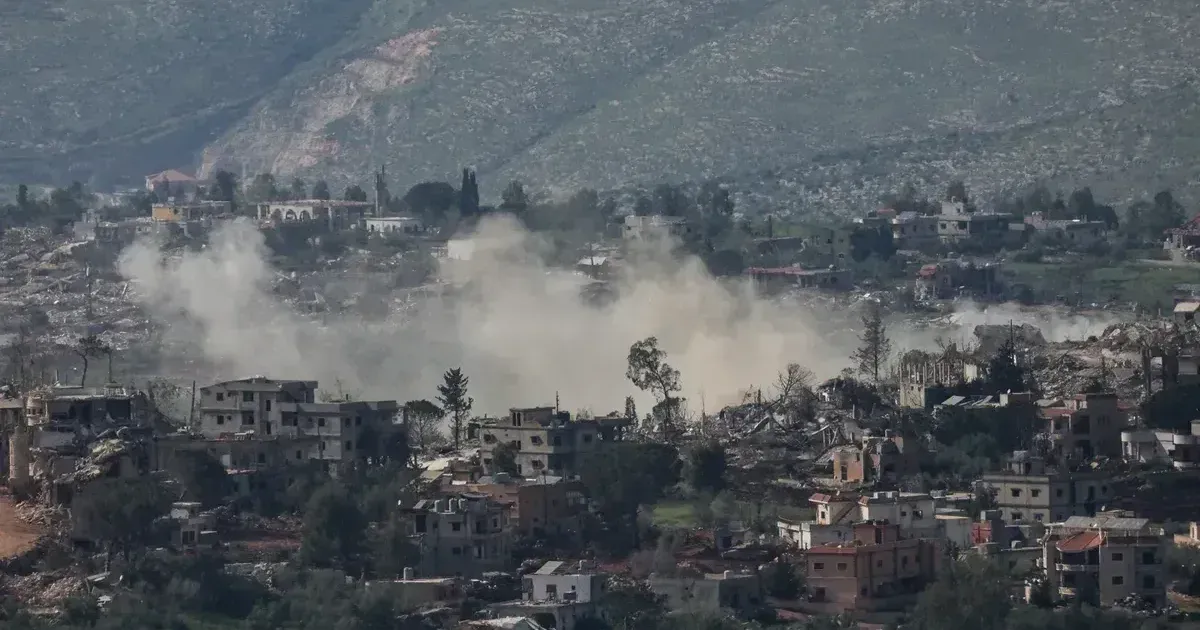
The southern Lebanon strikes show how fragile the ceasefire line remains months after the last major escalation. Civilian deaths are giving regional governments another reason to question Israel's targeting claims. Hezbollah's presence near the border keeps the area militarized even when diplomacy calls it calm. Israeli military operations in Lebanon claimed at least twelve lives over the last 24 hours. Authorities in Beirut confirmed the casualties on May 2, 2026, as rescue teams combed through wreckage in multiple southern districts. These strikes occurred within a concentrated window of activity that targeted residential and infrastructure sites across a broad geographic range. For residents near the border, the pattern means normal life can be interrupted by a strike even when officials describe the larger front as contained.
Local health officials stated that the fatalities included residents in several small settlements near the border. Reporting by TASS indicated that at least eight of those deaths happened specifically in southern Lebanon during the height of the aerial campaign. Simultaneously, Al Jazeera reports placed the total death toll higher, accounting for additional strikes in areas outside the immediate southern border zone.
Fifteen separate cities and settlements came under direct fire during this period. That scale suggests a concentrated campaign in the border region, with military assets focusing on 15 distinct locations within a single day. Witnesses described heavy smoke rising from villages that had already seen serious damage in previous weeks of fighting. Rescue operations were hampered by the speed of the successive strikes.
Casualty figures in Lebanon have climbed sharply since the conflict entered a more aggressive phase on March 2, 2026. Data from the Lebanese Ministry of Health shows that more than 2,600 people have been killed in the two months since that date. This figure includes both combatants and civilians, though independent verification of the exact proportions is difficult given the active nature of the combat zones.
Intensive Bombardment Hits Fifteen Settlements
Airstrikes focused heavily on the Nabatieh district and nearby southern areas, where Israeli jets targeted fifteen settlements in rapid succession. State media in Lebanon characterized the strikes as some of the most intense since the current escalation began in early March. Local authorities reported that the buildings hit included residential apartments and storage facilities, though the Israeli military typically maintains that it targets infrastructure belonging to armed groups.
Ceasefire Pressure
Rescue teams in the south faced major challenges while reaching the wounded in 15 different settlements. Many of these areas are now sparsely populated due to mass displacements, yet those who stayed behind remain vulnerable to high-altitude munitions. Destruction was reported in several villages that had been relatively quiet during the previous week. Infrastructure damage to roads also made it difficult for ambulances to transport the injured to hospitals in larger cities like Sidon.
"At least eight people were killed in these strikes across the southern region," according to local authorities in Lebanon.
Efforts to clear rubble and identify the deceased continued well into the evening hours. Families in the affected towns searched for survivors under collapsed concrete slabs. Lebanese medical staff at nearby clinics reported that several survivors arrived in critical condition, meaning the death toll could still rise in the coming days. Targeted locations included both hillside villages and more densely packed urban outskirts.
Fatalities Mount Despite Standing Ceasefire
Violent exchanges persist despite the existence of an ongoing ceasefire agreement. A disconnect between diplomatic declarations and the reality on the ground has created a sense of deep uncertainty for residents in southern Lebanon. While international mediators continue to reference the March ceasefire as framework for stability, the daily reality involves heavy artillery and airstrikes. Frequent incidents have effectively neutralized the protections usually associated with a cessation of hostilities.
Military analysts suggest the current operations represent a tactical shift toward high-frequency, low-duration strikes. Instead of long sieges, the pattern has moved toward hitting 15 or more targets in 24 hours to maximize pressure. Because these strikes happen under the umbrella of a technical ceasefire, the diplomatic response from regional powers has been complicated. Governments in the region have expressed concern that the rising death toll will make the current agreement entirely unsustainable.
A cumulative loss of 2,600 lives since March 2 highlights both the fragility of the current security arrangement and the intensity of the friction along the Blue Line. Daily life for millions of people in Lebanon is now dictated by the sound of overflights and the possibility of sudden bombardment. Records from local hospitals show a steady influx of casualties that does not align with a peaceful de-escalation path.
Regional Stakes
Can a ceasefire survive 2,600 deaths in sixty days? Border conflicts in the Levant often become harder to contain when the formal label of a truce no longer matches the daily tempo of strikes. These latest attacks on 15 cities and settlements are more than a flare-up; they show how quickly a ceasefire can lose operational meaning when enforcement lags behind events on the ground. Al Jazeera reported that the US-brokered ceasefire was announced on April 17 and extended to May 17, while TASS and Lebanese authorities described another day of strikes across southern Lebanon. That combination leaves mediators defending a framework that the battlefield is already testing.
Stability depends on whether the combatants see more value in the technical existence of a ceasefire than in the military gains of active strikes. Current operations favor the latter. Each hit on a Lebanese settlement creates political pressure for a response, making a quiet border harder to restore. Governments in the region are watching the 2,600 fatalities count as a warning sign for a broader war. Any renewal of the existing agreement will need a credible enforcement mechanism, because civilian harm, evacuations and damaged roads are now shaping security calculations as much as formal diplomacy.