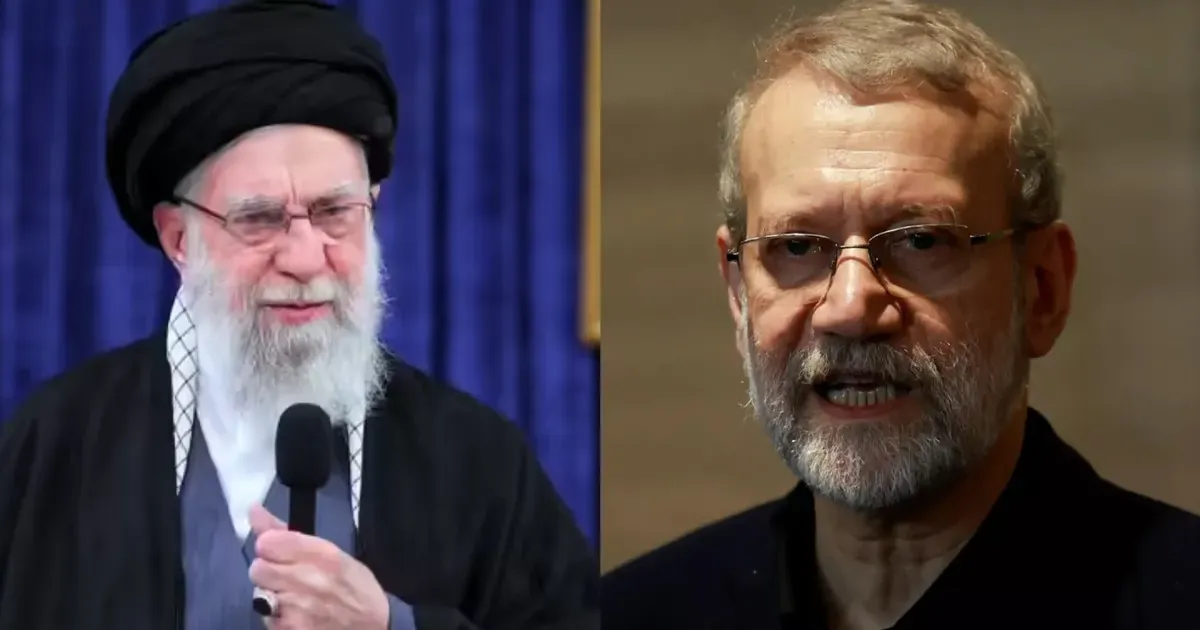
The strike report immediately changed the regional risk calculation. Officials in several capitals were still assessing the command impact. March 30, 2026, marked a major escalation in the modern Middle East when Israeli jets eliminated Supreme Leader Ali Khamenei and National Security Chief Ali Larijani during a large aerial campaign. Intelligence reports from the region confirm that the strikes targeted the clerical leadership’s inner sanctum in Tehran while simultaneously hitting critical infrastructure across the country. Israeli fighter pilots used a sophisticated array of precision-guided munitions to bypass Iranian air defenses during the multi-hour operation. 170 targets across Iranian territory faced destruction within a single 24-hour window. The offensive sharply increased uncertainty around Iranian command continuity.
Military planners in Tel Aviv orchestrated the deployment of 400 munitions to dismantle the logistical spine of the Iranian military. The Israel Defense Forces coordinated the barrage to hit high-value targets including command-and-control centers, communication nodes, and specialized manufacturing plants. Smoke columns rose over major industrial zones as the sun climbed on the morning of March 30, 2026. Local observers reported near-constant sonic booms as waves of aircraft entered and exited Iranian airspace. Command structures within the IRGC faced immediate disruption as senior leadership channels went silent following the initial impact at the Supreme Leader’s residence.
Military Scale of the 400-Munition Strike
Sophisticated electronic warfare suites preceded the kinetic strikes, effectively blinding Iranian radar arrays. Israeli officials described the operation as a surgical necessity to neutralize immediate threats to the Mediterranean coast.
The Israel Defense Forces stated that the attacks targeted "a central site used to produce key components for a variety of weapons in Iran."
Military analysts identified the site as a critical facility for the production of advanced drone guidance systems and long-range ballistic missile components. The destruction of this facility sharply impairs the ability of Tehran to resupply its regional proxies.
Each of the 400 munitions used carried specialized warheads designed to penetrate hardened underground bunkers. No Iranian surface-to-air missile battery managed to record a confirmed hit on the invading aircraft.
Destruction at the primary weapon production sites caused secondary explosions that were visible from satellite reconnaissance. These detonations continued for several hours after the initial sorties concluded. Ground-based sensors detected seismic activity consistent with the collapse of deep-tier storage facilities. Aircrews returned to base with zero casualties or equipment losses reported by the IDF. The precision of the strikes suggests years of deep-cover intelligence gathering within the Iranian Ministry of Defense. Operations of this magnitude require detailed data on structural weaknesses and daily movement patterns of high-value individuals.
High Command Elimination and Iranian Succession
Death certificates for Ali Khamenei and Ali Larijani were effectively signed the moment the first bunker-busters struck the secure compounds of North Tehran. Larijani, a veteran of the security apparatus, had been instrumental in coordinating Iranian influence across the Levant. His removal creates an institutional void that the remaining clerical establishment is struggling to fill. Emergency meetings of the Assembly of Experts took place in undisclosed locations to select a temporary successor. Reports from the state-run news agency indicate that the transition of power is full of internal friction. Rival factions within the IRGC are now competing for control over the remaining military assets.
President Trump characterized the operation as a successful move toward regime change. Washington had maintained a posture of maximum pressure, and these strikes represent the culmination of that policy. Tehran officials moved quickly to appoint interim directors for the national security council. These new officials face the difficult task of maintaining domestic order while the population reels from the sudden loss of their ideological figureheads. Protests erupted in some suburban districts, though the internal security forces quickly suppressed any sign of public celebration or dissent. The continuity of government remains the primary concern for the remaining members of the Iranian cabinet.
Civilian Impact and Hospitalization Crisis
Retaliatory strikes and collateral damage have placed an immense strain on the Israeli medical infrastructure. 6,000 people sought emergency treatment at hospitals across Israel since the start of the operation against Iran. The Ministry of Health in Jerusalem reported that the influx of patients has overwhelmed trauma centers in the northern and central districts. Many of these hospitalizations involve shock and respiratory issues, though physical injuries from shrapnel and debris are also widespread. One individual remains in critical condition while 16 others are categorized as serious. Medical staff have been placed on 24-hour shifts to manage the crisis.
Israeli hospitals prepared for this scenario by clearing elective procedure wings weeks in advance. Despite these preparations, the sheer volume of patients has stretched the availability of critical care resources. Families gathered outside emergency room entrances seeking information on loved ones caught in the crossfire of retaliatory rocket fire from Lebanese and Syrian border regions. Emergency responders worked through the night of March 30, 2026, to extract survivors from damaged residential structures. The psychological impact on the civilian population is expected to be long-lasting. Every ambulance in the national fleet is currently deployed to active zones.
Diplomats and energy traders are now reading the strike through the same lens: whether command disruption leads to a contained pause or a wider cycle of retaliation.
Energy Market Volatility and Global Repercussions
Oil prices surged on international exchanges as news of the leadership vacuum in Tehran reached global trading floors. Crude futures jumped 14% in a single trading session as analysts weighed the risk of a prolonged disruption in the Strait of Hormuz. Shipping lanes in the Persian Gulf are currently under high-alert status with several commercial tankers dropping anchor in neutral waters. Insurance premiums for maritime transport in the region have tripled overnight. The global economy, already sensitive to Middle Eastern instability, now faces a meaningful supply-side shock. Traders are bracing for a period of extreme price swings as the full extent of the damage to Iranian oil terminals becomes clear.
European capitals expressed deep concern over the potential for a huge refugee wave if the Iranian state structure collapses entirely. Diplomacy has largely been sidelined by the speed and violence of the Israeli offensive. Market participants are closely watching the response from Beijing and Moscow, both of whom have serious economic ties to the Iranian energy sector. Any disruption in Iranian exports directly affects the Chinese industrial base. The possibility of a wider regional conflict involving other Gulf monarchies stays high. Financial markets remain on edge as the world awaits a possible Iranian counter-response.