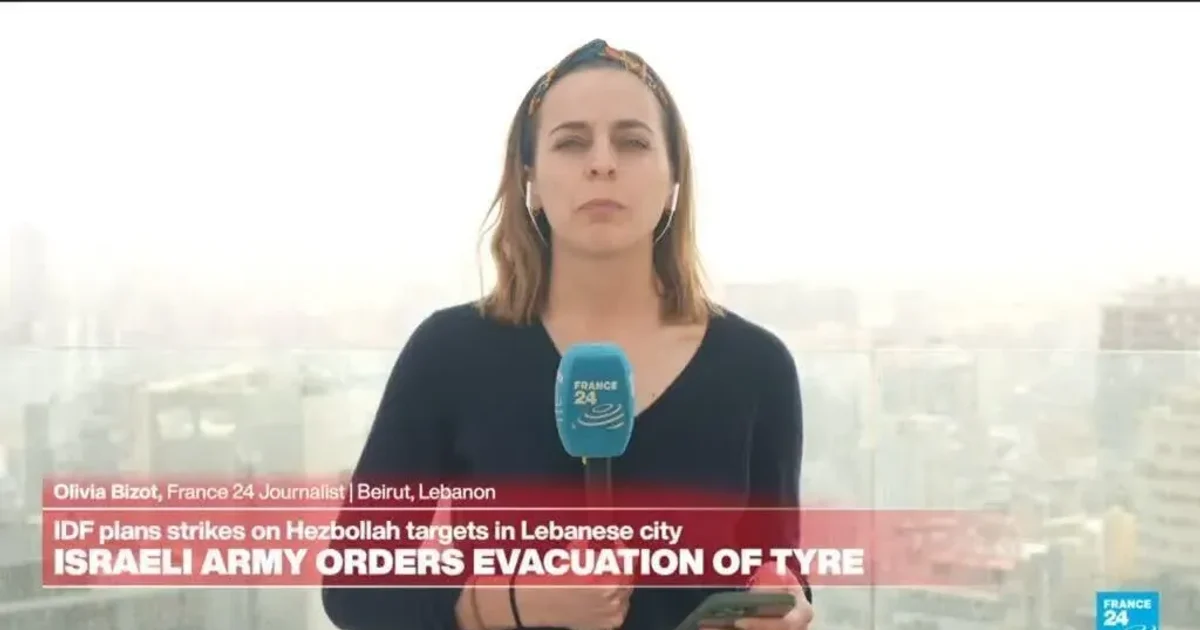
Tyre faced a direct military ultimatum on April 4, 2026, when Israeli forces commanded residents to flee the ancient southern Lebanese hub immediately. The order reached residents through social media, leaflet drops and emergency messages, but many families said the timing still left them uncertain about safe routes.
Air strikes intensified shortly after the warnings, targeting multiple locations within the city limits. At least 11 people suffered injuries when a missile strike impacted the area around the Lebanese Italian Hospital, forcing medical teams to work while displacement was already underway.
Lebanese Italian Hospital Damaged in Israeli Strike
Medical personnel at the facility reported that the explosion occurred without a specific warning for the hospital block itself. Doctors scrambled to stabilize the wounded as smoke entered parts of the emergency area and windows shattered near treatment rooms.
"The strikes hit the residential blocks surrounding the medical facility, causing significant structural damage to the emergency ward," a hospital administrator told Al Jazeera reporters.
Casualty numbers continued to fluctuate as civil defense teams searched nearby residential structures. The proximity to a hospital makes the strike especially sensitive because it limits treatment capacity just as injuries and displacement rise together.
Ground Invasion Advances Into Southern Lebanese Hub
Israeli infantry and armored units pushed deeper into Lebanese territory simultaneously with the aerial bombardment. Resistance from local armed groups slowed the pace of the advance in several dense urban sectors, where narrow streets limit armored movement.
Evacuation routes toward Sidon and Beirut became congested with thousands of vehicles. Fuel shortages hampered the flight of many families, leaving some to travel on foot or wait for relatives with transport.
Water, electricity and cellular services failed in parts of the city during the height of the bombardment. Repair crews cannot safely access damaged transformers, pumping stations or towers while strikes continue.
Aid groups warned that repeated displacement is exhausting household savings and making it harder for families to secure medicine, fuel and temporary shelter. Municipal officials are also trying to track elderly residents who may not have received digital alerts.
The evacuation order therefore creates a second emergency after the strikes themselves: moving civilians fast enough without breaking the systems meant to receive them. That pressure will grow if the operation lasts more than a few days.
The order also places pressure on hospitals outside Tyre. Facilities in Sidon and Beirut must prepare for patients who arrive without records, family contacts or stable access to medication.
Humanitarian coordinators are watching fuel supplies closely because ambulances, buses and private cars all depend on the same limited stocks. A stalled convoy can quickly become a medical problem if temperatures rise or shelling resumes nearby.
The city's age and density complicate the movement of civilians. Older stone streets, narrow residential lanes and damaged intersections make it difficult to separate emergency vehicles from families trying to leave at the same time.
International agencies are likely to ask for clearer humanitarian pauses if the operation expands. Without those pauses, evacuation orders can become warnings that civilians cannot realistically follow.
For residents who remain, the risk is not only direct bombardment. Food stocks, chronic medications and clean water can run down within days when roads are blocked and shops are closed. That makes the timing of relief access central to whether the evacuation order reduces harm or simply moves it elsewhere.
That access window will decide how many residents can leave safely.
Tyre Evacuation Deepens Civilian Crisis
The Tyre evacuation order adds another civilian burden to a conflict already stretching basic services. The humanitarian question is whether residents have safe routes, shelter and enough warning to move.