On April 4, 2026, President Donald Trump issued a 48-hour ultimatum to Tehran while elite special operations units intensified their search for a missing American pilot downed over Iranian territory. Pentagon officials refused to name the missing aviator but confirmed that search and rescue assets moved into position overnight. Specialized U.S. Navy SEAL teams and Air Force Pararescue jumpers are leading the effort in the rugged terrain of the Zagros Mountains. Aerial surveillance platforms remain operational over the crash site despite heavy Iranian anti-aircraft activity in the sector. Military command centers in Qatar and Bahrain are coordinating the recovery mission with high-priority status.
Pentagon Operations and the Missing Aviator
Naval assets in the Persian Gulf have shifted toward the Iranian coastline to provide cover for extraction teams. Satellite imagery confirmed the wreckage of a single-engine jet, but no ejection seat or parachute was immediately visible in the initial scans. Intelligence analysts are reviewing infrared signatures captured shortly after the impact to determine if the pilot survived the crash. Specialized electronic warfare aircraft are jamming Iranian communications to prevent local militias from pinpointing the rescue teams. CENTCOM officials have placed three additional carrier strike groups on high alert to respond to any further escalation.
Tehran maintains that its air defense systems successfully intercepted a hostile intrusion into sovereign airspace. State-controlled media outlets in Iran have broadcast footage of what they claim is wreckage from the downed American craft. No evidence of a captured pilot has surfaced on these networks yet. Foreign observers noted that Iranian ground troops are moving toward the crash coordinates in a race against American special forces. Local reports indicate that several mountain passes have been cordoned off by Revolutionary Guard units.
Logistical hurdles for the rescue mission include worsening weather patterns and high-altitude winds that limit helicopter maneuverability. Defense Department sources told Reuters that the window for a successful recovery is closing rapidly due to the presence of local thermal imaging technology. Combat search and rescue operations typically rely on the first 24 hours for the highest probability of success. Every hour spent on the ground increases the risk of the pilot being captured by local insurgent groups or Iranian regular army units. High-resolution sensors are scanning for emergency beacon signals that might indicate the pilot is still alive and mobile.
Economic Deadlines and the Strait of Hormuz
Global energy markets reacted sharply to the news of a potential closure of the world's most critical maritime chokepoint. Brent crude is trading at $120 per barrel as traders weigh the risks of a protracted conflict. Trump used his social media platform to demand that Iran reopen the Strait of Hormuz immediately or face severe consequences. While he refrained from mentioning the downed pilot in his public posts, the timing of the 48-hour deadline coincides with the height of the rescue operation. International shipping companies have already diverted several tankers away from the region to avoid rising insurance premiums.
Crude oil deliveries through the strait account for nearly 20 percent of global consumption. Disruptions here could lead to a major spike in gasoline prices across the United States and Europe. Trump focused his digital messaging on his economic policies and the implementation of new tariffs rather than the military crisis. He praised himself on Truth Social, thanking "Mr. Tariff" for supposed economic gains. Critics argued that the focus on trade was a distraction from the unstable situation of the missing serviceman. Financial analysts at Goldman Sachs warn that a full blockade could push oil prices past record highs within days.
"I suspect the President is probably in panic mode right now behind the scenes because he has not been seen publicly since his address on Wednesday night," John Bolton said.
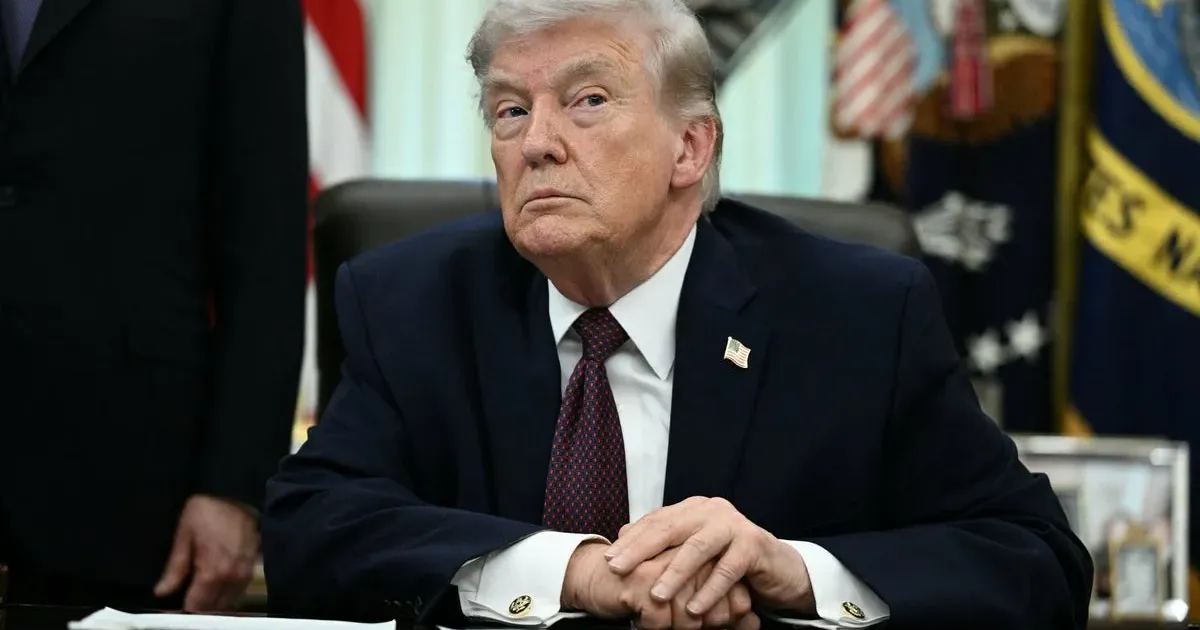
John Bolton, the former National Security Adviser, expressed deep skepticism regarding the administration's ability to manage this double-front crisis. Bolton told The Independent that the lack of public appearances from the commander-in-chief suggests internal chaos. Since the Wednesday night address to the nation, Trump has communicated exclusively through text-based social media posts. This pattern of behavior has drawn scrutiny from both Republican and Democratic lawmakers on Capitol Hill. White House staffers have declined to provide a specific schedule for the President for the remainder of the weekend.
Speculation regarding the state of mind of the president intensified as the search reached its third day. John Bolton characterized the current atmosphere as one of confusion and reactive decision-making. High-ranking military officials are reportedly frustrated by the lack of clear directives from the executive branch. Some aides suggest that the president is waiting for a successful recovery before appearing on camera. Other sources within the administration claim that he is preoccupied with the upcoming 48-hour deadline he imposed on Tehran. Public confidence in the administration's handling of foreign policy is under heavy pressure from these reports.
Diplomatic channels between Washington and Tehran are nonexistent. Swiss intermediaries are attempting to enable a dialogue to prevent a broader regional war. European allies have urged restraint, fearing that a rescue mission could trigger a direct confrontation with the Iranian military. United Nations officials called for an immediate de-escalation of rhetoric to protect civilian shipping in the Gulf. Intelligence suggests that Iranian leaders are equally hesitant to spark a full-scale conflict but must project strength to their domestic audience. Peace remains a distant prospect while the fate of the pilot hangs in the balance.
Congressional leaders have demanded a classified briefing on the status of the search and the strategic goals of the 48-hour ultimatum. House and Senate intelligence committees are preparing to investigate the circumstances leading to the downing of the jet. Questions persist about whether the aircraft was on a routine patrol or a more sensitive reconnaissance mission. This uncertainty has created a vacuum of information that is being filled by partisan speculation on both sides. The American public is waiting for a definitive update on the safety of the aviator. Hard data on the rescue progress remains classified to protect the safety of the teams on the ground.
Pilot Search Shapes Iran Deadline Pressure
Trump's Iran deadline is tied to the missing pilot because personnel risk changes the politics of escalation. The demand may project urgency, but it also narrows the space for a quiet diplomatic exit.