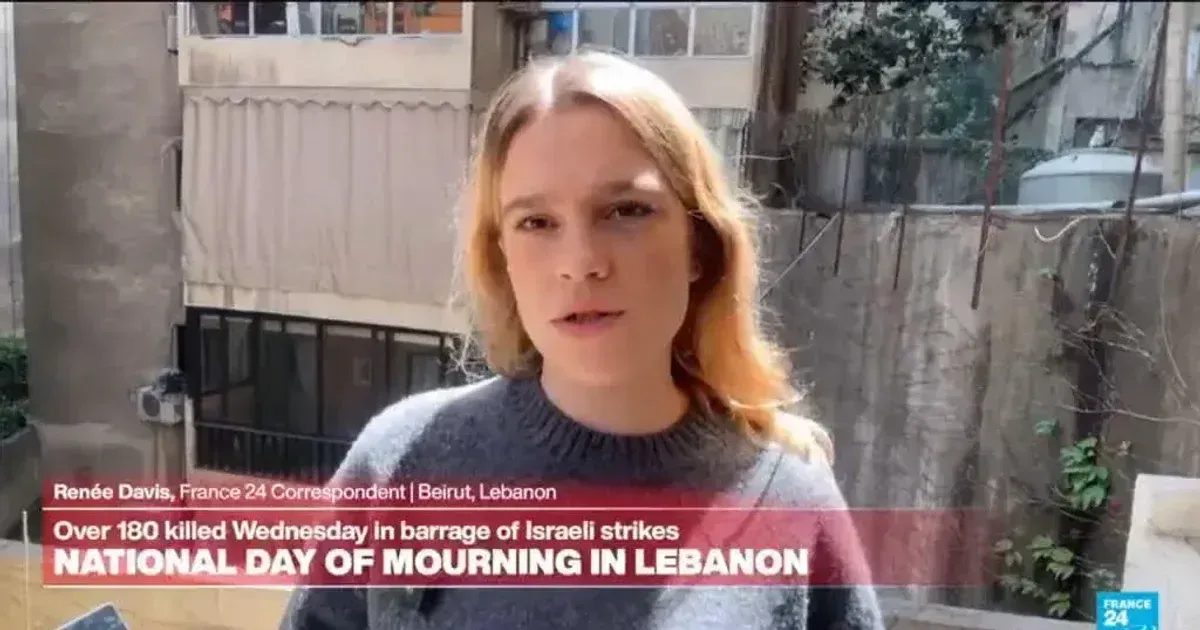
Officials in Beirut confirmed that the casualty list from the April 8 Israeli aerial campaign includes more than 350 individuals. Lebanon and Israel have seen escalating tensions culminate in this specific window of violence. Local health workers spent the weekend documenting names of victims scattered across the southern and eastern regions of the country. These efforts revealed a demographic profile consisting largely of civilians who were in their homes or at places of work when the munitions struck.
Rescue operations shifted from search-and-rescue to recovery within hours of the initial bombardment. Medical facilities in Tyre and Nabatieh reported that their morgues reached capacity before midnight on the day of the attack. Families have since been forced to conduct mass burials as the sheer volume of the deceased exceeded the storage capabilities of local municipalities. Each victim is a data point in a rapidly expanding ledger of regional loss.
Southern Lebanon Towns Bear Brunt of Aerial Assault
Civil defense teams describe a sequence of events where multiple residential blocks were leveled simultaneously. Witnesses in the south reported hearing a low hum followed by a series of detonations that broke windows several miles away. Reports from the Lebanese Red Cross indicate that the speed of the strikes prevented many families from reaching underground shelters. Evidence at the scenes suggests that heavy payloads were used against structures that housed dozens of residents. Dust and smoke covered the skyline of Nabatieh for hours as first responders dug through concrete with their bare hands. These teams struggled because of a lack of heavy machinery, much of which had been damaged or fuel-deprived. Villages once vibrant with commerce now sit as silent collections of rubble and twisted rebar. Survivors often find themselves standing among the ruins of their heritage with nothing but the clothes on their backs.
Hospitals in the south have been forced to prioritize patients based on the likelihood of survival. Surgeons worked thirty-hour shifts to address shrapnel wounds and blunt force trauma among the hundreds of injured survivors. Supplies of anesthesia and clean bandages dwindled rapidly as the surge of patients overwhelmed the local logistics chains. Many of the 350 people killed were pronounced dead upon arrival at these triage centers.
Health Ministry Data Reveals Victim Demographics
Records from the Lebanese Ministry of Public Health provide a detailed look at the human cost of the April 8 strikes. Children under the age of eighteen account for approximately 25 percent of the confirmed fatalities. Women and the elderly make up another 40 percent of the total death toll. Such numbers challenge the assertion that the strikes targeted only active combatant locations or military hardware. Small villages in the Bekaa Valley suffered some of the highest concentrations of civilian deaths per capita during the barrage.
Teachers, pharmacists, and municipal workers appear frequently on the official lists of the deceased. One primary school in the south lost four faculty members who were gathered for an afternoon meeting when their building was hit. These losses hollow out the social fabric of communities that rely on a handful of professional figures to maintain order. Grief has become the primary occupation for the thousands who remain in these decimated districts. The sheer volume of casualties overwhelmed every available operating room in the southern governorates within sixty minutes of the first strike.
Identification of the bodies remains a grueling task for the authorities. Burned remains and collapsed structures make the verification of identities difficult without DNA testing or dental records. Relatives have gathered outside the gates of major hospitals, holding photographs and identifying marks of their missing loved ones. The atmospheric tension in these waiting areas is thick with a mixture of despair and exhaustion.
Lebanon's infrastructure was already weakened by years of economic instability before this recent surge in violence. The power grid operates on a part-time basis, forcing hospitals to rely on expensive diesel generators to keep life-support systems active. Fuel shortages have hindered the movement of ambulances between the border regions and more advanced medical centers in Beirut. Communications networks frequently fail after strikes, leaving families unable to coordinate their movements or call for help.
International aid organizations have called for an immediate humanitarian corridor to allow for the delivery of medical supplies. Current blockades and active combat zones make it nearly impossible for convoys to reach the most affected areas in the south. Doctors Without Borders reported that their teams are operating in makeshift clinics under constant threat of further aerial activity. The lack of clean water in these zones creates a secondary risk of disease outbreaks among the displaced population.
Displacement has reached levels not seen in the country for a generation. Tens of thousands of people have fled their homes with no clear destination or long-term plan for shelter. Public buildings and schools in Beirut have been converted into temporary housing for these internally displaced persons. Resources in the capital are stretched thin as the city attempts to absorb the sudden influx of traumatized families. Crowded conditions in these shelters worsen the mental health crisis currently gripping the nation.
Civilian Protection Fallout
Modern warfare has entered a phase where the term precision is used as a rhetorical shield to justify the obliteration of entire residential blocks. The events of April 8 demonstrate that technological sophistication does not reduce the inherent brutality of high-yield munitions in urban settings. Counting 350 bodies in minutes is not an anomaly of war but a feature of current military doctrines that prioritize total dominance over the protection of non-combatants. Deterrence as a concept has failed when its implementation requires the systematic destruction of a neighbor's civilian infrastructure. Any military strategy that produces such a high ratio of dead children to neutralized combatants is a strategic failure regardless of the number of weapon caches destroyed.
Israel continues to operate under the assumption that kinetic force can solve complex political and social grievances. This belief ignores the reality that every funeral in Lebanon is a recruitment event for the next generation of adversaries. By leveling Nabatieh and Tyre, the IDF is not securing its northern border but rather fertilizing the ground for future conflict. The international community, led by a hesitant Washington and a fragmented Europe, has effectively greenlit this level of violence through its lack of effective intervention. Words of concern mean little to the families burying their children in mass graves.
The regional order is not being stabilized through these strikes; it is being set on fire by a policy of unbridled aggression that acknowledges no limits. Brutality is now the only currency being traded in this conflict.