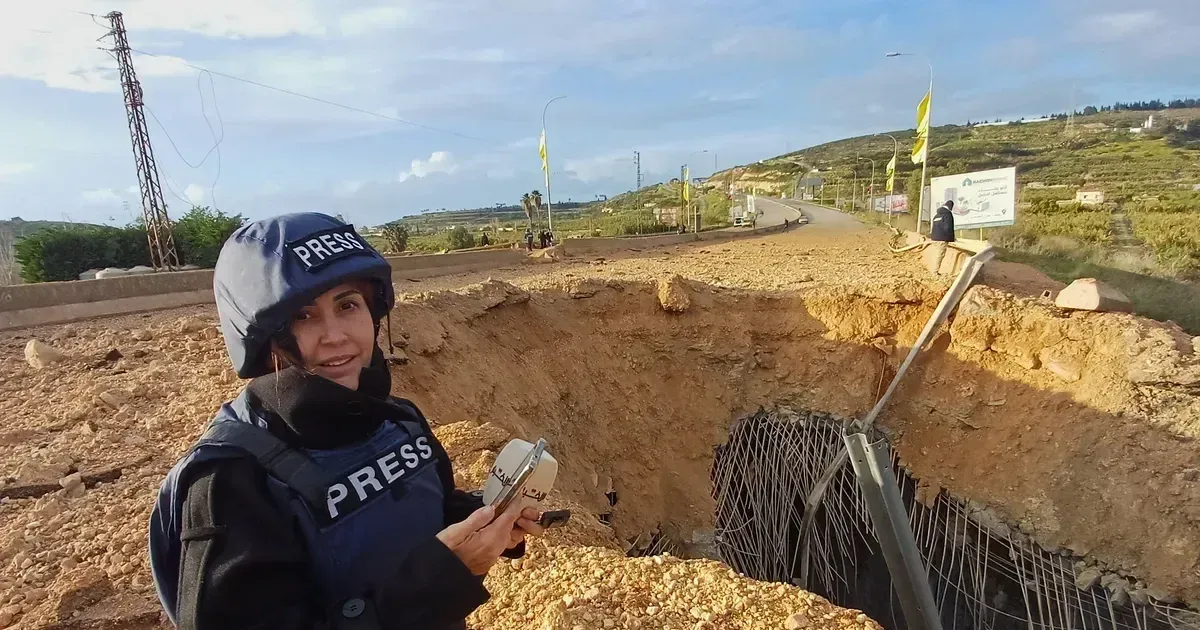
Israeli strikes in Tiri trapped journalists beneath rubble and forced marked Red Cross rescuers to retreat under drone fire. Tiri, a Lebanese municipality near the Israeli border, became the center of a lethal military blockade on April 22, 2026. Israeli forces trapped civilian rescuers and journalists beneath the wreckage of targeted buildings. Heavy fire prevented immediate medical aid from reaching survivors during several rounds of aerial bombardment. Reports from the region indicate at least two people were killed in the initial strikes. Two journalists are among the wounded, with one still missing under the debris of a collapsed structure.
Rescue Efforts Halted in Tiri Rubble
Evacuation teams faced immediate danger while attempting to access the impact site in the town center. Lebanese Red Cross units managed to retrieve several bodies and one injured journalist despite the persistent presence of combat aircraft. Ground conditions deteriorated rapidly when Israeli units established a military seal around the municipal perimeter. Local authorities reported that the physical barrier effectively isolated the victims from critical trauma care. Rescue vehicles sat idle at checkpoints while sounds of shifting concrete echoed through the streets.
Surviving reporters on the scene described a situation where every movement drew immediate scrutiny from overhead surveillance. Visibility in the town remains poor due to dust from pulverized masonry and smoke from active fires. Witnesses stated that the trapped reporter had been documenting the civilian exodus from Tiri before the first missile strike. This individual has not been heard from since the roof of the temporary media center gave way. Communication networks in the border zone are currently non-functional.
Israeli Drone Attacks Red Cross Personnel
Violence escalated when a humanitarian mission attempted to reach the second trapped reporter. A specialized team from the Lebanese Red Cross maneuvered into the impact zone to begin manual excavation. They were met with direct hostility from the air. Evidence from the site suggests the rescue workers were clearly identified by their high-visibility gear and marked vehicles. A precision weapon hit the immediate vicinity of the rescue crew, forcing an immediate retreat.
An Israeli drone launched a grenade from the sky when it was carrying out the rescue of a second reporter.
Casualties from this secondary attack included medical personnel who suffered shrapnel wounds. Israeli Defense Forces (IDF) officials have not issued a formal statement regarding the drone strike on the Red Cross team. International humanitarian law mandates the protection of medical workers and journalists in active conflict zones. Article 79 of Protocol I of the Geneva Conventions explicitly classifies journalists as civilians. These legal protections are frequently tested in the dense urban combat environments of Southern Lebanon.
Religious Iconography Targeted in Combat Zones
Cultural tensions intensified elsewhere in the theater of operations as footage surfaced of soldiers vandalizing local landmarks. Israeli military authorities took the rare step of jailing soldiers who were filmed smashing a statue of Jesus in a captured Lebanese village. The footage showed uniformed personnel using heavy tools to destroy the religious icon while cheering. Critics of the operation argue that such acts undermine diplomatic claims of shared Judeo-Christian values. This incident has sparked backlash among Lebanese Christian communities who historically remained neutral in the border conflict.
Vandalism of religious sites constitutes a violation of the Hague Convention for the Protection of Cultural Property in the Event of Armed Conflict. Military leaders in Tel Aviv described the event as an isolated breach of discipline. They confirmed that the involved soldiers would face court-martial proceedings and incarceration. Previous reports from similar conflict zones have highlighted the destruction of churches and shrines, though rarely with such clear video evidence. The psychological impact of these images often outlasts the tactical significance of the ground captured.
Legal Fallout for Vandalism Within Ranks
Disciplinary action against the soldiers serves a dual purpose for the military command. It attempts to restore internal order while managing the international perception of the campaign. Legal analysts observe that the swift prosecution of the statue-smashing incident contrasts with the lack of accountability for strikes on rescuers. Professional conduct in the field is a requirement for maintaining the legitimacy of military objectives. The IDF maintains that its rules of engagement prohibit the targeting of non-combatant landmarks.
Data from previous months shows a rising trend of cultural damage in the border region. Over forty religious and historical sites have reported significant structural damage since the start of the year. While some damage results from proximity to legitimate targets, other instances show signs of deliberate intent. The incarceration of the soldiers involved in the Jesus statue incident is a historic move for the current administration. It highlights a specific threshold of conduct that the military is no longer willing to tolerate in public view.
Accountability for the safety of media members remains much more elusive. Journalists operating in Southern Lebanon often lack the armored transport and high-tech communications required to survive high-intensity strikes. The death toll for media workers in this conflict has surpassed records set in previous decades. Groups dedicated to press freedom have called for an immediate investigation into the Tiri blockade. They argue that the prevention of rescue operations is a de facto execution of those trapped under the rubble.
Rescuers in Tiri have now withdrawn to a distance of two kilometers from the town center. The Lebanese Red Cross cited the high risk of further drone strikes as the primary reason for the retreat. Nightfall has brought a cessation of major aerial activity, but the military cordon stays in place. Hopes for finding the missing reporter alive are fading as the twelve-hour mark passes. No further attempts to enter the town are planned until a formal ceasefire for humanitarian access is negotiated.
Tiri Strikes Deny Rescue Access
Why does a modern military risk its international standing over the destruction of a stone statue while simultaneously authorizing lethal force against clearly marked Red Cross rescuers? The prosecution of soldiers for smashing a Jesus statue is a calculated exercise in optics designed to appease Western allies. It is far easier to punish a few low-ranking vandals than it is to answer for the systematic targeting of the people who document the war. This split reveals a hierarchy of value where religious icons are more protected than the human beings who record the reality of the battlefield.
Modern warfare has entered a phase where the elimination of the witness is a tactical priority. By blocking rescuers and journalists in Tiri, the military creates an information vacuum. In this void, the only narrative that survives is the one sanctioned by the state. The drone strike on the Red Cross was not an accident; it was a signal. It told the humanitarian community that the rules of medical neutrality have been suspended in favor of total military control over the zone of operations.
The West must decide if its support for these operations is worth the erosion of the very international laws it helped draft. If the Geneva Conventions can be ignored under the guise of security, they cease to be laws and become mere suggestions. The trend will not stop at the Lebanese border. It will become the global standard for how states deal with inconvenient witnesses. The era of the protected observer is over.