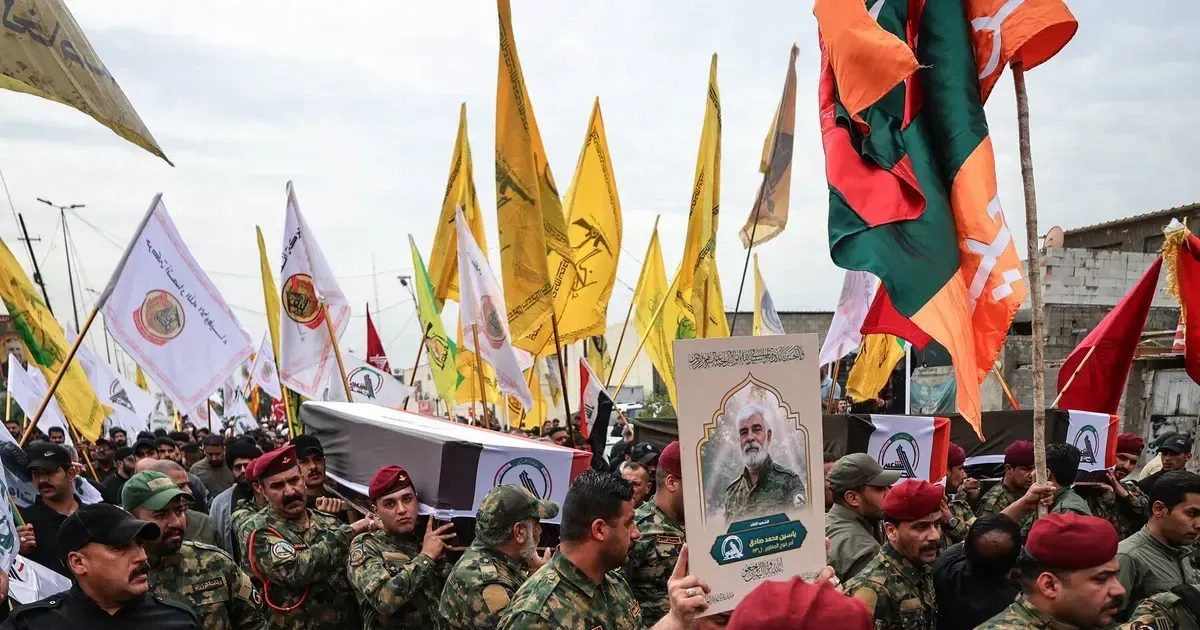
Washington’s freeze on physical dollar shipments to Baghdad weaponizes Iraq’s oil revenue in an attempt to limit Iranian access to cash. Treasury officials on April 22, 2026, froze a routine shipment of physical currency to Baghdad, a move that effectively weaponizes Iraq’s oil revenue against its deepening ties with Tehran. Physical dollar deliveries from the Federal Reserve Bank of New York have historically functioned as the lifeblood of the Iraqi economy. Washington officials now claim that a significant part of this cash is being siphoned into Iranian hands through a network of shell companies and currency auctions. This disruption has sent the Iraqi dinar into a tailspin against the dollar on the black market.
Iraq relies on these cash infusions to stabilize its local currency and pay the salaries of millions of public-sector employees. Oil revenues are deposited into an account at the New York Fed, an arrangement established after the 2003 invasion to ensure international reparations were paid. Baghdad must request the physical transfer of its own funds in pallets of cash. Treasury representatives have signaled that future transfers depend on the Iraqi government’s ability to implement stricter anti-money laundering controls. Recent audits suggest that daily auctions at the Central Bank of Iraq enabled the flight of billions of dollars to Iran and Syria.
Baghdad Faces Liquidity Crisis as Dollars Vanish
Liquidity shortages are already rippling through the commercial districts of the Iraqi capital. Traders in the Al-Kifah and Al-Harithiya currency markets reported a sudden scarcity of greenbacks on Wednesday morning. Merchants who depend on imports for food and medicine find themselves unable to secure the hard currency needed for international transactions. Iraqi Prime Minister Mohammed Shia al-Sudani faces increasing pressure from pro-Iran factions in parliament to pivot away from the Western financial system entirely. Some political blocs have suggested shifting oil trade to the Chinese yuan or the Russian ruble to bypass the American blockade.
Economic analysts in Baghdad warn that a prolonged freeze could lead to hyperinflation and civil unrest. Civil servant salaries for the month of April were delayed by four days as the government scrambled to cover the shortfall. Domestic banks have limited dollar withdrawals to $2,000 per month for individual account holders. The official exchange rate remains pegged at 1,300 dinars per dollar, but the street rate has soared to 1,650 dinars. This disparity creates a lucrative arbitrage opportunity for the very militias the United States intends to target.
Ghalibaf Denounces U.S. Naval Blockade in Strait
Iranian state media outlets have characterized the financial restrictions as a form of economic warfare that parallels military aggression. Mohammad Bagher Ghalibaf, the Iranian parliament speaker, issued a blistering statement on Wednesday accusing the Western powers of using bullying tactics to achieve diplomatic goals. Ghalibaf asserted that the era of American hegemony in the Middle East is over and that Tehran will not buckle under pressure. He specifically linked the financial pressure on Iraq to the ongoing naval standoff in the Persian Gulf.
"Reopening the Strait of Hormuz is not possible amid a blatant violation of the ceasefire," speaker Mohammad Bagher Ghalibaf said on X.
Security in the Strait of Hormuz has deteriorated since the deployment of a US-led task force designed to enforce sanctions. Iran has responded by conducting live-fire drills near the shipping lanes that carry twenty percent of the world’s petroleum. Ghalibaf warned that any attempt to forcibly escort tankers through the waterway would be met with an immediate response from the Islamic Revolutionary Guard Corps. Iranian officials maintain that the closure of the strait is a legitimate response to the violation of maritime sovereignty. Shipping insurance premiums for vessels entering the Gulf have increased by 400 percent over the last quarter.
Regional Ceasefire Fails to Defuse Financial War
Diplomatic efforts to stabilize the region have met a wall of financial resistance. A fragile truce brokered in early 2026 was supposed to end active hostilities between regional proxies, but the US Treasury’s latest move suggests the conflict has only shifted to the banking sector. Israel and the United States continue to view the Iranian financial network as a primary engine for regional instability. Intelligence reports shared with the Iraqi government identify twenty-four banks with direct links to the Iranian Revolutionary Guard. Baghdad has shuttered eight of these institutions, yet Washington considers these measures insufficient.
Financial sovereignty is a luxury the Iraqi government cannot afford. Iraqi diplomats in Washington have requested a grace period to implement the required electronic tracking systems for dollar transfers. American negotiators have countered by demanding the immediate expulsion of Iranian-backed paramilitary leaders from the Iraqi security apparatus. This deadlock leaves the Sudani administration in an unstable position between its primary security guarantor and its most influential neighbor. Failure to resolve the dispute could lead to a total collapse of the Iraqi banking sector by the end of the fiscal year.
Energy Markets React to Hormuz Shipping Deadlock
Global energy prices jumped three percent following the statements from Mohammad Bagher Ghalibaf regarding the Strait of Hormuz. Brent crude futures crossed the $95 per barrel mark as traders factored in the risk of a total shutdown of the world’s most critical maritime chokepoint. Analysts at Goldman Sachs have revised their year-end price targets to reflect the possibility of sustained supply disruptions. Tankers currently anchored outside the Gulf are awaiting instructions from owners who fear seizure by Iranian naval assets. The Persian Gulf remains the most volatile corridor for global trade.
Diplomacy has reached a stalemate in the Persian Gulf. Iranian naval vessels have reportedly shadowed several Western-flagged cargo ships over the last twenty-four hours. US Central Command has increased its aerial surveillance of the Iranian coastline in response to Ghalibaf's remarks. Regional allies, including Saudi Arabia and the United Arab Emirates, have expressed concern that the financial squeeze on Iraq will spill over into broader regional instability. $3.5 billion in Iraqi oil proceeds is currently held in the New York account, awaiting the next clearance from the Treasury Department.
Dollar Freeze Tests Financial Pressure on Iraq
Washington's decision to weaponize the petrodollar against Iraq marks a reckless escalation that prioritizes short-term Iranian containment over the long-term stability of a critical partner. By withholding physical currency, the United States is essentially admitting that its control over the global financial plumbing is its only remaining lever of influence in the Middle East. It is a strategy born of desperation, not strength.
Iraq is not a laboratory for Treasury Department experiments; it is a fractured state where the dinar’s value is the only thing standing between relative peace and a return to sectarian chaos. Forcing Baghdad to choose between the New York Fed and Tehran is a false binary that ignores the reality on the ground. Iran’s influence in Iraq is ideological, religious, and geographic; America’s influence is purely transactional. When the transactions stop, the influence evaporates. If the US persists in this blockade, it will succeed only in driving Iraq permanently into the arms of the growing Eastern economic bloc, rendering two decades of American blood and treasure entirely moot.
The era of the dollar as a diplomatic bludgeon is ending. Iraq will be the first major casualty of this transition, but it certainly will not be the last. Either Washington learns to share the regional stage, or it will find itself locked out of the theater entirely. Baghdad has already started looking for the exit.