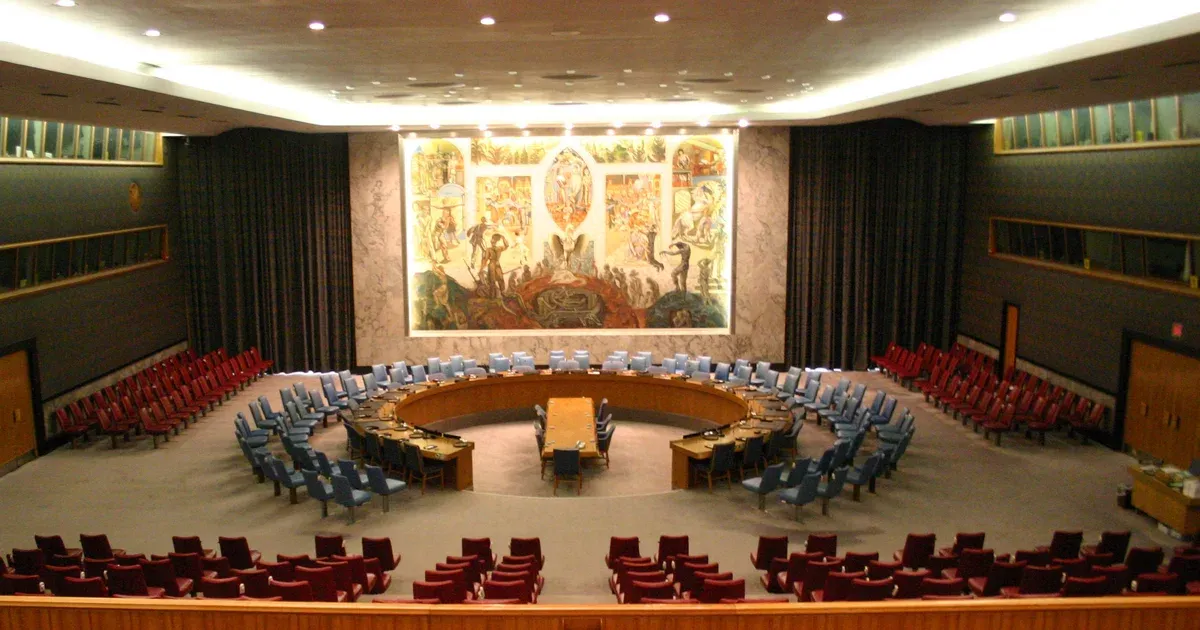
Russia and China blocked a UN Security Council resolution on the Strait of Hormuz, leaving the maritime crisis without a council-backed path forward. The vetoes overrode support from a broad majority and reinforced how quickly great-power rivalry can paralyze crisis diplomacy. The vote on April 7, 2026, followed weeks of negotiations over a watered-down text that no longer authorized force. Even that compromise failed, pushing Gulf states and Western governments to consider what can be done outside the UN framework. The practical result is a legitimacy gap. The strait remains a global chokepoint, but the main global security body cannot agree on even a limited response.
Bahraini Proposal Fails Despite Broad Support
Gulf nations viewed the Bahraini resolution as an essential step toward stabilizing global oil markets. Kuwait and the United Arab Emirates joined Bahrain in lobbying for international oversight of the waterway. These states worry that a prolonged closure of the strait will cripple their national budgets and lead to long-term energy contract defaults. Vasily Nebenzya, the permanent representative of Russia to the UN, argued that the resolution was fundamentally flawed. He asserted that the document was unilateral and ignored the root causes of the regional tension.
Russia maintained that the text would have jeopardized ongoing talks between Iran and various regional neighbors. According to the Russian delegation, the resolution was a tool for Western pressure rather than a genuine peace initiative. The proposal failed to address the security guarantees that Iran had demanded in exchange for reopening the shipping lanes.
Nebenzya Criticizes Interference With Regional Diplomacy
Russia focused its opposition on the potential disruption of non-Western diplomatic channels. Nebenzya highlighted the efforts of China, Pakistan, and Turkey to mediate between the conflicting parties in the Persian Gulf. He suggested that a UN resolution would have imposed a Western-centric solution that ignores these alternative peace tracks.
Moscow has consistently maintained that regional problems should be solved by regional actors without outside interference. The Russian diplomat emphasized that any resolution must be balanced and consider the security of all littoral states. He specifically mentioned that the Bahraini text did not account for the defensive needs of Iran.
Russia views the current crisis as a direct result of Western sanctions and military posturing. The delegation from Moscow insisted that a return to the 2015 nuclear deal framework is the only way to ensure maritime security. Nebenzya summarized his position by stating that the resolution was a step backward for diplomacy.
China Demands End to Israeli Military Operations
Beijing linked the Hormuz crisis directly to the ongoing conflict involving Israel and the United States. Fu Cong, the Chinese representative at the UN, urged both nations to cease what he described as illegal military actions. China argued that the blockade of the strait is a reactive measure to Western aggression in the region. The Chinese delegation insisted that the council could not address the maritime issue without first resolving the underlying military provocations. Fu Cong stated that the U.S.-Israeli actions were the key reason behind the blocked resolution.
He emphasized that Beijing would not support a measure that places the blame solely on one side of the conflict. China has historically maintained a policy of non-interference but has become increasingly vocal about Western military presence in the Middle East. The representative called for an immediate ceasefire and a withdrawal of foreign naval assets from the Gulf. Beijing sees the resolution as an attempt to legitimize a military buildup near its primary energy suppliers.
Western delegates expressed frustration with the outcome after the session ended. They pointed to the 11-member majority as evidence of a global consensus that the blockade is unacceptable. The failure to pass the measure leaves the Strait of Hormuz in a state of legal and military limbo. Shipping companies have already rerouted vessels around the Cape of Good Hope to avoid the area. Costs for insurance and fuel have skyrocketed since the blockade began in early March. Analysts from several major banks predict that oil prices will remain volatile as long as the council remains paralyzed.
The United States delegation indicated that it would explore alternative maritime coalitions outside of the UN framework. This move would bypass the veto power of Moscow and Beijing but lacks the broad international legitimacy of a council resolution. The session adjourned without a date for a follow-up meeting. A unilateral resolution would also hinder peace initiatives undertaken by China, Pakistan, and Turkey.
Pakistan and Turkey have been working behind the scenes to enable a direct dialogue between Tehran and Riyadh. These efforts are seen by the Kremlin as more viable than the public debates held in New York. Russian officials believe that public UN resolutions often serve as a prelude to military action. They cited previous interventions in the Middle East as evidence of how such mandates can be expanded beyond their original scope.
By blocking the resolution, Russia aims to protect its strategic partnership with Iran and maintain its influence in the region. The veto is also a check on what Moscow perceives as an expansionist U.S. foreign policy. Nebenzya noted that the council must return to the principle of consensus-based decision-making. The Russian mission issued a formal statement reiterating its commitment to a multilateral approach that includes all stakeholders.
The Veto Pushes Action Outside the UN
The veto does not end the crisis; it moves the next phase elsewhere. States that depend on open shipping lanes will now look to coalitions, insurers, naval escorts and regional mediation rather than a Security Council mandate. That shift carries risk. Action outside the UN may be faster, but it will also be more contested, especially if Russia and China frame any maritime coalition as an extension of U.S. pressure on Iran.